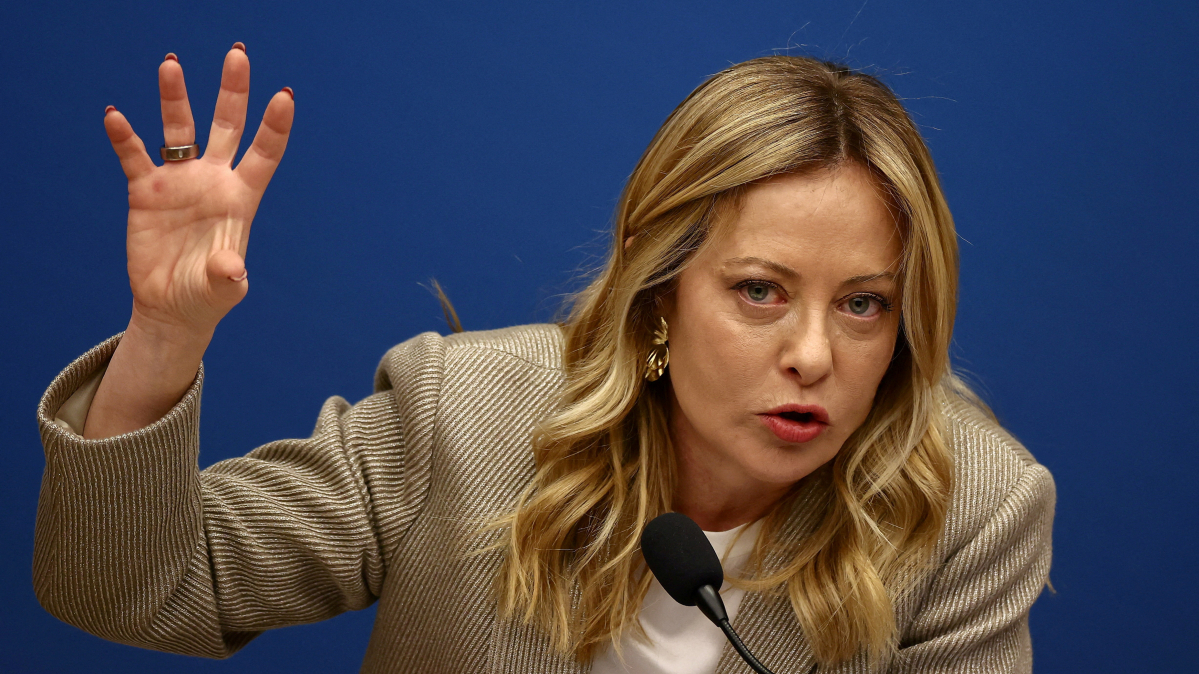
Italian Prime Minister Giorgia Meloni said on Saturday (17 January) that concerns over security in Greenland should be addressed within the framework of NATO, describing a ground military intervention as highly unlikely.
Speaking to journalists during an official visit to Japan, Meloni said security issues raised by the United States regarding the Arctic region were “serious” and legitimate, but stressed that discussions should take place through dialogue among allies within the Atlantic Alliance.
She said Greenland should be viewed as a territory falling under NATO’s collective responsibility and argued that strengthening allied presence in the Arctic must be considered within that framework. Meloni added that debates among allies should not be seen as divisive, but as a necessary response to shared strategic concerns.
Meloni noted that NATO has already recognised the Arctic as a strategic region in its official documents, and said coordination within the alliance was essential to avoid fragmented or unilateral actions. She said Italy had proposed that the issue be formally discussed within NATO and pointed to recent meetings organised by NATO Secretary General Mark Rutte with Danish and Greenlandic leaders.
Italy has held observer status on the Arctic Council since 2013 and has recently updated its Arctic strategy, reflecting the region’s growing geopolitical importance amid heightened tensions between the United States and Denmark over Greenland.
U.S. President Donald Trump has renewed calls for American control of Greenland, citing concerns about potential influence from Russia or China. The island, an autonomous territory of Denmark, rejected the proposal during talks in Washington this week, exposing what Danish officials described as fundamental differences.
In recent days, several European countries deployed small numbers of military personnel to Greenland in a show of solidarity with Denmark. Italy’s Defence Minister Guido Crosetto said he did not understand the move.
Separately, Meloni addressed developments in Iran, expressing solidarity with protesters and condemning what she described as repression by Iranian authorities. She called on Tehran to guarantee the safety of citizens demonstrating for their rights, while urging de-escalation and a return to negotiations, particularly on Iran’s nuclear programme.











What is your opinion on this topic?
Leave the first comment