The Commonwealth of Independent States (CIS) has long been a significant structure in the post-Soviet space, connecting former Soviet republics under a shared historical, cultural, and political framework.
However, the relevance and future trajectory of the CIS have been subjects of intense debate in recent years, especially in the wake of geopolitical tensions, shifting alliances, and Russia's role in maintaining this multilateral association.
Professor Zaur Gasimov, a prominent academic from the Turkish-German University, shared his insights on the current state and potential future of the CIS format in an interview with Andi Mioč of AnewZ.
In the interview, Professor Gasimov first delved into Russia's influence on the CIS and how Moscow, under the leadership of Vladimir Putin, has shaped the trajectory of the organisation.
He noted that the ongoing meetings, such as those held in Dushanbe and St. Petersburg, are examples of the continued relevance of the CIS in the post-Soviet world.
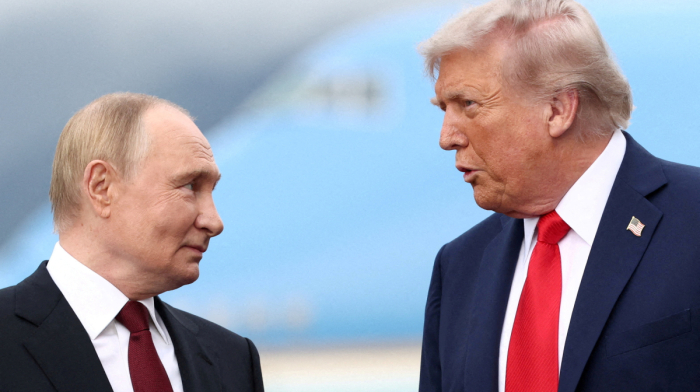
He said "I mean, you see that there were also meetings in other places of the post-Soviet world. So, there was a meeting in Dushanbe, and Aliyev participated in that meeting, and they came together, President Putin and President Aliyev. So, there was a conversation between them, and even the key issues were touched there."
Gasimov acknowledged that these meetings represent a continuation of the shared framework of the post-Soviet world. He highlighted Russia's continued efforts to "fill the category of commonness" within the CIS.
In this context, he emphasised Russia's ongoing attempt to define the meaning of the CIS, particularly in terms of cultural unity, with Russian language serving as a key element in maintaining connections between member states:
"Now Moscow is very preoccupied with filling the category of the commonness. The meeting is conducted in Russian language."
However, Gasimov also pointed out the shifting dynamics within the CIS. Some countries, such as Moldova and Georgia, have distanced themselves from the organisation, with Moldova even suspending its participation.
He noted that the situation around Ukraine is another factor complicating the unity of the CIS, as Moscow grapples with the challenges arising from its ongoing conflict with Ukraine.
An interesting development in recent CIS meetings, according to Gasimov, was the participation of Armenia's Prime Minister, Nikol Pashinyan, who showed a more nuanced approach towards Russia.
Gasimov highlighted that the rhetoric of the Armenian leadership seems to be shifting, as demonstrated by Pashinyan’s remarks of gratitude towards both the Russian and Azerbaijani leaderships during the meeting:
"It was interesting to see that the prime minister of Armenia, Nikol Pashinyan, participated in the meeting. And he sees the opportunity to announce his gratitude to the president of Russia for inviting him there, but also to the president of Azerbaijan, Ilham Aliyev. So, we see the changing of the rhetorics of the Armenian leadership. And CIS meeting became also a forum for that. So that's very new."
The future of the CIS
Gasimov was asked about the potential direction the CIS might take, especially in light of Russia's diminishing financial assets.
He suggested that the CIS would persist due to its post-Soviet inertia saying that what Russia lacks are financial assets to boost this (the CIS) cooperation.
He stressed that, while the CIS might not evolve significantly, it would continue to serve as an important platform for Russian soft power and cultural influence, particularly in Central Asia, where Russian language education remains a key priority. He noted:
"That's a meeting of leaders of the states being able to communicate in Russian language. I would even connect that much more with Russian soft power, with Russian cultural policy in this part of the world in particular, Central Asia is a region very, very symptomatic for that. So, that is an important format for Moscow."
However, Gasimov believes that while the CIS will continue to exist, its political and strategic significance will likely remain limited in the years to come:
Professor Zaur Gasimov’s reflections on the CIS underscore the complexities of the post-Soviet space and the continuing efforts by Russia to shape the future of this multilateral body.
As the CIS faces increasing challenges, including shifting alliances, declining financial support, and the changing rhetoric of member states, the format’s role in Russian foreign policy may evolve but remain tethered to the enduring influence of Russian culture and language.










What is your opinion on this topic?
Leave the first comment