Azerbaijan’s outreach to Europe is entering a more visible phase, and the visit to Slovakia has become a focal point in understanding how these ties are evolving.
Ulviyya Zulfikar, a political analyst describes the moment as a continuation of growing interaction that accelerated over the past year.
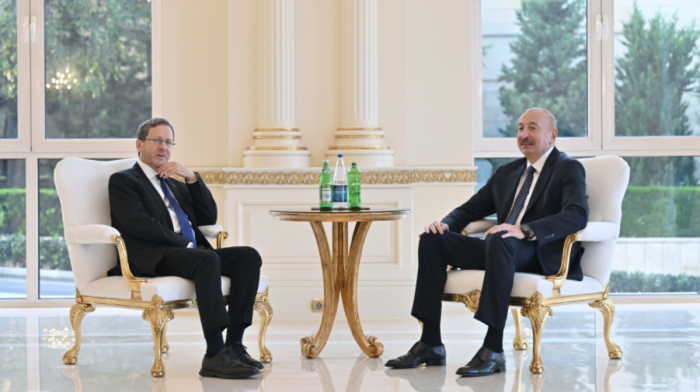
Speaking to Anewz on Tuesday, Zulfikar said, “This is the first official visit of the Azerbaijani President to Slovakia,” noting that the relationship has gained momentum since both sides signed a strategic partnership declaration.
Azerbaijan’s first gas delivery to Slovakia, which brought the number of European importers to fourteen, has added practical depth to that cooperation.
The visit also exposed a wider agenda. The two presidents, she says, indicated that relations had reached a high point, extending into defence cooperation.
Zulfikar notes that Slovakia signalled it was “not only ready to sell weapons to Azerbaijan” but also prepared “to cooperate with Azerbaijan and sell it to third countries”.
From her perspective, both countries are responding to broader shifts in Europe’s political and energy landscape. “Azerbaijan is seeking to be deeply in Central Europe,” she says, while Slovakia is looking for “a stable and diversified partnership” at a time when the European Union continues to adjust its energy strategy.
In that context, she adds, Slovakia sees Azerbaijan as a link stretching into the South Caucasus, Central Asia and Türkiye.
As the discussion turns to the Middle Corridor, Zulfikar frames Slovakia’s interest as part of an effort to widen strategic options beyond traditional Western European channels.
“Slovakia is trying to take part in this Middle Corridor because it looks for diversifying its policy, its strategy, its energy supply,” she says.
The challenge, she notes, may come from the need to navigate established expectations inside the European Union.
She describes these as reflecting “the European Union’s traditional policy”, which often favours continuity within its own frameworks.
Zulfikar also points to changes in Azerbaijan’s regional standing. She says the country has gained visibility following the restoration of control over its territories and notes that discussions with Armenia have advanced.
The two sides, she says, are “very close to a peace agreement more than ever”. With the OSCE Minsk Group no longer active, she argues that one long-standing element of the negotiation structure has fallen away.
Looking ahead, she frames the Azerbaijan-Slovakia dynamic as part of a broader pattern of countries reassessing their partners and strategic links. Slovakia, she says, occupies a bridging role within the European Union and Central Europe, while Azerbaijan connects Europe to the South Caucasus and neighbouring regions.
She concludes that the developing partnership “will be very fruitful to both countries”, offering scope for deeper cooperation in trade, investment and connectivity.








What is your opinion on this topic?
Leave the first comment