Critical minerals: the new arena of U.S.–China competition
The U.S. and China are locked in a growing struggle over critical minerals, the materials that power everything from electric vehicles and microchips ...
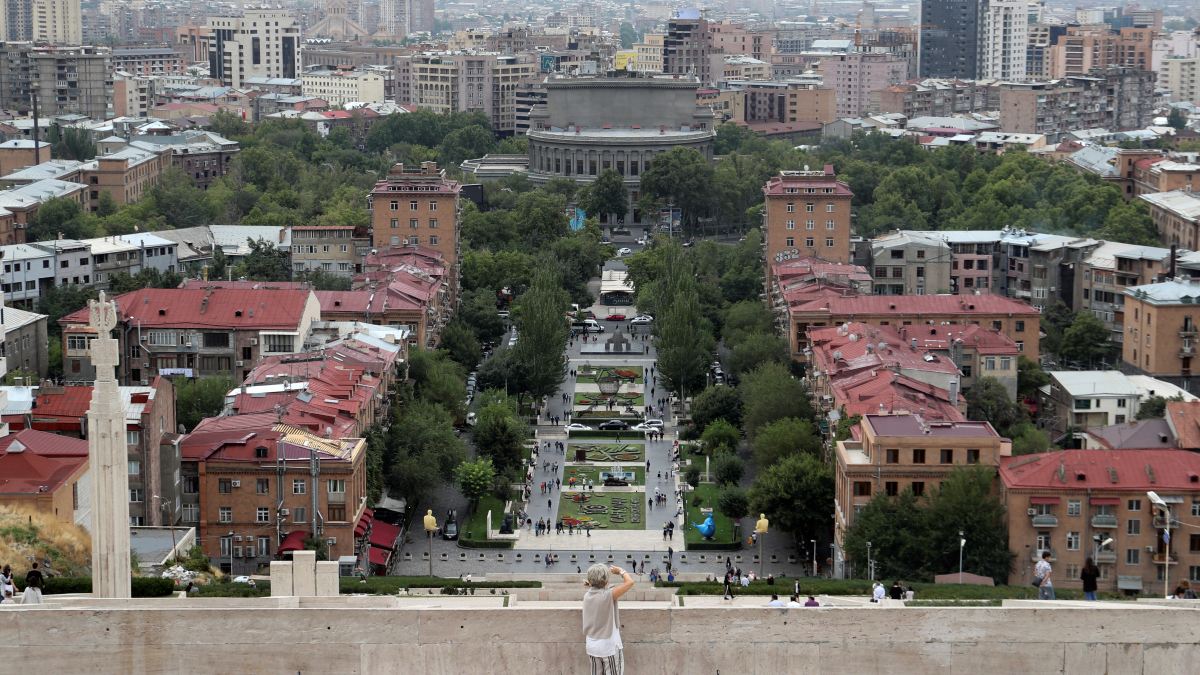
Armenia will offer Azerbaijani as an optional subject for 10-12th grade students in three schools from the 2025/2026 academic year as part of a state programme to develop foreign and regional languages.
Armenia’s Ministry of Education, Science, Culture and Sport will from the 2025/2026 academic year pilot Azerbaijani language teaching in three schools under a government programme aimed at broadening pupils’ access to the languages of neighbouring countries.
The initiative is presented as part of wider efforts to modernise curricula, expand regional studies and give senior students practical language skills that could be used in future education or employment.
According to the ministry’s framework, Azerbaijani will be taught only on a voluntary basis and only to pupils in grades 10 to 12. Schools will be allowed to open groups if there is both student demand and qualified teaching staff.
Education officials have underlined that the scope of the programme will depend directly on whether suitable teachers are available, which means the number of schools and groups could change once the project starts.
The measure is included in Armenia’s current state plan on the development of foreign and regional languages, which promotes greater exposure to the languages of the South Caucasus and wider region.
By adding Azerbaijani to the list of offered languages, Yerevan is signalling that it wants schoolchildren to have more flexible learning options and to understand the linguistic environment of the region more fully.
At this stage the programme is limited to three schools, based on the announcement cited by Armenian media, although in earlier years officials had mentioned Azerbaijani being taught in a slightly higher number of institutions. That suggests the figure may be adjusted as the ministry finalises staffing and curriculum details.
For now, the ministry will coordinate teacher selection, teaching materials and oversight to ensure that the new subject is in line with national education standards.

Rivers and reservoirs across Spain and Portugal were on the verge of overflowing on Wednesday as a new weather front pounded the Iberian peninsula, compounding damage from last week's Storm Kristin.
Iran’s Islamic Revolutionary Guard Corps (IRGC) unveiled a new underground ballistic missile base on Wednesday (4 February), just over a day before the start of mediated nuclear negotiations with the United States, slated for Friday in Oman.
Morocco has evacuated more than 100,000 people from four provinces after heavy rainfall triggered flash floods across several northern regions, the Interior Ministry said on Wednesday.
A second group of Palestinians receiving medical treatment arrived in Egypt from Gaza via the Rafah border crossing on Tuesday (3 February).
The World Health Organization has added the Nipah virus to its list of the world’s top 10 priority diseases, alongside COVID-19 and the Zika virus, warning that its epidemic potential highlights the global risk posed by fast-spreading outbreaks.
Georgia and the United States have held a rare high-level meeting in Washington, reopening cautious discussion about relations after years of political stagnation.
Using art as a quiet alarm, a new exhibition in Baku is drawing attention to endangered wildlife and the need for environmental responsibility.
The United States and Iran are set to hold nuclear talks in Oman on Friday after Tehran requested a change of venue and a strictly bilateral, nuclear-focused format, a move that is fuelling questions about Iran’s negotiating strategy.
Iran’s Islamic Revolutionary Guard Corps (IRGC) unveiled a new underground ballistic missile base on Wednesday (4 February), just over a day before the start of mediated nuclear negotiations with the United States, slated for Friday in Oman.
The joint awarding of the Zayed Award for Human Fraternity to Azerbaijani President Ilham Aliyev and Armenian Prime Minister Nikol Pashinyan in Abu Dhabi on 4 February underscores a shared commitment to peace and reconciliation, political analyst Fuad Karimli told AnewZ.
You can download the AnewZ application from Play Store and the App Store.
What is your opinion on this topic?
Leave the first comment