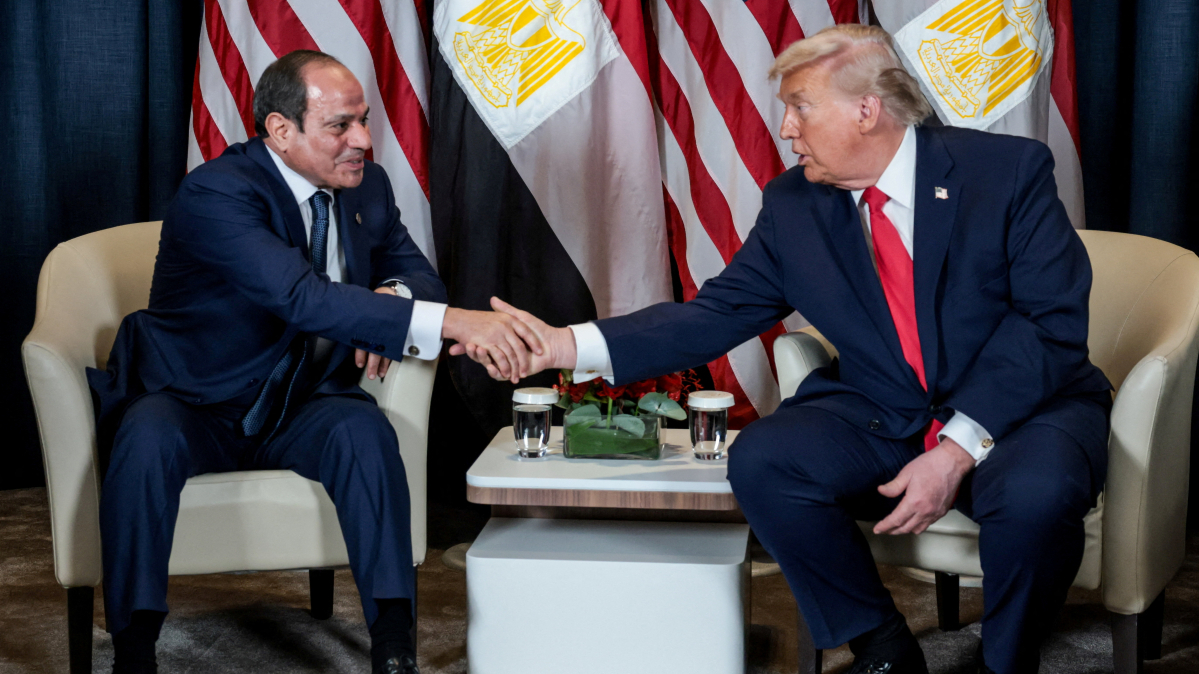
Egypt’s President Abdel Fattah al-Sisi on Monday urged U.S. President Donald Trump to intervene in the escalating Gulf conflict, warning that only he could prevent it from spreading further.
"I tell President Trump: nobody can stop the war in our region in the Gulf but you," Sisi said at the Egypt Energy Show 2026 conference in Cairo. "Please, Mr. President, please. Please help us stop the war. You are capable of doing so."
Speaking alongside Cypriot President Nikos Christodoulides to the press, Sisi framed his appeal as a call for humanity and peace. "I speak to you in the name of humanity and in the name of everyone who loves peace - and you, Mr President, are among those who love peace," he said.
Effects on global economy
Sisi warned that the conflict could trigger severe economic shocks. “I fear that targeting energy facilities, whether production sites or refineries, will have very serious repercussions for the global economy and fuel prices,” he told the conference. He added that market analysts had warned “the price of a barrel of oil could reach more than $200, and this is not an exaggeration.”
He also cautioned about the potential fallout for global food supplies, pointing to disruptions in fertiliser exports. “Wealthy countries might be able to absorb this, but for middle-income and fragile economies it could have a very, very severe impact on their stability,” Sisi said.
Egypt has long received U.S. military aid and support from wealthy Gulf states. The country has condemned Iranian attacks on Gulf Arab states and pushed diplomatic efforts to avoid a wider regional war. Sisi credited Trump with helping end the war in Gaza, noting that he had previously told the U.S. president that only he could bring peace ahead of the ceasefire in Sharm el-Sheikh in November.
The appeal comes amid heightened tensions in the Gulf, with Iran’s recent threats against energy facilities and the closure of the Strait of Hormuz - a key oil route handling around a fifth of global supplies. Addressing the conference virtually, Gulf Cooperation Council Secretary-General Jasem Mohamed Albudaiwi described Iranian actions as a threat to the world.
"The brutal Iranian threats against energy facilities and the closure of the Strait of Hormuz constitute not only a blatant violation of international law but also a direct threat to global energy," he said.
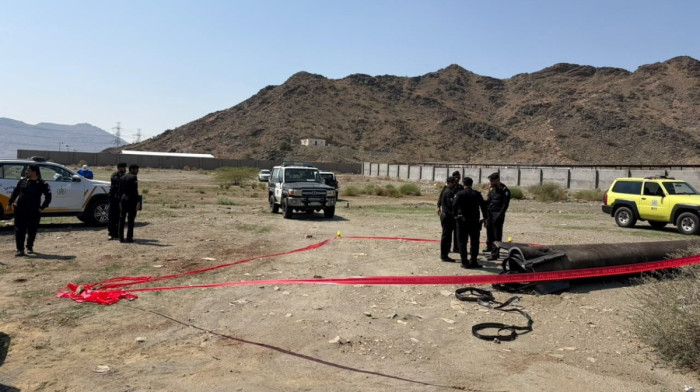
GCC member states - Saudi Arabia, the United Arab Emirates, Qatar, Kuwait, Oman and Bahrain - have faced drone and missile attacks in recent weeks, further heightening fears of regional instability.
Sisi’s remarks came shortly before Trump threatened strikes on Iran’s electricity plants and Kharg Island, the country’s main oil export hub.










What is your opinion on this topic?
Leave the first comment