Iran warned it would strike energy and water infrastructure across the Gulf if U.S. President Donald Trump follows through on his threat to attack its electricity grid, raising fears of mass disruption in a region heavily dependent on desalination for drinking water.
"If Iran’s fuel and energy infrastructure is attacked by the enemy, all energy infrastructure, as well as information technology...and water desalination facilities, belonging to the U.S. and the regime in the region will be targeted pursuant to previous warnings,” Iranian military spokesman Ebrahim Zolfaqari said, according to state media.
Also Iran's Parliament Speaker Mohammad Baqer Qalibaf doubled down, writing on X that critical infrastructure and energy facilities in the Middle East could be "irreversibly destroyed" should Iranian power plants be attacked.
Trump set a Monday deadline of around 7:45 p.m. EDT (2345 GMT), warning late on Saturday that the United States would strike Iran’s power plants unless Tehran fully reopened the Strait of Hormuz within 48 hours.
President Trump's warning came less than a day after he signalled the United States might be considering winding down the conflict, even as U.S. Marines and heavy landing craft were heading to the region.
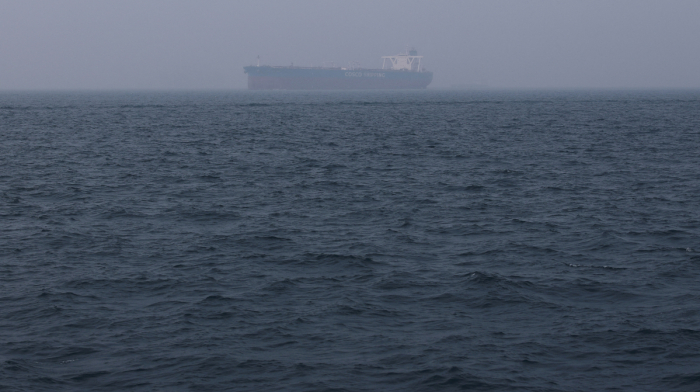
Strait of Hormuz
Iran's powerful Revolutionary Guards said it would also mean the shipping lane where a fifth of global oil and liquefied natural gas normally transits along Iran's southern coast would remain shut.
"The Strait of Hormuz will be completely closed and will not be opened until our destroyed power plants are rebuilt," the Guards said in a statement.
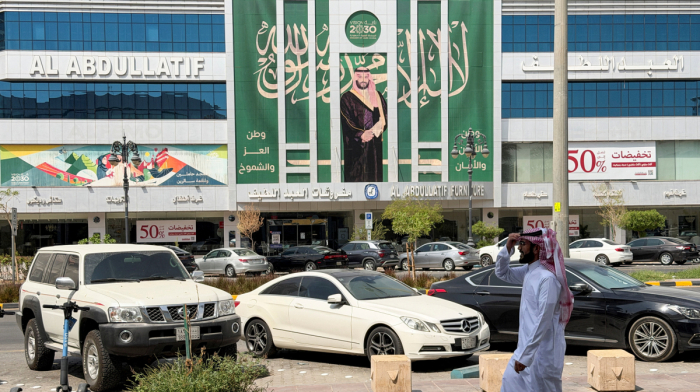
Missiles launched towards Riyadh on Monday
The Saudi defence ministry said early Monday two ballsitic missiles had been launched towards Riyadh. One missile was intercepted while the other fell in an unhabited area.
'Ticking time bomb of elevated uncertainty'
"President Trump's threat has now placed a 48-hour ticking time bomb of elevated uncertainty over markets," said IG market analyst Tony Sycamore, who expects stock markets to fall when they reopen on Monday.
Iranian attacks have effectively closed the Strait of Hormuz, causing the worst oil crisis since the 1970s. Its near-closure sent European gas prices surging as much as 35% last week.
"If Iran doesn't FULLY OPEN, WITHOUT THREAT, the Strait of Hormuz, within 48 HOURS from this exact point in time, the United States of America will hit and obliterate their various POWER PLANTS, STARTING WITH THE BIGGEST ONE FIRST!" Trump posted on social media around 7:45 p.m. EDT (2345 GMT) on Saturday.
Iranian media quoted the country's representative to the International Maritime Organisation as saying the strait remains open to all shipping except vessels linked to "Iran's enemies".
Ali Mousavi said passage through the waterway was possible by coordinating security and safety arrangements with Tehran.
Ship-tracking data shows some vessels, such as Indian-flagged ships and a Pakistani oil tanker, have negotiated safe passage through the strait.
Wider impact
While attacks on electricity could hurt Iran, they could be catastrophic for its Gulf neighbours, which consume around five times as much power per capita.
Electricity makes their gleaming desert cities habitable, in part by powering the desalination plants that produce 100% of the water consumed in Bahrain and Qatar. Such plants use seawater to meet more than 80% of drinking water needs in the United Arab Emirates, and 50% of the water supply in Saudi Arabia.
The prospect of tit-for-tat strikes on civilian infrastructure further unsettled oil markets, with prices opening choppy in Asia trading.
After more than three weeks of heavy U.S. and Israeli bombardment that officials say has sharply reduced Iran’s missile capabilities, Tehran has continued to demonstrate its ability to strike back.
Attacks in Tel Aviv and West Bank
The Israeli military said early Monday it had begun a wide-scale wave of strikes targeting Iranian infrastructure in Tehran.
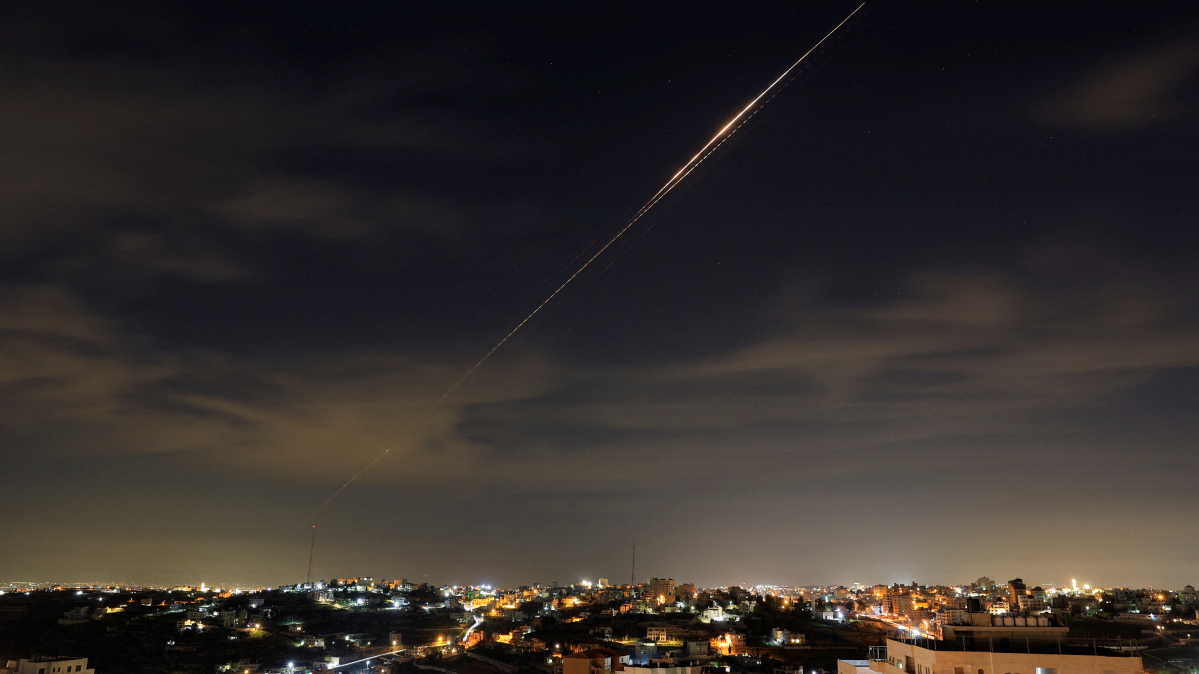
The strikes come after air raid sirens sounded across parts of northern and central Israel on Sunday, including in Tel Aviv, and the West Bank overnight, warning of incoming missiles from Iran.
On Sunday, Iranian strikes on two southern Israeli towns injured dozens in what an Israeli hospital described as a major casualty event. The towns were located close to Israel's secretive nuclear reactor and a number of military installations, including Nevatim Air Base, one of the country's largest.
Attacks on Iran
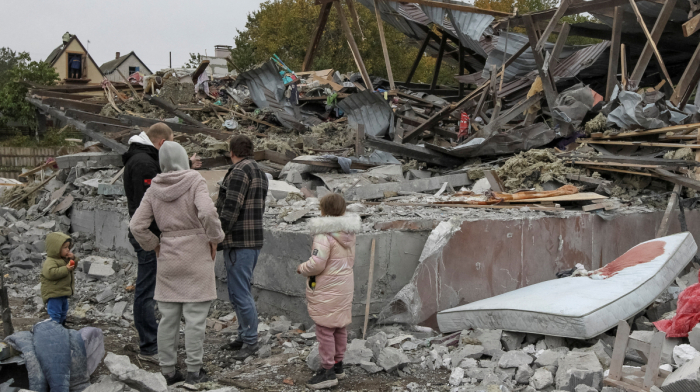
Iranian news agencies said at least one child was killed and several people were injured in the bombing of a residential area in western Khorramabad city.
A residential neighbourhood in the northwestern city of Urmia was damaged by an air strike, Iranian news agencies reported. Iranian Red Crescent rescuers were shown in a video searching for survivors.
There were no immediate reports of casualties.
'Weeks more fighting'
The war has been taking place alongside a confrontation on a separate front between Israel and Lebanon's Hezbollah, backed by Iran.
Israel said on Sunday its troops had raided a number of the armed group's sites in southern Lebanon.
Israeli military spokesperson Brigadier General Effie Defrin told reporters Israel expects "weeks more of fighting against Iran and Hezbollah."
Hezbollah said it had attacked several border areas in northern Israel. Israeli emergency services said one person was killed in a kibbutz near the border. Israel later said it was checking whether the death was caused by Israeli fire.
Hezbollah has fired hundreds of rockets at Israel since it entered the regional war on 2 March, prompting an Israeli offensive that has killed more than 1,000 people in Lebanon.
More than 2,000 people have been killed during the war the U.S. and Israel launched on 28 February, which has upended markets, spiked fuel costs, fuelled global inflation fears and convulsed the postwar Western alliance.












What is your opinion on this topic?
Leave the first comment