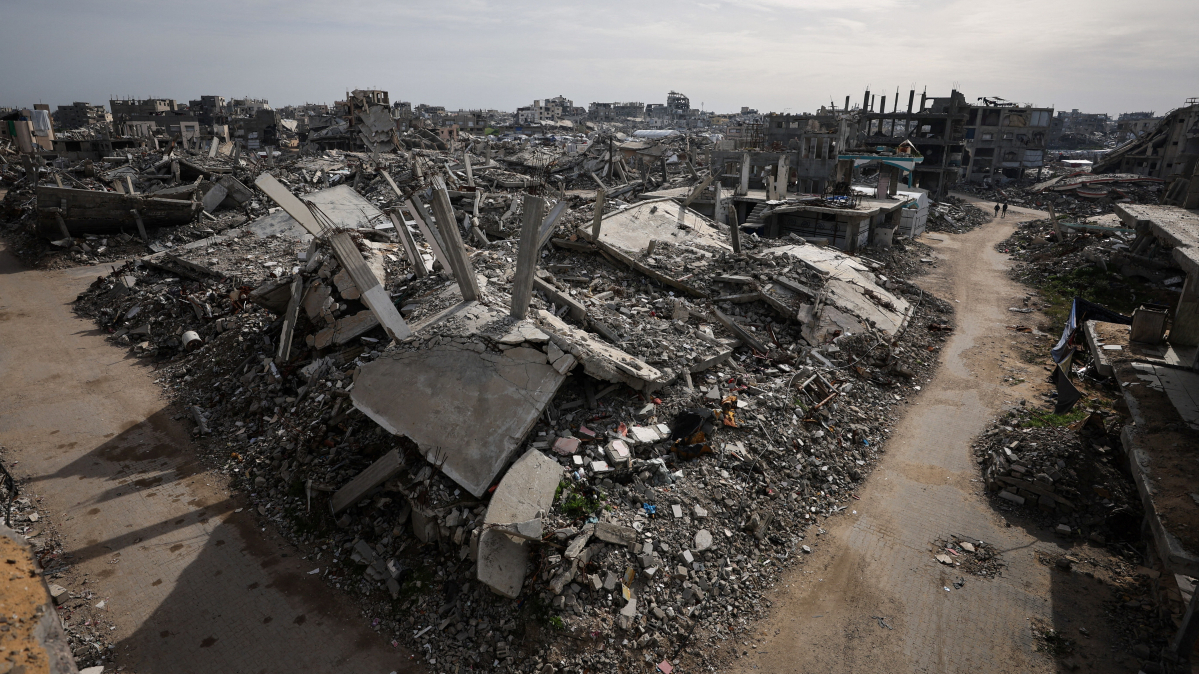
The United Nations Development Programme (UNDP) has warned that clearing the vast of rubble in Gaza could take up to seven years at the current pace, as the overwhelming majority of residents continue to live in what it describes as extremely dangerous conditions.
Speaking during a virtual briefing from Jerusalem following a recent visit to the Gaza Strip, UNDP chief Alexander De Croo said the humanitarian situation was the worst he had witnessed in his years of development work.
“This is the worst living conditions that I have ever seen, extremely painful conditions to live in,” De Croo said, adding that “90% of the people of Gaza today live in the middle of that rubble, which is extremely dangerous.”
He said UNDP’s recovery efforts are focused on three main priorities, beginning with debris and solid waste removal.
“Rubble removal, we have done approximately 0.5% of the total,” De Croo said. “At the current pace, it will take us seven years to remove all the rubble.”
He stressed that greater authority and capacity would be needed to accelerate debris clearance and recycling operations.
Temporary housing is the second priority, he said, noting that the vast majority of residents are living in makeshift shelters.
“90% of the population lives in what you could not even call tents. I mean, this is very, very rudimentary tents,” De Croo said.
The UNDP has so far built 500 recovery housing units and has 4,000 ready, but the needs far exceed available supply. Between 200,000 and 300,000 units are required to provide people with better living conditions, he added.
The third focus area is reviving Gaza’s private sector, much of which has been in hibernation. Recovery programmes include limited investment initiatives and cash-for-work schemes aimed at helping businesses resume operations.
To expand assistance, De Croo said the UNDP’s “one big ask to the Israeli authorities” was for greater access to allow the entry of materials, housing units and support for private enterprises. He added that Israel’s alleged security concerns should not prevent increased access for UNDP, other UN agencies and international non-governmental organisations (NGOs).
A U.S.-backed ceasefire has been in place in Gaza since 10 October, halting Israel’s two-year war, which has killed more than 72,000 people, mostly women and children, and injured more than 171,000 others since October 2023 according to Gaza's health ministry.
Authorities also said Israeli forces have committed hundreds of violations since the ceasefire took effect, through shelling and gunfire, killing 603 Palestinians and injuring 1,618 others.
Israeli authorities said that at least 4 soldiers have been killed since the ceasefire began last October.

















What is your opinion on this topic?
Leave the first comment