For many Palestinians, the holy month of Ramadan is being observed amid hunger, displacement and uncertainty. Families are relying on humanitarian aid to uphold faith and dignity, even as violence, poverty and restrictions shape daily life.
The Muslim holy month of Ramadan is expected to begin on February 18 or 19, depending on the sighting of the crescent moon.
During the 29 or 30-day month, Muslims observing the fast abstain from food and drink from dawn to sunset, typically for 12 to 15 hours, depending on their location.
Zahra Abdel Raouf, a mother and grandmother in Gaza City, recalls the days before war when her large family gathered for iftar, the evening meal that breaks the fast.
“Every year we were together. All my children around me,” she said, “the kids were happy for Ramadan. Not like now.”
After the 2023 conflict, Abdel Raouf’s home was destroyed in bombing. Her family was forced to flee first to schools, then to southern Gaza and eventually to central Wadi Gaza, where they lived in makeshift shelters of wood and nylon sheets. Water had to be carried from afar, food was scarce and work had stopped.
“It is survival with whatever we can afford,” she said.
Today, a nearby World Food Programme-supported hot meals kitchen provides rice, peas, carrots and bulgur wheat directly to her family’s tent. “Thank God, the kitchen saves us,” Abdel Raouf said.
Bread is often insufficient for a family of nine and her children still yearn for meat, but aid allows them to mark the holy month with basic sustenance.
Spirit despite hardship
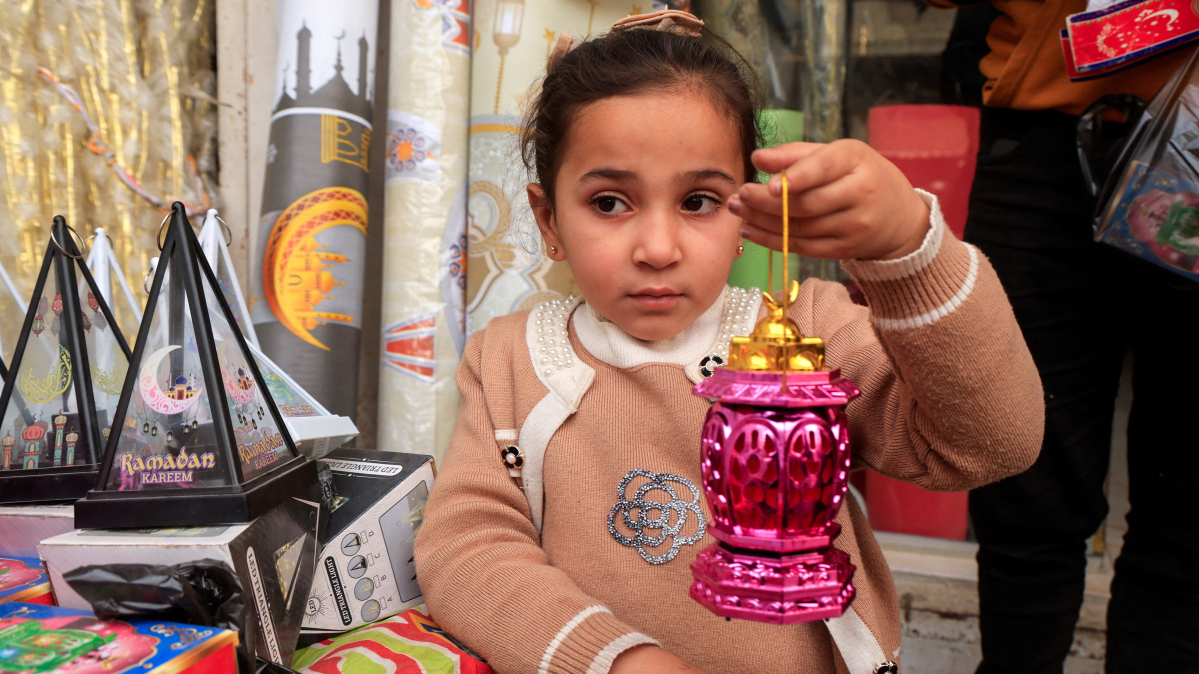
Despite ongoing hardships, Ramadan traditions persist. Palestinians in Gaza have crafted decorations and lanterns from recycled materials, including soda cans, in a bid to preserve the holiday spirit.
Sameh al-Bitar, a spice shop owner in Gaza City, described the scene in the once-bustling Zawiya market.
“We used to decorate our homes, streets and markets. Now everything in Gaza is sad.”
Al-Bitar lost two sons in an airstrike and said this year’s Ramadan will focus on basic religious observance rather than family gatherings and communal iftars.
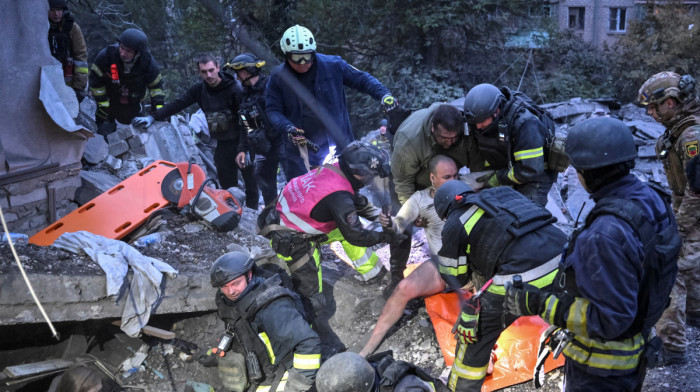
Since the October 2025 ceasefire, Gaza has seen continued violence. Health authorities report 603 Palestinians killed and 1,618 wounded since 10 October, 2025, with a total toll since 2023 exceeding 72,000 deaths and 171,000 injuries.
Residents across Gaza describe a Ramadan marked by restricted movement, heavy security and ongoing hardship, yet families continue to find ways to observe the holy month and maintain faith amid adversity.














What is your opinion on this topic?
Leave the first comment