U.S. and Iran exchange threats - Tuesday, 10 March
Tensions in the region remained high on Tuesday (10 March), as the United States and Iran exchanged increasingly sharp warnings, including thr...
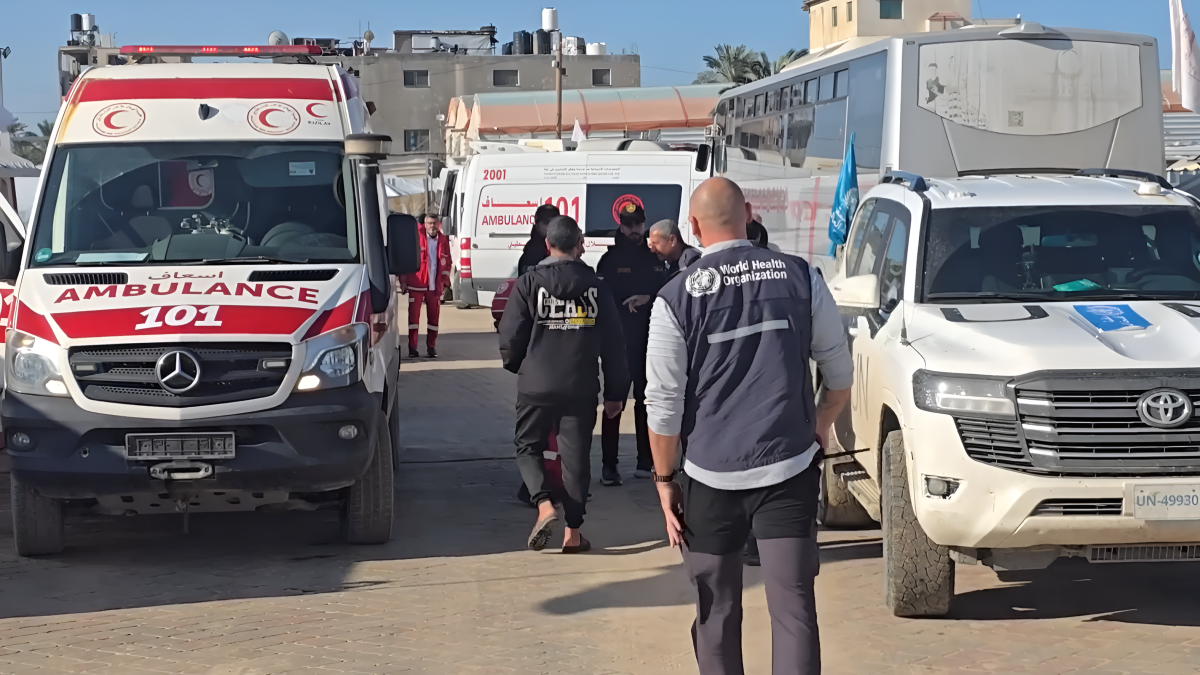
A group of sick and injured Palestinians and their caregivers left Gaza through the Rafah border crossing on Wednesday (25 February) for medical treatment abroad, as limited evacuations continue under tight restrictions.
The crossing was partially reopened on 2 February, but the United Nations reports that only about 260 patients have been evacuated from Gaza so far.
Patients and their companions gathered at a field hospital operated by the Palestine Red Crescent Society in western Khan Younis before boarding buses and ambulances bound for the crossing, which remains subject to strict Israeli controls.
Ongoing Israeli military operations and the collapse of Gaza’s healthcare system have forced the transfer of severely wounded and chronically ill patients outside the besieged enclave for urgent care.
Gaza officials say around 22,000 wounded and chronically ill residents require treatment abroad as the territory’s health system continues to struggle following two years of war. Separate semi-official figures indicate that nearly 80,000 Palestinians have registered to return to Gaza.
Gaza’s Government Media Office said on Thursday that only 1,148 Palestinians have crossed the Rafah border crossing with Egypt since its limited reopening earlier this month, describing the figure as roughly one-third of those expected to travel.
According to the office, 640 people left Gaza and 508 returned between 2-18 February, while 26 others were turned back while trying to leave.
The U.S.-backed ceasefire, in place since 10 October 2025, halted two years of fighting that Gaza authorities say has killed more than 72,000 people, mostly women and children and injured more than 171,000 others since October 2023.
Since the agreement took effect, Gaza’s Health Ministry says Israeli forces have committed hundreds of violations through shelling and gunfire, killing more than 610 Palestinians and injuring over 1,630 others.

Tensions in the region remained high on Tuesday (10 March), as the United States and Iran exchanged increasingly sharp warnings, including threats over the strategic Strait of Hormuz, a critical artery for global oil supplies.
Global oil prices surpassed $119 a barrel on Monday (9 March, 2026), an almost four year high, as the Middle East conflict rumbled on.
China has urged Afghanistan and Pakistan to resolve their dispute through dialogue after Chinese envoy Yue Xiaoyong met Afghan Foreign Minister Amir Khan Muttaqi, as fighting between the two neighbours entered its eleventh day.
Entry and exit across the state border between Azerbaijan and Iran for all types of cargo vehicles, including those in transit, will resume on 9 March, according to a statement by the Cabinet of Ministers of Azerbaijan.
Iran named Mojtaba Khamenei to succeed his father Ali Khamenei as supreme leader on Monday (9 March), signaling that hardliners remain firmly in charge, as the week-old U.S.-Israeli war with Iran pushed oil above $100 a barrel.
Iran and the U.S. exchanged threats on Tuesday, as U.S. Defense Secretary Pete Hegseth warned Tehran to expect the “most intense day" of attacks so far. Meanwhile, Iranian President Masoud Pezeshkian said “anyone who entertains the illusion of destroying Iran knows nothing of history."
The Strait of Hormuz has become a focal point of global concern as tensions rise following the conflict involving Iran, the United States and Israel. Tehran has threatened to block the strategic waterway, raising fears of disruption to global oil shipments and energy markets.
Reports of so-called “acid clouds” moving from Iran towards Central Asia are not supported by scientific data, national hydrometeorological services in Kazakhstan, Uzbekistan and Kyrgyzstan say, adding there is no threat to the region.
A senior delegation from the OSCE Parliamentary Assembly has been holding meetings with Georgian government officials, opposition leaders and security authorities this week, as international observers attempt to gauge the country’s political climate following last year’s contentious elections.
Turkish President Recep Tayyip Erdoğan has told Masoud Pezeshkian, his Iranian counterpart, that violations of Turkish airspace by Iran could not be justified “for any reason whatsoever.”
You can download the AnewZ application from Play Store and the App Store.
What is your opinion on this topic?
Leave the first comment