The United States and international partners have announced billions of dollars in pledges to rebuild Gaza but many Palestinians remain sceptical about whether the funds will translate into tangible improvements for daily life.
At the inaugural meeting of the Board of Peace in Washington on 19 February, U.S. President Donald Trump said nine member states had pledged a combined $7 billion towards Gaza relief and reconstruction. The U.S. itself pledged $10 billion, although details on how the funds would be allocated were not clarified.
Observers emphasise that even these substantial contributions represent only a fraction of the estimated $70 billion believed to be necessary to rebuild infrastructure devastated by more than two years of conflict.
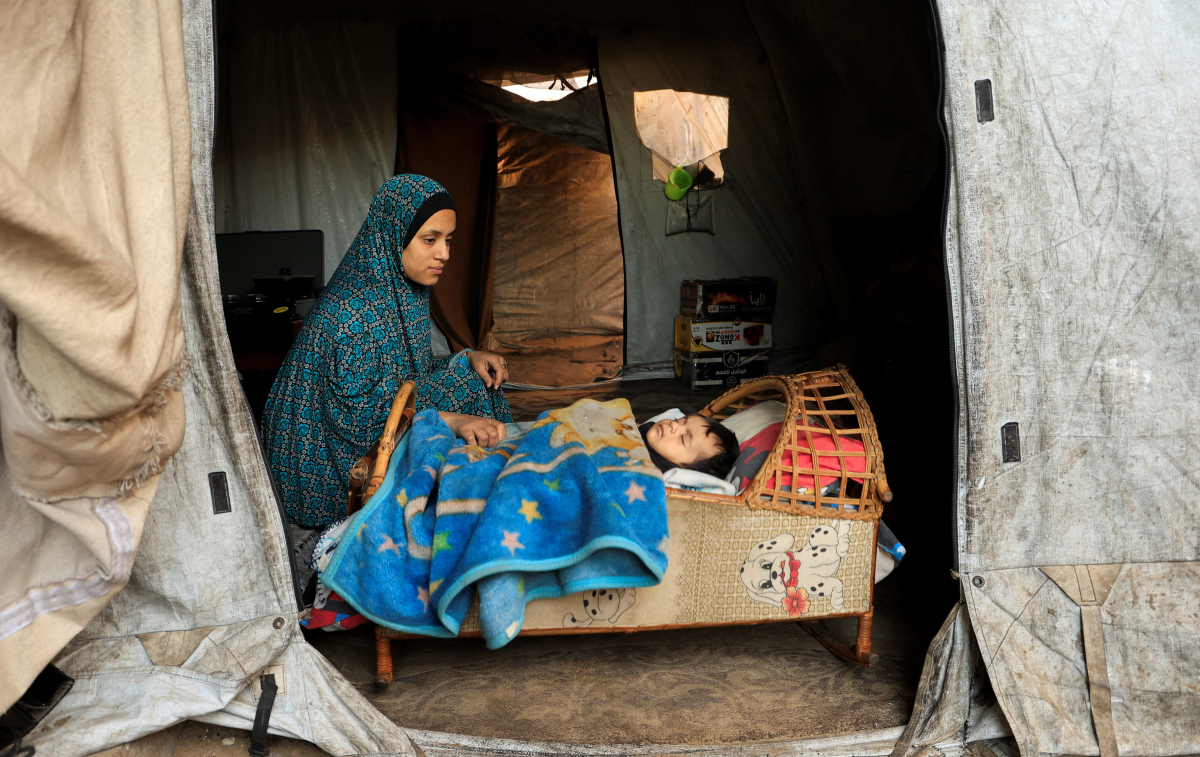
Some of those affected by the war welcome the pledges but are wary of what they will actually deliver.
“We hope that the reconstruction happens quickly and that the money that has been allocated truly goes to the right place and isn’t mismanaged in any way,” said Nael Al‑Nawasrah, a displaced Gazan.
Others expressed deeper doubts about the political motives behind the pledges.
“No, of course I’m not optimistic… it feels pointless. There won’t be any reconstruction. This is clearly part of a plan by the occupation, with the Americans involved,” said Omar Al-Masri, another displaced person, arguing that past reconstruction efforts have often fallen short of expectations.
The Board of Peace was established under the broader framework of Trump’s 20‑point Gaza plan, which helped secure a ceasefire in October 2025.
A key pillar of the board’s agenda is the creation of an international stabilisation force.
The force is intended to be a multinational contingent providing security, supporting demilitarisation and assisting with police training in Gaza. However, its full deployment remains subject to political agreement.
Israeli Prime Minister Benjamin Netanyahu has reiterated that no significant reconstruction will take place until Gaza is demilitarised, tying rebuilding to the dismantling of armed groups.
“We agreed with our friends in the United States: there will be no reconstruction of the Strip before it is demilitarised,” he said, underlining Israel’s security conditions for rebuilding.
As pledges continue to accumulate and strategic conditions are negotiated, Gazans are watching closely to see whether promised reconstruction funds will deliver real progress on the ground.











What is your opinion on this topic?
Leave the first comment