Central Asian forecasters dismiss Iran 'acid cloud' rumours
Reports of so-called “acid clouds” moving from Iran towards Central Asia are not supported by scientif...
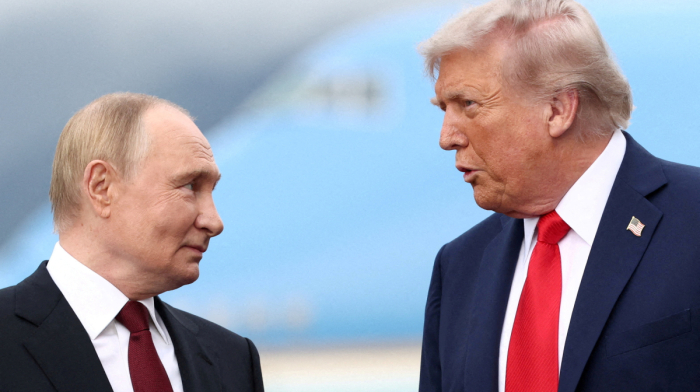
Turkish President Recep Tayyip Erdoğan has had a call with his U.S. counterpart, Donald Trump, to discuss recent developments in northern Syria, where a fragile truce remains in place between Damascus and the Kurdish-led Syrian Democratic Forces (SDF).
According to Turkish state media, the two leaders also discussed Türkiye-U.S. trade relations, especially in the defense industry field.
Shortly after his call with Trump, Erdoğan told reporters that Türkiye would continue taking steps to enhance bilateral cooperation – in multiple areas – with the United States.
He also repeated calls for the full implementation of the ceasefire deal between the SDF and Damascus, stressing that Ankara was “closely following” the situation in coordination with Washington.
Although the SDF is backed by the United States, Türkiye views the group as a terrorist organization due its close ties to the Kurdistan Workers Party, which for decades waged a violent insurgency against the Turkish state.
Earlier this month, Damascus announced the ceasefire deal, which had called for an end of hostilities between Syrian government forces and SDF fighters following several days of fighting.
Ankara and Washington both support the agreement, which also calls for the integration of armed Syrian Kurdish factions – including the SDF – into Syria’s state military apparatus.
Since the truce was announced in mid-January, both sides have accused the other of violating its terms.
Last week, Syrian government forces expelled SDF fighters from the northwestern city of Aleppo while also seizing SDF-held territory, including key oilfields, in the country’s northeast.
Last Friday (23 January), Damascus extended the truce by an additional 15 days to allow U.S. forces deployed in the region transfer imprisoned members of the ISIS terrorist group from SDF-controlled detention centers.
On Tuesday (27 January), Trump also held a phone conversation with Syrian President Ahmed al-Sharaa, after which he told reporters that his administration was “very happy” with the latest developments in Syria.

Mojtaba Khamenei, son of the late Ayatollah Ali Khamenei, is a hardline cleric with strong backing from the Islamic Revolutionary Guard Corps. His rise signals continuity in Tehran's anti-Western policies.
Global oil prices surpassed $119 a barrel on Monday (9 March, 2026), an almost four year high, as the Middle East conflict rumbled on.
China has urged Afghanistan and Pakistan to resolve their dispute through dialogue after Chinese envoy Yue Xiaoyong met Afghan Foreign Minister Amir Khan Muttaqi, as fighting between the two neighbours entered its eleventh day.
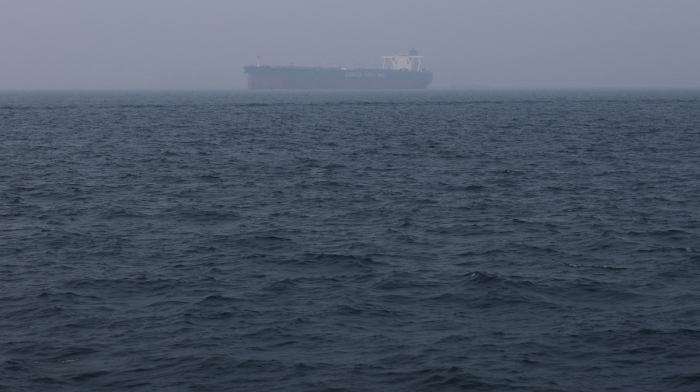
Welcome to our live coverage as the conflict involving Iran enters its 11th day. Tensions in the region remain high as the United States and Iran exchange increasingly sharp warnings over the strategic Strait of Hormuz, a critical artery for global oil supplies.
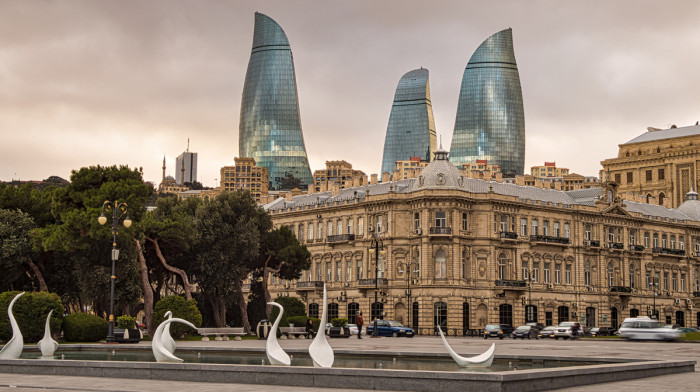
Entry and exit across the state border between Azerbaijan and Iran for all types of cargo vehicles, including those in transit, will resume on 9 March, according to a statement by the Cabinet of Ministers of Azerbaijan.
Reports of so-called “acid clouds” moving from Iran towards Central Asia are not supported by scientific data, national hydrometeorological services in Kazakhstan, Uzbekistan and Kyrgyzstan say, adding there is no threat to the region.
A senior delegation from the OSCE Parliamentary Assembly has been holding meetings with Georgian government officials, opposition leaders and security authorities this week, as international observers attempt to gauge the country’s political climate following last year’s contentious elections.
Turkish President Recep Tayyip Erdoğan has told Masoud Pezeshkian, his Iranian counterpart, that violations of Turkish airspace by Iran could not be justified “for any reason whatsoever.”
The Cabinet of Ministers of Kyrgyzstan has approved a new programme aimed at developing educational courses and training sessions for young parents.
Kazakhstan has evacuated 8,585 citizens from Middle Eastern countries as regional tensions escalate. Authorities are coordinating air and land evacuations while analysts warn the crisis could reshape security and energy risks across the Caspian region.
You can download the AnewZ application from Play Store and the App Store.
What is your opinion on this topic?
Leave the first comment