Iran’s ambassador to Azerbaijan Mojtaba Demirchilou has outlined Tehran’s carefully calibrated positions on Azerbaijan’s relations with Israel and on major regional connectivity projects in an interview with AnewZ.
The ambassador acknowledged Azerbaijan’s sovereign right to determine its foreign partnerships, including its strategic relationship with Israel.
“Naturally, the sovereignty of the Republic of Azerbaijan allows it to establish relations with any side it chooses and this is its legitimate right,” he said.
At the same time, Demirchilou stressed that this principle is inseparable from Iran’s expectation that Azerbaijani territory will not be used in ways that could threaten Iranian security.
“As the highest officials of the Republic of Azerbaijan have stated, they will not allow their territory to be used against Iran. Naturally, we expect this to be the case,” he added.
The ambassador also expressed concern over what he described as attempts by Israeli officials to use visits to Baku as a platform for statements hostile to Iran, reflecting Tehran’s sensitivity not only to military realities but also to diplomatic signalling.
The remarks reveal Iran’s dual-track approach: formally respecting Azerbaijan’s sovereignty while drawing clear political and security red lines around Israel’s regional role.
A similar conditional logic shaped Demirchilou’s comments on regional transportation initiatives, including the TRIPP/Zangazur Corridor.
He said Iran supports projects that enhance economic cooperation, regional connectivity and development.
“Any plan in the field of transportation aims to preserve peace and stability in the region and contribute to economic development, we naturally support it,” he said.
However, Demirchilou repeatedly warned that Iran would oppose any initiative driven by external geopolitical objectives or directed against Iranian interests.
“If there is a plan that contains specific geopolitical objectives and is directed against Iran, then naturally Iran cannot tolerate such a matter,” he said.
When pressed for a clear endorsement of the TRIPP initiative itself, the ambassador reiterated the same formulation without offering a direct yes-or-no answer.
“Regardless of the name, if any plan in the field of transportation aims to preserve peace and stability in the region and contribute to economic development, we naturally support it,” he said.
The repeated ambiguity suggests Tehran’s intent to avoid openly opposing regional connectivity while retaining flexibility to challenge projects it views as strategically threatening.
The interview highlights an Iranian strategy defined less by outright opposition and more by careful qualification.
Tehran signals openness to cooperation and economic integration, but consistently frames its support as conditional, contingent on the absence of geopolitical motives.
For Azerbaijan, the remarks underline the diplomatic balancing act required to advance regional connectivity and strategic partnerships while managing the sensitivities of a neighbouring power whose acceptance remains cautious and closely guarded.
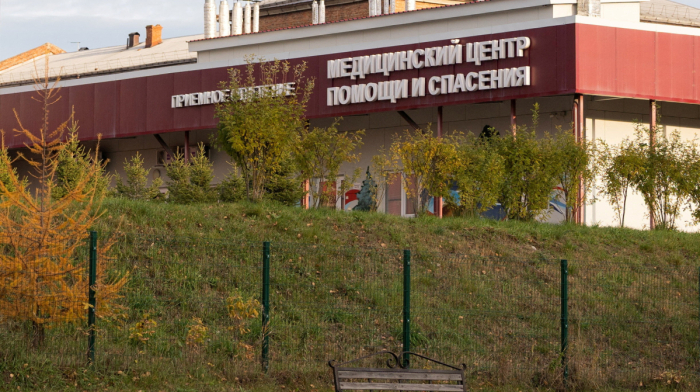
Russia's health watchdog said on Tuesday that no cases of plague had been detected among anyone who had come into contact with a Siberian plague institutelaboratory worker who died last week, and locals said their lives had barely been disrupted.
Russia struck Ukraine overnight in one of the biggest attacks of the conflict, killing at least 19 people, Kyiv's Foreign Ministry said on Wednesday. Around 70 missiles were fired at Ukraine during the attack, as well as drones, the Ministry said.
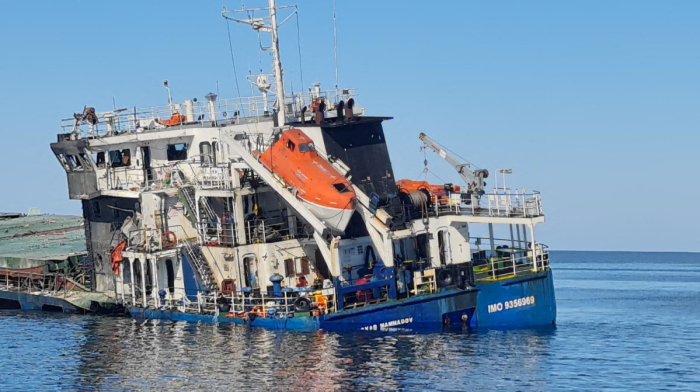
An Azerbaijani citizen died and another is missing after a cargo ship was attacked by a drone in the Black Sea, near the coast of Romania on Monday, 5 October, Baku's Foreign Ministry has said.
A large Ukrainian drone attack on Moscow and the surrounding region has killed two people, damaged homes and sparked a major fire at a key fuel facility, according to Russian officials and military bloggers.
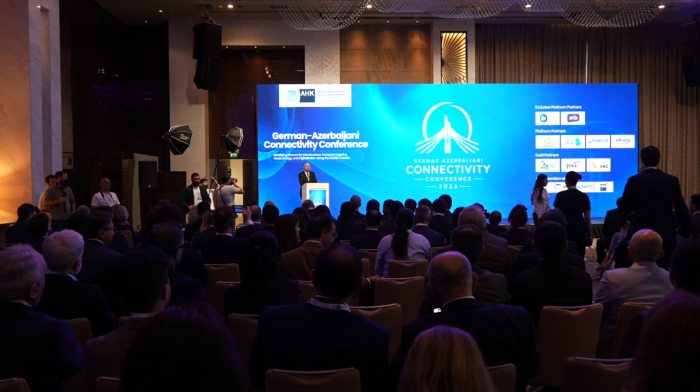
The German-Azerbaijani Connectivity Conference 2026 commenced on 6 October in Baku under the title “Mobilising Finance for Infrastructure, Transport, Logistics, Green Energy, and Digitalisation along the Middle Corridor.”
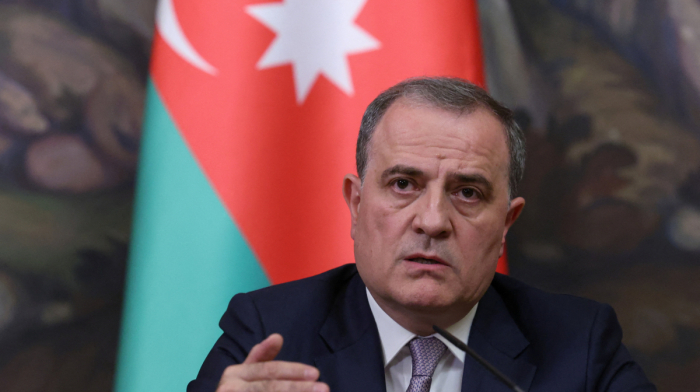
Azerbaijan’s Foreign Minister Jeyhun Bayramov has called for further integration of infrastructure between regional countries to bolster the Middle Corridor trade and logistics network.
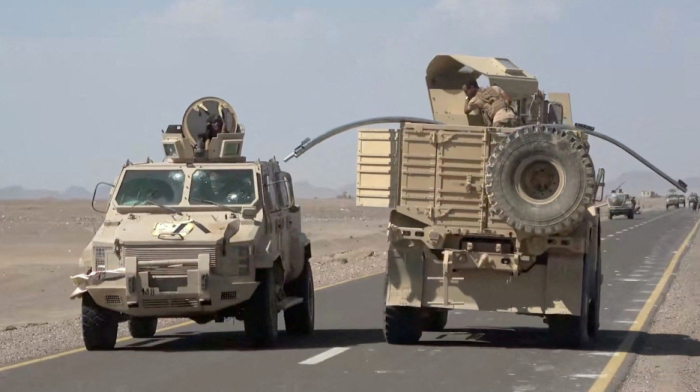
The Saudi-led coalition says it has carried out a series of military operations against Houthi targets in Yemen after attacks on two Saudi airports left three people dead and dozens injured.
Russian oil company Lukoil plans to expand its activities in Uzbekistan, with potential areas including geological exploration, hydrocarbon development and retail fuel sales. The plans were discussed during a meeting between President Shavkat Mirziyoyev and Lukoil founder Vagit Alekperov.
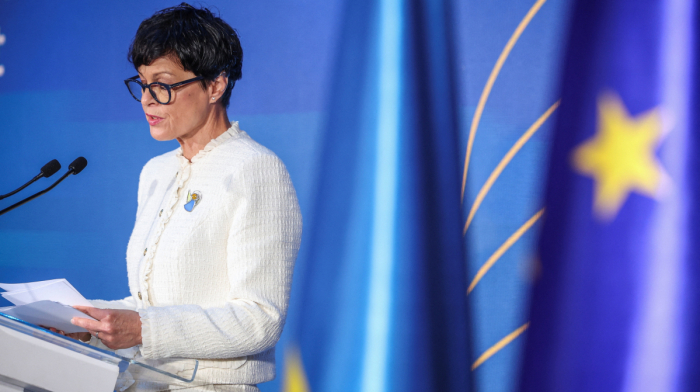
European Commissioner for Enlargement Marta Kos has said Georgia is a candidate country “only on paper,” prompting a rapid response from senior Georgian officials who rejected the characterisation and criticised Brussels.
United Nations Development Programme Administrator Alexander De Croo has warned the international community against turning its back on Afghanistan, pointing to a sharp fall in opium production while raising serious concerns about restrictions on women and girls.
Download the AnewZ app
You can download the AnewZ application from Play Store and the App Store.














What is your opinion on this topic?
Leave the first comment