As Iran and the United States continue with nuclear talks in Geneva on Thursday, Tehran’s extensive ballistic missile programme remains a central point of contention.
Iranian officials insist their missile arsenal is purely defensive. Western powers, however, regard it as both a potential delivery system for nuclear weapons and a destabilising force across the Middle East.
What are ballistic missiles - and why do they matter?
Ballistic missiles are rocket-propelled weapons guided during their initial ascent before following a largely unpowered, free-fall trajectory towards their target. They can carry conventional explosives and, potentially, chemical, biological or nuclear warheads.
Their strategic importance lies in their range, payload capacity and speed. For Western policymakers, Iran’s ballistic missile capability presents two primary concerns: its conventional military reach across the Middle East and its theoretical suitability as a nuclear delivery platform.
The scale of Iran’s missile arsenal
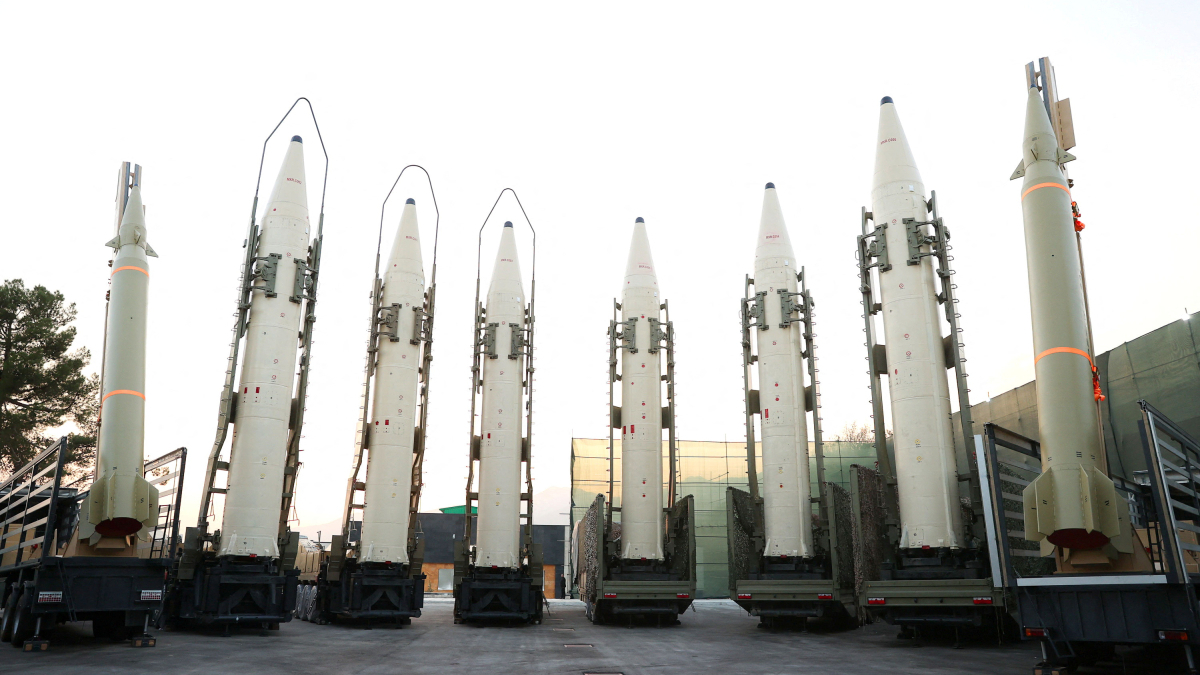
According to the U.S. Office of the Director of National Intelligence, Iran maintains the largest stockpile of ballistic missiles in the Middle East. Launch sites and storage facilities are concentrated around Tehran and in fortified underground complexes - often referred to domestically as “missile cities” - in provinces such as Kermanshah and Semnan, as well as near the Gulf coast.
Tehran says it has imposed a 2,000-kilometre limit on missile range, arguing this is sufficient for national defence. That radius places Israel and U.S. bases across the region well within reach.
Missile types, range and strike capability
Iran’s arsenal spans short-, medium- and long-range systems capable of striking targets across the region.
Among its longer-range missiles are the Sejil, Ghadr and Khorramshahr, each with reported ranges of up to 2,000 km. The Emad and Shahab-3 provide intermediate-range capability, while shorter-range systems such as the Zolfaghar and Shahab-1 are designed for closer regional targets.
Iranian media have also highlighted newer models, including a Sejil variant said to exceed speeds of 17,000 km/h and the domestically produced Haj Qasem missile, which reportedly has a range of 1,400 km.
Western analysts say much of the programme has been developed through reverse engineering of North Korean and Russian designs, with reported Chinese technical assistance. Over time, Iran has improved guidance systems, airframe materials and propulsion technology to extend range and enhance accuracy.
How far can Iran’s missiles reach?
With ranges of up to 2,000 km - and some variants reportedly under development exceeding that - Iran’s ballistic missiles can reach Israel, the Gulf states, parts of south-eastern Europe and numerous U.S. military installations across the region.
This reach underpins Tehran’s deterrence posture but also fuels concerns among its adversaries about escalation risks in any future conflict.
Operational use: When has Iran deployed its missiles?
Iran has demonstrated a willingness to use ballistic missiles in live conflict.
During the 12-day war with Israel in June 2025, Tehran launched multiple ballistic missiles, causing casualties and significant damage. The Institute for the Study of War assessed that Israeli forces likely destroyed roughly a third of Iran’s missile launchers during the fighting, although Iranian officials say the programme has since recovered.
Iran also fired missiles at the U.S. Al Udeid air base in Qatar following American involvement in the conflict, giving advance warning that resulted in no casualties.
Previous uses include strikes on Kurdish targets in Iraq, Islamic State positions in Syria, militant bases in Pakistan, and U.S.-led forces in Iraq in 2020 following the killing of Major General Qassem Soleimani.
Underground ‘missile cities’ and survivability strategy
A defining feature of Iran’s missile doctrine is survivability. Over the past decade, Tehran has invested heavily in underground depots equipped with transport, storage and launch systems designed to shield missiles from pre-emptive strikes.
In 2020, Iran announced it had conducted its first ballistic missile launch from an underground facility, signalling confidence in its hardened infrastructure.
Analysts argue that this network complicates adversaries’ targeting calculations and strengthens Iran’s second-strike capability.
Hypersonic development and technological advances
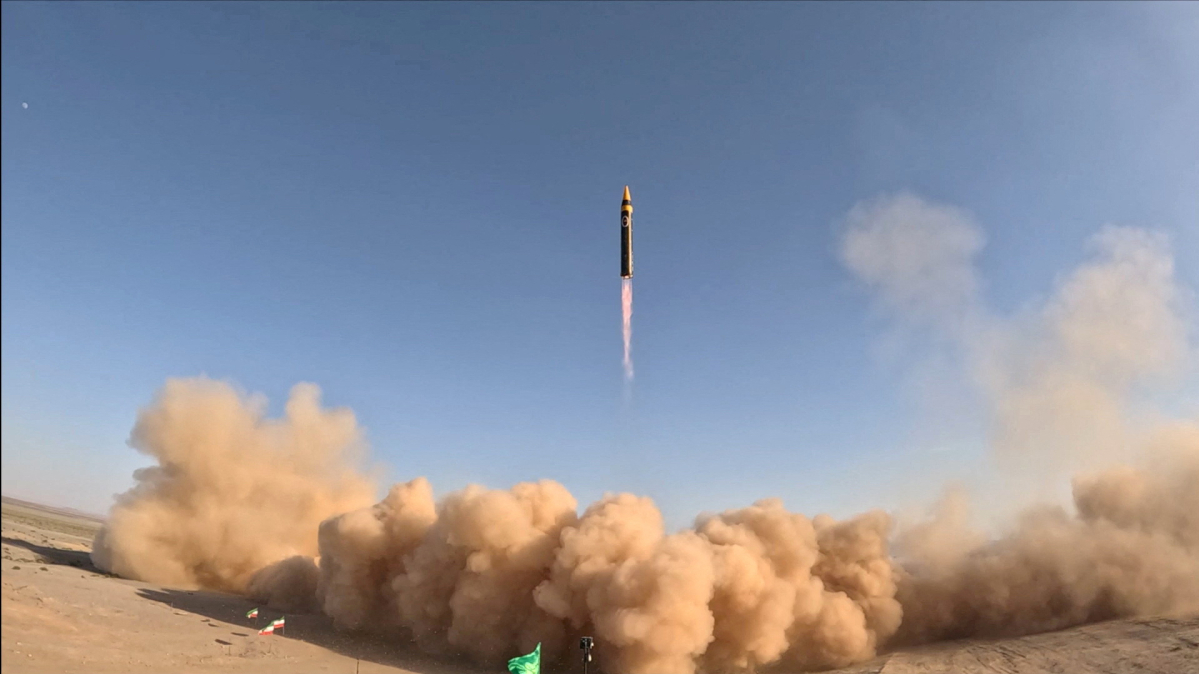
In 2023, Iran unveiled what it described as its first domestically produced hypersonic ballistic missile. Hypersonic weapons travel at speeds of at least five times the speed of sound and can manoeuvre mid-flight, making them significantly harder to intercept.
Experts caution that while details remain limited, such developments suggest a strategic focus on overcoming advanced missile defence systems deployed by Israel and Gulf states.
Deterrence doctrine and regional power projection
Tehran frames its missile programme as a necessary deterrent against the United States, Israel and regional rivals. Lacking a modern air force comparable to those of its adversaries, Iran relies on ballistic missiles as an asymmetric equaliser.
Critics counter that the scale and sophistication of the arsenal heighten regional insecurity, blur the line between conventional and strategic capability, and complicate broader non-proliferation efforts.
Why the missile programme matters now
As negotiations resume in Geneva, Western officials argue that limiting Iran’s nuclear activities without addressing its missile capability would leave a critical gap in regional security arrangements.
For Tehran, however, the missile programme is regarded as non-negotiable and central to national defence.
That fundamental divide ensures that Iran’s ballistic missile capabilities - as much as its nuclear ambitions - will shape the outcome of the talks.





















What is your opinion on this topic?
Leave the first comment