live Iran claims control over the Strait of Hormuz
The Strait of Hormuz is "under Iran's control and management", the head of Iran's Basij paramilitary unit, Hossein Taeb, said on ...
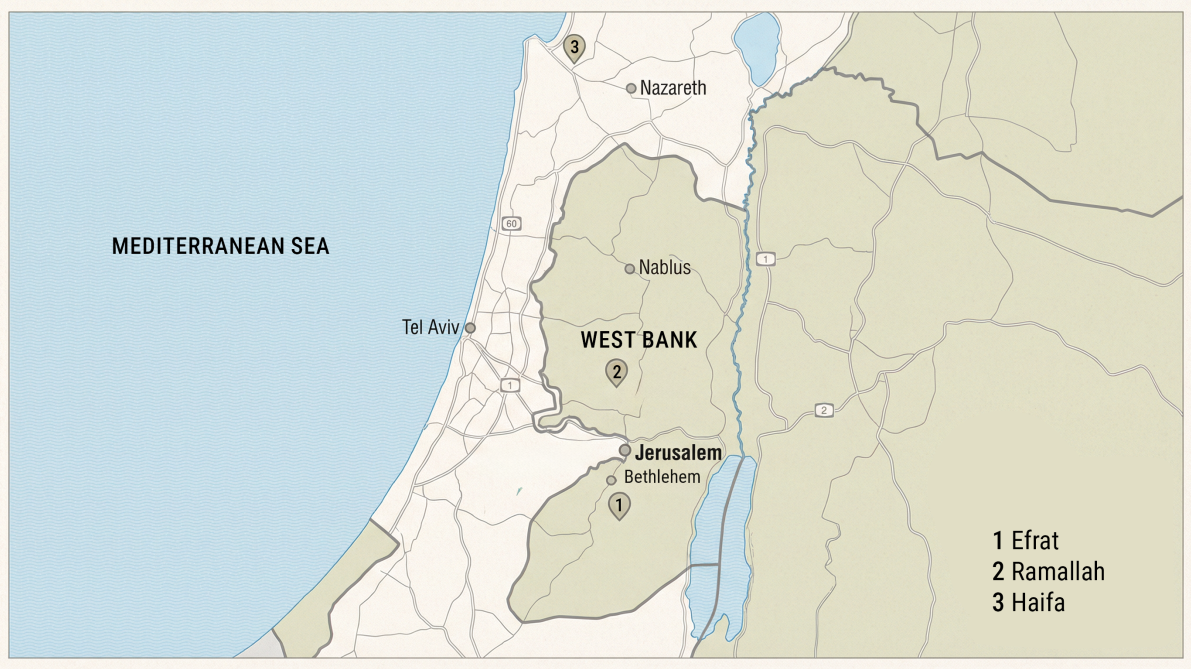
The U.S. Embassy in Jerusalem says it will provide on-site passport and consular services to settlers based in the West Bank on Friday 27 February. The move marks the first time American consular officials have offered such services to settlers, U.S. officials said on Tuesday.

The services will be in the settlement of Efrat, south of Bethlehem, where many American-Israeli immigrants live, according to officials in a post on X. Similar services are planned for Ramallah, and cities outside of the West Bank, including Haifa.
Last week, Israel’s cabinet approved steps to expand its control over the West Bank making it easier for settlers to seize land, a move Palestinians described as a “de facto annexation.”
While U.S. President Donald Trump opposes formal annexation despite being a staunch supporter of Israel, his administration has taken no steps to curb settlement expansion, which rights groups say has increased since he took office.
Most of the West Bank remains under Israeli military control, with limited Palestinian self-rule in areas overseen by the Palestinian Authority.
Israel disputes claims that the settlements are illegal under international law. Prime Minister Benjamin Netanyahu’s right-wing coalition, which draws significant support from settlement communities, includes members advocating for the annexation of land captured in the 1967 Middle East war.
More than 500,000 Israeli settlers live in the West Bank, which is also home to three million Palestinians.
Palestinians have long sought the West Bank for a future independent state, alongside Gaza and East Jerusalem.
The United Nations designates the West Bank as occupied because it was captured by Israeli forces during a six-day war in 1967 and it remains under its authority. The West Bank is also subject to the fourth Geneva Convention which governs the treatment of civilians in occupied terriroties.
The UN Security Council states that the establishment of Israeli settlers in the West Bank is a "flagrant violation of international law" and has no legal validity.
Israel strongly disputes these claims.

Disruption in the Strait of Hormuz has increased the strategic importance of Bab al-Mandab, raising fears that instability in both waterways could trigger a wider global energy and trade crisis.
Iran and the United States remain at loggerheads over efforts to agree a permanent end to the war in the Gulf, according to a senior Iranian source who said there had been no progress in talks to revive the interim deal agreed in June and define a timeframe to implement it.
Millions of people across Spain and Iceland are preparing on Wednesday to witness a rare total solar eclipse, when the moon will pass directly between Earth and the Sun, briefly turning daylight into darkness along a narrow path.
Start your day informed with AnewZ Morning Brief. Here are the top news stories for the 12th of August, covering the latest developments.
Azerbaijan's President Ilham Aliyev has outlined an expanded vision for the Zangezur Corridor, describing it not simply as a transport route connecting mainland Azerbaijan with the Nakhchivan exclave, but as a future platform for energy, telecommunications and wider regional integration.
Central Asia’s economy has surpassed $543 billion, driven by Kazakhstan’s economic weight, strong exports and foreign investment, while growing trade across Asia points to an increasingly connected region.
The United Nations refugee agency is planning a settlement and carpet-weaving workshop for Afghan returnees in Kabul as the country grapples with large-scale returns and growing pressure on housing, jobs and basic services.
Iran will soon join the New Development Bank (NDB), the lender established by BRICS nations, Central Bank Governor Abdolnaser Hemmati said in a state media report on Wednesday ahead of a BRICS finance meeting in India.
Azerbaijan's President Ilham Aliyev has outlined an expanded vision for the Zangezur Corridor, describing it not simply as a transport route connecting mainland Azerbaijan with the Nakhchivan exclave, but as a future platform for energy, telecommunications and wider regional integration.
Iran and Russia are seeking closer cooperation on arms control and Iran’s nuclear programme as the two countries deepen strategic ties amid heightened tensions with the U.S. and Israel.
You can download the AnewZ application from Play Store and the App Store.
What is your opinion on this topic?
Leave the first comment