Jordan’s King Abdullah II warned on Monday that what he described as “illegal” Israeli measures in the West Bank risk undermining de-escalation efforts and inflaming regional tensions.
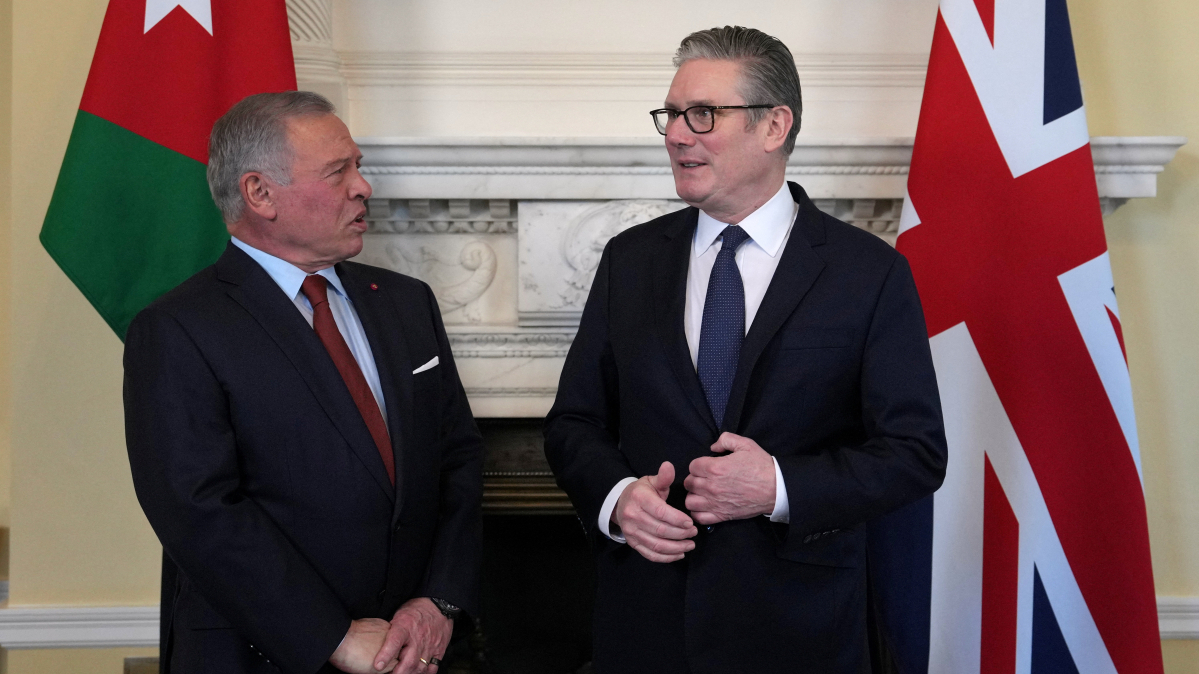
In a statement, the Royal Court said the monarch raised the issue during meetings with British officials and members of parliament as part of his official visit to London.
Discussions focused on developments in the West Bank, as well as the situations in Gaza, Syria and Iran, and British efforts to support regional stability.
“The illegal Israeli measures that seek to entrench settlements and impose sovereignty over the land undermine de-escalation efforts and threaten to exacerbate the conflict,” King Abdullah said, according to the statement.
His remarks came a day after the Israeli government approved a proposal to register Palestinian land in the West Bank as “state property” for the first time since Israel occupied the territory in 1967.
Israeli broadcaster Channel 7 reported that the move includes reopening previously frozen land registration procedures, cancelling Jordanian-era legislation and unsealing land records that had remained confidential for decades.
The Israeli newspaper Israel Hayom said the aim is the “gradual settlement of 15% of Area C by 2030.”
Under the 1995 Oslo II Accord, the West Bank was divided into three administrative zones. Area A under full Palestinian civil and security control; Area B under Palestinian civil administration with Israeli security control; and Area C under full Israeli civil and security control, covering about 61% of the territory.
Palestinians say Israel rarely grants building permits in Area C, effectively restricting construction and land development.
They view the latest measures as a prelude to formal annexation and a step towards de facto annexation of large parts of the West Bank, moves they argue would undermine the United Nations endorsed two-state solution framework.
Meanwhile, eight countries including Türkiye, Egypt, Saudi Arabia, Qatar and the United Arab Emirates strongly condemned Israel's decision to designate some state lands in the West Bank, according to a joint statement published on Tuesday (17 February) by the Turkish Foreign Ministry.
In the statement, it said that measures represent "flagrant violation of international law" and that such policies constitute a "dangerous escalation that will further heighten tensions and instability" in the territory and wider region.
States' foreign ministers "call upon the international community to assume its responsibilities and take clear and decisive steps to halt these violations," statement said.
The West Bank is among the territories that Palestinians seek for a future independent state. Much of it is under Israeli military control, with limited Palestinian self-rule in some areas run by the Western-backed Palestinian Authority.
In July 2024, the International Court of Justice issued an advisory opinion declaring Israel’s occupation of Palestinian territory illegal and calling for the evacuation of settlements in the West Bank and East Jerusalem.
Israeli Prime Minister Benjamin Netanyahu, who is facing an election later this year, deems the establishment of any Palestinian state a security threat.



















What is your opinion on this topic?
Leave the first comment