Central Asian forecasters dismiss Iran 'acid cloud' rumours
Reports of so-called “acid clouds” moving from Iran towards Central Asia are not supported by scientif...
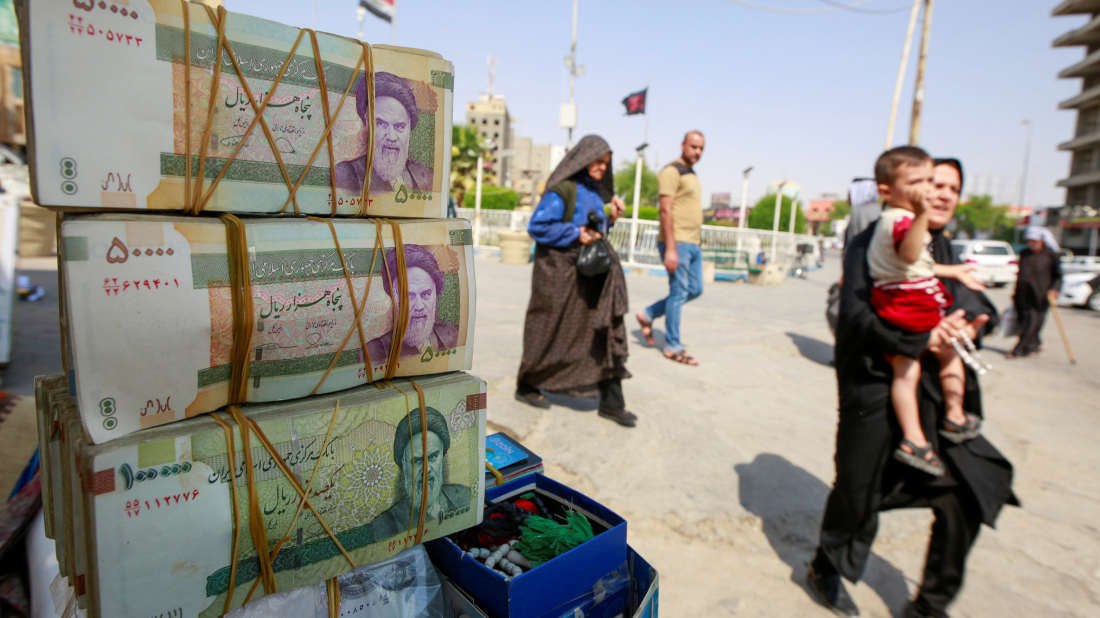
Iran's cabinet has endorsed a plan to slash four zeros from the national currency, pending parliamentary and Constitutional Council approval.
Government spokeswoman Fatemeh Mohajerani said on Sunday that the decision, approved during a cabinet meeting in Tehran, follows last week's approval by the Iranian parliament’s economic commission.
Speaking to reporters, Mohajerani clarified that the currency will remain the rial, subdivided into the gheran, and the transition will be gradual, with both the current and new denominations circulating for a period.
Shamseddin Hosseini, chairman of the parliament's economic commission, said the reform aims to simplify financial transactions, noting that one rial would be valued at 10,000 of its current unit and split into 100 gherans.
Currently, 1 U.S. dollar is equal to nearly 40,000 Iranian rials at the official rate, but trades for more than 90,000 rials on the free market.
The proposal still requires parliamentary endorsement and clearance from the Constitutional Council before implementation.
Iran’s currency has faced steep depreciation since the U.S. withdrawal from the 2015 nuclear deal in May 2018 and the subsequent reinstatement of sanctions, which have strained the country’s economy.

Mojtaba Khamenei, son of the late Ayatollah Ali Khamenei, is a hardline cleric with strong backing from the Islamic Revolutionary Guard Corps. His rise signals continuity in Tehran's anti-Western policies.
Global oil prices surpassed $119 a barrel on Monday (9 March, 2026), an almost four year high, as the Middle East conflict rumbled on.
Welcome to our live coverage as the conflict involving Iran enters its 11th day. Tensions in the region remain high as the United States and Iran exchange increasingly sharp warnings over the strategic Strait of Hormuz, a critical artery for global oil supplies.
China has urged Afghanistan and Pakistan to resolve their dispute through dialogue after Chinese envoy Yue Xiaoyong met Afghan Foreign Minister Amir Khan Muttaqi, as fighting between the two neighbours entered its eleventh day.
Entry and exit across the state border between Azerbaijan and Iran for all types of cargo vehicles, including those in transit, will resume on 9 March, according to a statement by the Cabinet of Ministers of Azerbaijan.
Reports of so-called “acid clouds” moving from Iran towards Central Asia are not supported by scientific data, national hydrometeorological services in Kazakhstan, Uzbekistan and Kyrgyzstan say, adding there is no threat to the region.
A senior delegation from the OSCE Parliamentary Assembly has been holding meetings with Georgian government officials, opposition leaders and security authorities this week, as international observers attempt to gauge the country’s political climate following last year’s contentious elections.
Turkish President Recep Tayyip Erdoğan has told Masoud Pezeshkian, his Iranian counterpart, that violations of Turkish airspace by Iran could not be justified “for any reason whatsoever.”
The Cabinet of Ministers of Kyrgyzstan has approved a new programme aimed at developing educational courses and training sessions for young parents.
Kazakhstan has evacuated 8,585 citizens from Middle Eastern countries as regional tensions escalate. Authorities are coordinating air and land evacuations while analysts warn the crisis could reshape security and energy risks across the Caspian region.
You can download the AnewZ application from Play Store and the App Store.
What is your opinion on this topic?
Leave the first comment