Iran’s Foreign Minister Abbas Araghchi and Secretary of Supreme National Security Council (SNSC) Ali Larijani have stressed that Tehran is entitled to the peaceful applications of its nuclear program.
This comes as Iran is on the agenda of Board of Governors of the International Atomic Energy Agency (IAEA) in Vienna next week.
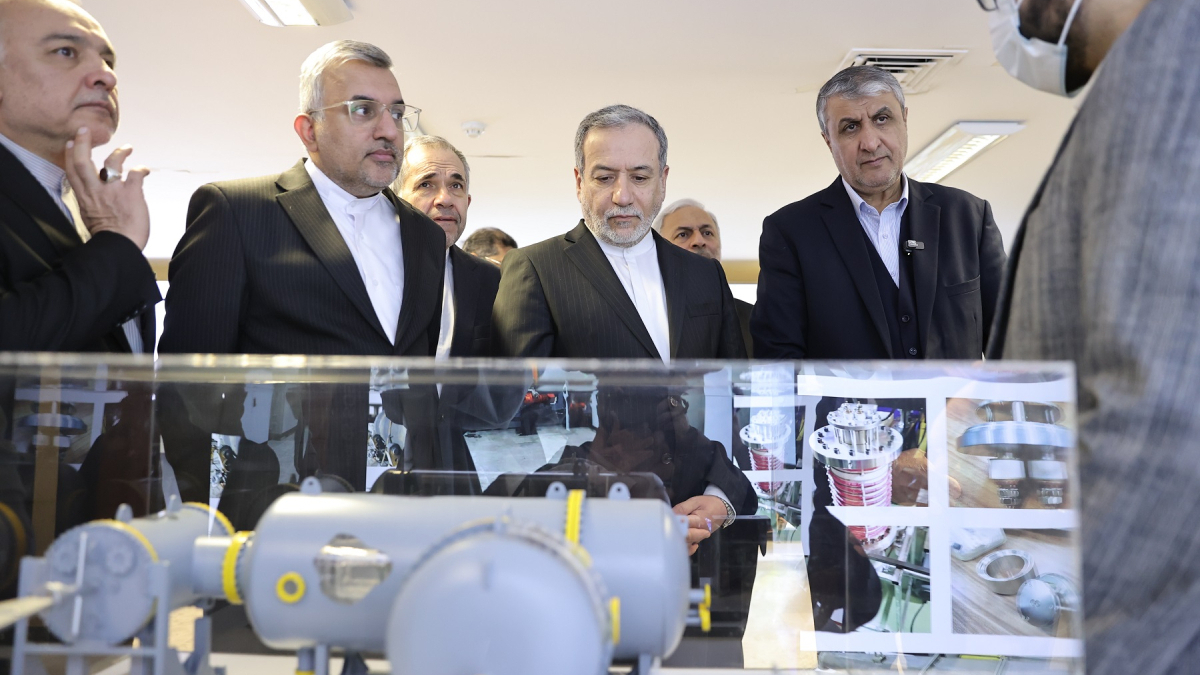
During a visit to the medical and technological achievements of Atomic Energy Organization of Iran (AEOI) on Monday, Araghchi said that West has no alternative but to agree with Iran’s civilian nuclear program.
“Western countries have no choice but to accept Iran as a scientific hub in the field of peaceful nuclear activity.
Contrary to the West's baseless claims, their main problem is not nuclear weapons, rather Iran's scientific development and technological independence,” he said.
According to the Foreign Ministry’s website, he added that West’s main goal is to deprive Iran of these achievements and to “monopolise” everything for themselves.
“We at the Ministry of Foreign Affairs stand with AEOI and have always defended the rights of this organization, which belongs to the Iranian people.”
In the run-off to the IAEA board’s quarterly meeting, SNSC Secretary Larijani said that Tehran will not surrender to the West neither in its civilian nuclear program nor the ballistic missiles capability even if its resilience leads to a confrontation.
“What does it have to do with the West that it comments on the range of Iranian missiles?” he asked speaking at the closing ceremony of a conference in Tehran on Monday.
“Today it has become clear that the nuclear issue was nothing more than an excuse to fight the Iranian people.
Iran will not surrender to empty talk. Even if it costs confrontation,” added the top security official who is a close aide to Supreme Leader Ayatollah Seyed Ali Khamenei.
Also, on sidelines of the conference, he told reporters that Iran has not sent any message to the United States for resumption of nuclear talks because Tehran’s pervious messages sent to Washington during the UN General Assembly in New York received no response.
Foreign Minister Araghchi said on Sunday there was not a possibility of renewed nuclear talks with the US for now.
“There is currently no possibility of resuming negotiations with the United State. Whenever the Americans are ready for equal and beneficial negotiations for both sides, negotiations can be possible," the Government Information Centre quoted him as saying.
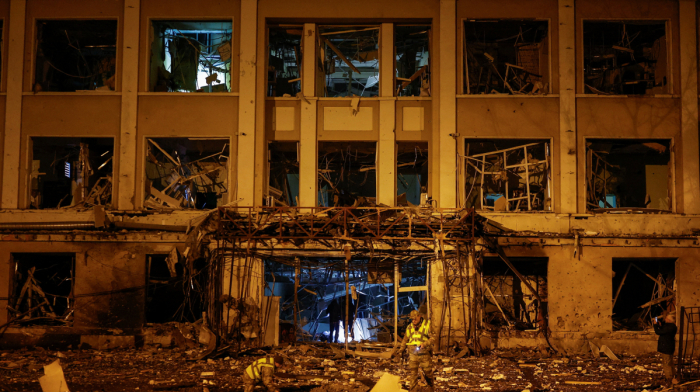
Tehran cut the mediated nuclear negotiations with Washington and suspended its relations with the UN nuclear watchdog because of the Israel-US airstrikes on Iran’s civilian nuclear sites in June citing the IAEA’s failure to condemn the attacks on the nuclear facilities under UN safeguards.
Foreign Ministry Spokesman Esmaeil Baghai said at a weekly press conference on Monday that IAEA inspectors visited several Iranian sites last week after receiving the clearance from the Supreme National Security Council.
“As long as we are a party to the NPT and committed to the Safeguards Agreement, we are aware of our obligations. Last week, IAEA inspectors visited and inspected several Iranian nuclear facilities, including the Tehran Research Reactor,” he said.














What is your opinion on this topic?
Leave the first comment