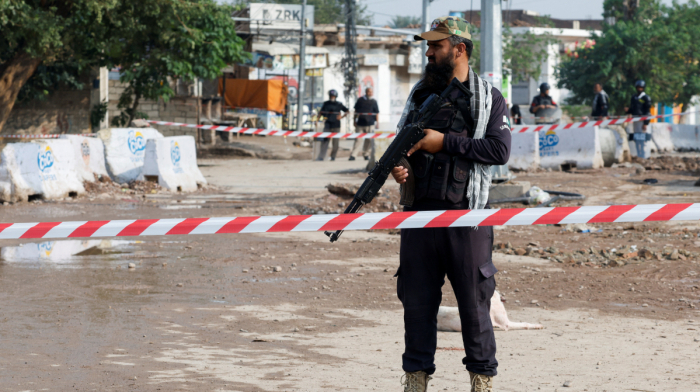
Kazakhstan vows to fast-track AZAL crash investigation amid rising diplomatic tensions
Kazakhstan has vowed to speed up its investigation into the Azerbaijan Airlines (AZAL) crash near Aktau, as mounti...
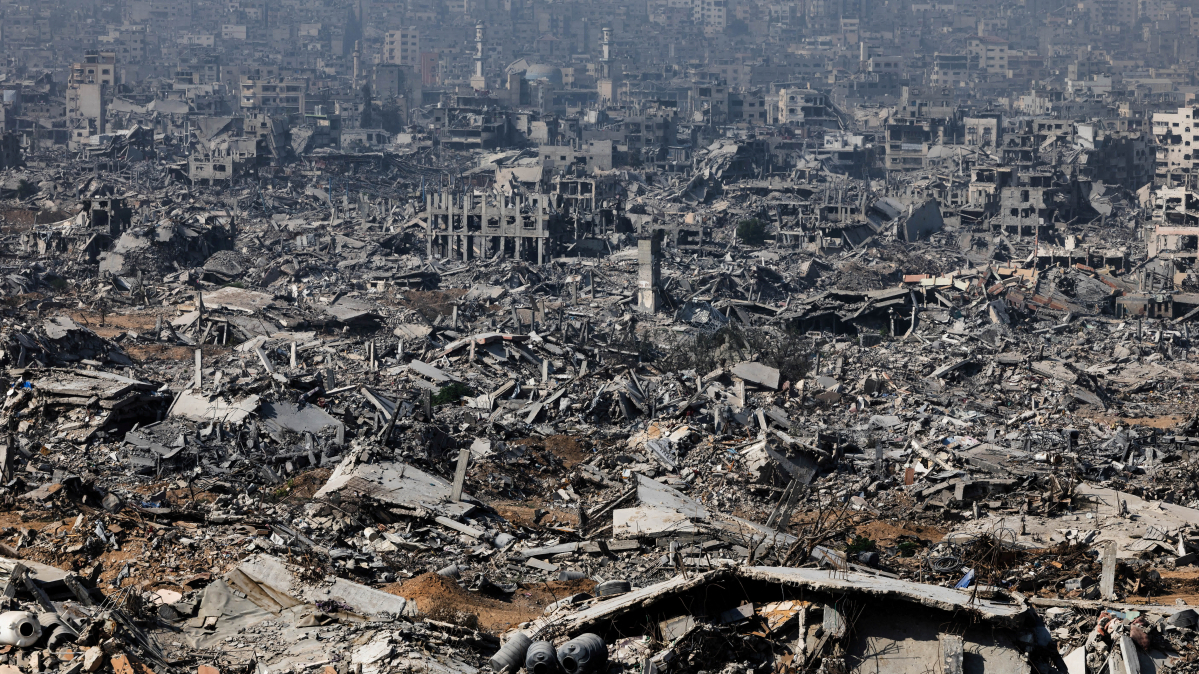
The U.S. is studying a plan to divide Gaza into zones with different levels of control. Documents cited by The Guardian outline a green zone for reconstruction under Israeli and international oversight, and a red zone that would remain heavily damaged after two years of war.
The creation of an International Stabilisation Force forms the core of the drafted U.S. proposal. Washington expects a UN Security Council resolution to provide the force with a formal mandate and hopes that governments will then confirm troop commitments.
The proposal appears in a series of U.S. Central Command documents that outline the role of several European states.
The planning includes deploying British and French forces to the eastern part of Gaza. Up to 1500 British infantry personnel and as many as 1000 French soldiers would take part in security duties and mine clearance.
The U.S. also explored the participation of Germany, the Netherlands and Nordic states to establish field hospitals and logistics units.
The documents state that Israeli forces will determine any future withdrawal only after international security conditions are met.
No timeline is mentioned. At the same time, President Trump has ruled out sending U.S. troops to prepare a withdrawal or to finance Gaza’s reconstruction. A U.S. official told the newspaper that Washington intends to shape the political outline rather than fund its implementation.
The publication notes that the draft raises questions about Washington’s commitment to linking a ceasefire to a wider political settlement involving Palestinian administration across the enclave.
Analysts warn that without a workable peacekeeping framework, a clear withdrawal process and large scale reconstruction, Gaza could enter a prolonged period of uncertainty despite the end of major operations.

The Kremlin is utilising the recent United States and Israeli military strikes on Iran to validate its ongoing war in Ukraine. Russian officials are pointing to the escalation in the Middle East as evidence that Western nations do not adhere to international rules.
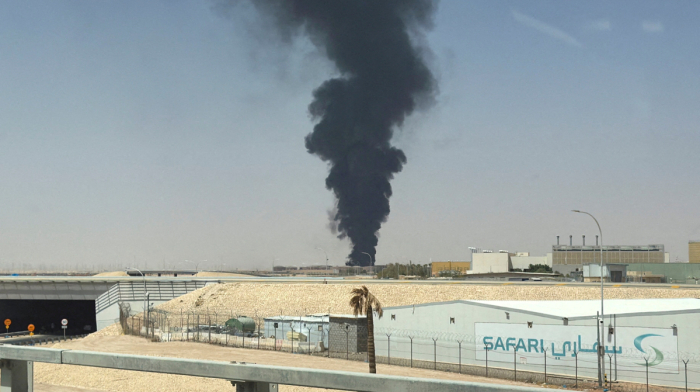
Saudi Arabia’s state oil giant Saudi Aramco closed its Ras Tanura refinery on Monday following an Iranian drone strike, an industry source told Reuters as Tehran retaliated across the Gulf after a U.S.-Israeli attack on Iranian targets over the weekend.
The Middle East crisis intensifies after the deadly attack on the compound of the Supreme Leader of Iran Ali Khamenei on Saturday that killed him, other family members and senior figures. Iran has launched retaliatory strikes on U.S. targets in the region.
U.S. President Donald Trump said the U.S. military has enough stockpiled weapons to fight wars "forever"; in a social media post late on Monday. The remarks came hours before conflict in Iran and the Middle East entered its fourth day.
Türkiye raised its security level for Turkish-flagged vessels in the Strait of Hormuz to Level 3 on Sunday (2 March). The development follows Iranian restrictions on shipping after U.S. and Israeli strikes and confirmation of Supreme Leader Ali Khamenei’s death.
Seven opposition parties in Georgia have formed a coordinated alliance ahead of upcoming elections, saying it aims to challenge the dominance of the ruling Georgian Dream party. The government has dismissed the move as a rebranding of familiar political figures.
Türkiye’s President, Recep Tayyip Erdoğan, has described the ongoing U.S.–Israeli military campaign against Iran as a “clear violation of international law”, in his strongest remarks yet on the escalating regional crisis.
U.S. President Donald Trump said the U.S. military has enough stockpiled weapons to fight wars "forever"; in a social media post late on Monday. The remarks came hours before conflict in Iran and the Middle East entered its fourth day.
Kazakhstan has vowed to speed up its investigation into the Azerbaijan Airlines (AZAL) crash near Aktau, as mounting diplomatic pressure and geopolitical tensions push the disaster further into the international spotlight.
Entrances to Iran's underground and previously bombed uranium-enrichment plant at Natanz have been struck as part of the U.S.-Israeli military attacks on the country, the United Nations nuclear watchdog, the International Atomic Energy Agency (IAEZ) confirmed on Tuesday (3 March).
You can download the AnewZ application from Play Store and the App Store.
What is your opinion on this topic?
Leave the first comment