The EU plans to mobilise up to €12 billion ($13.8 billion) in public and private investment to strengthen the Middle Corridor, a key trade route connecting Central Asia and the South Caucasus with European markets.
Investment in regional connectivity
European Commission President Ursula von der Leyen recently announced the initiative as part of the EU’s push to strengthen international transport links. The project is being developed under the Global Gateway initiative and aims to diversify trade routes between Europe and Asia while strengthening connections across the Caspian region.
The investment is expected to support infrastructure along the route, with the EU aiming to triple trade flows by 2030 and significantly cut transport times for goods moving between the regions.
The European Commission also plans to hold a regional summit on transport connectivity with Bulgarian Prime Minister Rumen Radev.
Route linking China and Europe
The Middle Corridor, also known as the Trans-Caspian International Transport Route, runs from China to Europe viaKazakhstan, the Caspian Sea, Azerbaijan, Georgia and Türkiye, bypassing Russian territory.
Kazakhstan is a crucial link along the route, connecting Central Asian markets with the Caspian Sea and onward transport routes to Europe.
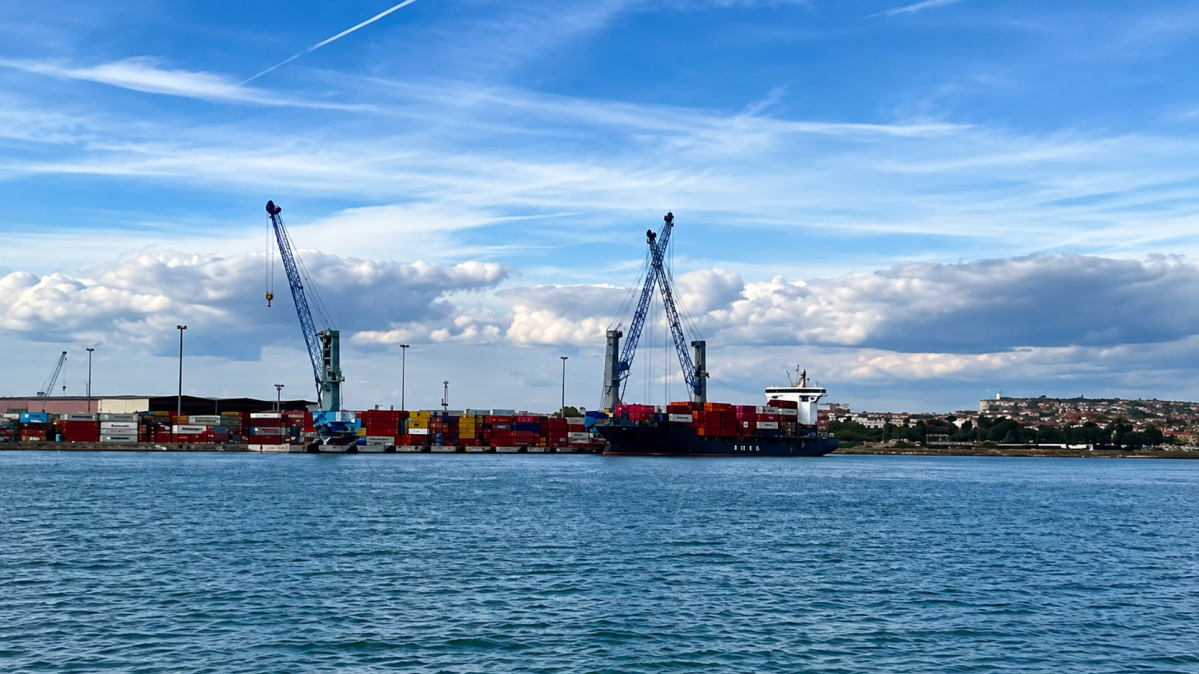
The corridor combines rail, road and maritime transport. It is used mainly for containerised and general cargo, including industrial equipment, electronics, consumer goods, agricultural products and metals.
Oil and petroleum products are also transported along the route, including Kazakh exports shipped across the Caspian Sea to Azerbaijan and onwards.
A 6,000-kilometre transport network
The different branches of the corridor stretch for around 6,000 kilometres, including approximately 700-800 kilometres across the Caspian Sea.
After reaching Baku, the route splits in two main directions. One continues through Georgia and Türkiye by rail, while the other passes through the Georgian ports of Poti and Batumi before continuing by sea to Europe.
The European Commission has previously said developing the route could create a modern transport link between Europe and Asia, with cargo delivery times of up to 15 days.
Under Global Gateway, investment is expected to cover not only railways, roads, ports and logistics centres, but also digitalisation, trade facilitation and greater compatibility between transport systems.
Diversifying Europe-Asia trade routes
For the European Union, the project is part of a broader effort to diversify transport links with Asia. For countries along the route, particularly Kazakhstan, it could strengthen their position in the expanding Eurasian transport network and boost trade connections between Central Asia and European markets.













What is your opinion on this topic?
Leave the first comment