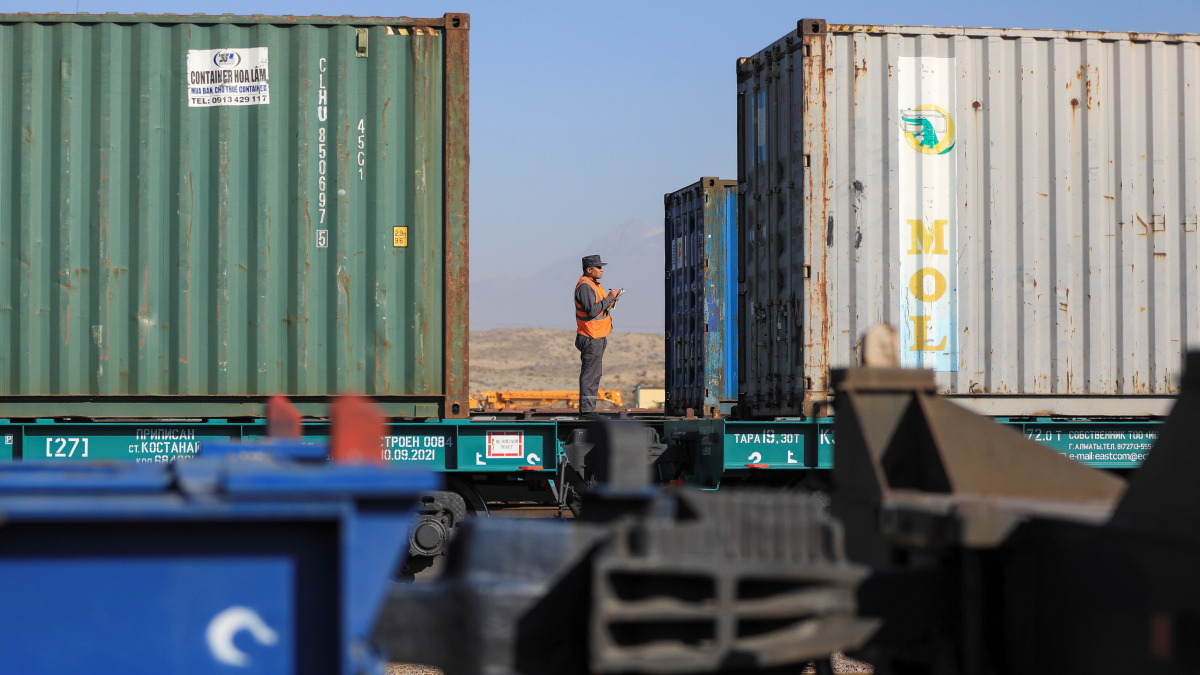
Kazakhstan is stepping up investment in the Middle Corridor as rising freight volumes and demand for more diverse trade links drive the rapid expansion of the route connecting Asia and Europe.
Kazakhstan’s strategic position
The figures underscore the growing importance of the route, widely known as the Middle Corridor, in connecting Asia and Europe. As manufacturers and logistics companies seek to diversify trade routes, the corridor is rapidly developing from a promising alternative into one of the fastest-growing overland links between the two regions.
Kazakhstan occupies a central position along this route. Sharing the world’s longest continuous land border with China and with direct access to the Caspian Sea, the country connects markets with a combined population of more than three billion people.
That geographical advantage has been backed by significant investment. Over the past seven years, Kazakhstan has invested around $35 billion in transport infrastructure as it seeks to accommodate growing international trade and strengthen the resilience of Eurasian supply chains.
Caspian capacity expands
Increasing capacity on the Caspian section is part of that effort. Kazakhstan has previously announced plans to expand the capacity of its seaports to 30 million tonnes.
At the port of Kuryk, the modernisation of lifting and transition bridges has already been completed, cutting processing times for railway ferries by a third and for vehicle ferries by almost half.
Digital push for faster freight
Expanding physical infrastructure, however, is only part of Kazakhstan’s effort to improve the corridor. As freight traffic grows, the country is also turning its attention to the digitalisation of transport routes and how cargo movements are managed across international logistics networks.
Taizhanov highlighted the need to create a digital map of transport routes. The proposed system is expected to bring together information on transport infrastructure, logistics chains and the main parameters of cargo flows along international transport corridors.
Targeting 10 million tonnes
Rising freight volumes, expanding Caspian port capacity and greater digital integration come as demand for diversified trade routes between Asia and Europe continues to grow.
Against that backdrop, Kazakhstan is targeting freight volumes of 10 million tonnes along the Trans-Caspian International Transport Route.
Read more:















What is your opinion on this topic?
Leave the first comment