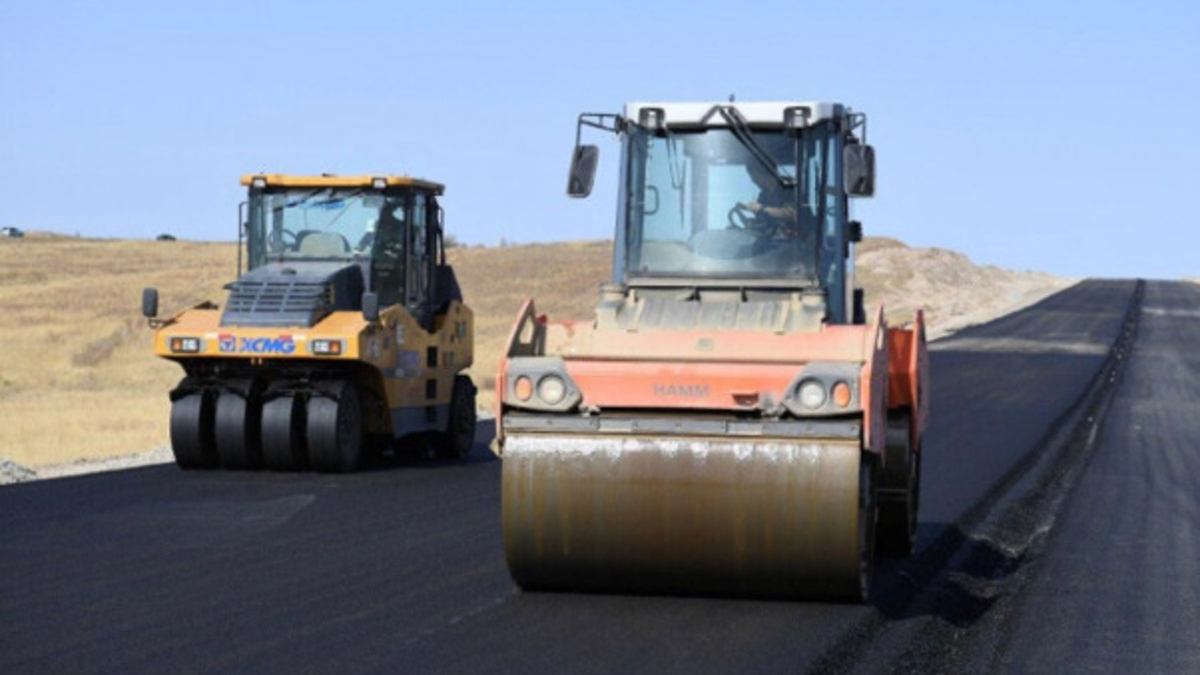
Kazakhstan has begun building the Beineu-Saksaulsk highway, a new Middle Corridor link expected to shorten freight journeys between China and Europe by around 1,000 kilometres and reduce delivery times by up to three days.
Strengthening the Middle Corridor
The project comes as the Trans-Caspian International Transport Route, commonly known as the Middle Corridor, plays an increasingly important role in trade between Asia and Europe. The new highway will provide a more direct connection between border crossings and Kazakhstan’s Caspian ports of Aktau and Kuryk, strengthening the trade route linking China with European markets via Central Asia and the Caspian Sea.
For Kazakhstan, the road is part of a broader effort to transform its strategic location into greater transport capacity. The country shares the world’s longest continuous land border with China and has direct access to the Caspian Sea, positioning it between markets with a combined population of more than three billion people.
$35 billion invested in transport
Over the past seven years, Kazakhstan has invested around $35 billion in transport infrastructure, including railways, roads, ports, airports and digital logistics systems. The investment is intended to support growing international trade and strengthen the resilience of supply chains across Eurasia.
That push has become increasingly important as manufacturers and logistics companies seek to diversify the routes used to move goods between Asia and Europe. Against this backdrop, the Middle Corridor has developed from an alternative route into one of the fastest-growing overland connections between the two regions.
Freight volumes rise fivefold
The shift is already visible in freight volumes. Cargo transported along the corridor has increased fivefold over the past seven years, exceeding 4.5 million tonnes in 2025. Container traffic reached approximately 77,000 twenty-foot equivalent units (TEUs), while Kazakhstan and its regional partners aim to increase annual capacity to 300,000 TEUs by 2029.
The growth of the corridor is also increasing Kazakhstan’s importance within the wider Eurasian transport network. According to the OECD, the country already accounts for around 83 per cent of overland freight traffic between China and Europe, reflecting the scale of its role in moving goods across the continent.
Read more



















What is your opinion on this topic?
Leave the first comment