live Iran ties Hormuz reopening to U.S. concessions on several demands
Iran said it was nearing a final pact with Oman defining new shipping lanes between them through the Strait of Hormuz but repeated that the U.S. must ...
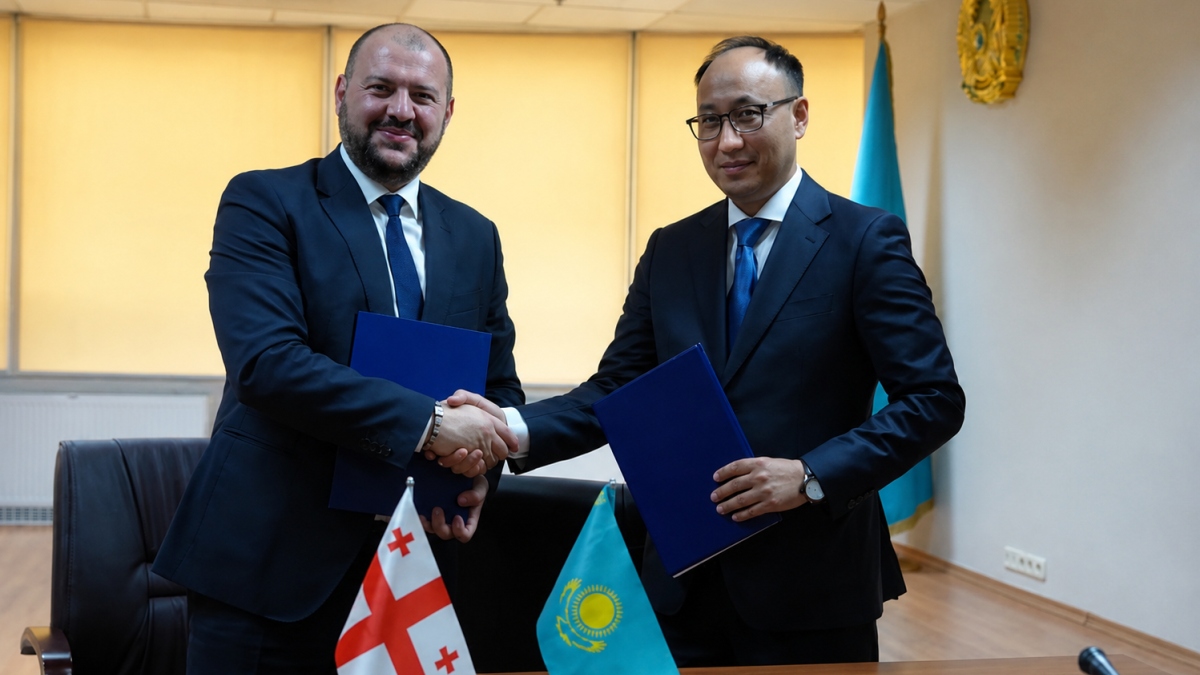
Kazakhstan and Georgia will begin testing a digital permit exchange system for international road freight on 22 July, replacing paper permits with an electronic platform designed to streamline cross-border transport.
The pilot scheme was approved during a meeting of the Kazakhstan-Georgia Joint Commission on International Road Transport. Under the initiative, transport permits will be issued and exchanged through the e-Permit platform, which Kazakh authorities say will reduce administrative procedures, improve transparency and speed up freight movements.
The trial is also expected to pave the way for broader reform of bilateral road transport. Once the electronic system is fully implemented, the two countries plan to abolish quantitative restrictions on permit exchanges, replacing the current quota-based model with an unrestricted system.
In the meantime, Kazakhstan and Georgia have agreed to increase the number of permits available to transport operators. They will exchange an additional 6,000 permits in 2026, while a preliminary quota of 20,500 permits has been set for 2027 - 6,000 more than the previous allocation.
The agreement comes as both countries seek to strengthen their roles along trade routes linking Central Asia, the South Caucasus and Europe. More efficient permit procedures are expected to support growing freight volumes and improve the competitiveness of regional transport corridors.
The initiative forms part of Kazakhstan's wider drive to digitise international road transport. Earlier this year, Kazakhstan and China agreed to introduce an unlimited exchange of transport permits without quantitative quotas following a meeting of the China-Kazakhstan Joint Committee on International Road Transport in Beijing.
Kazakhstan has also introduced digital permit systems with Türkiye, Azerbaijan and Kyrgyzstan. The country currently conducts international road freight under intergovernmental agreements with 42 countries.

An agreement between Iran and the U.S. to reopen the Strait of Hormuz is expected "soon," a U.S. official has said. The deal would result in the resumption of commercial shipping through the sea passage and the lifting of an American naval blockade on Iranian ports.
Flights arriving at Catania airport in eastern Sicily were suspended after volcanic ash from a new eruption of Mount Etna drifted into the airspace around the airport, disrupting operations at one of Italy’s busiest aviation hubs.
A deal on a new route for vessels through the Strait of Hormuz is "very close," Iranian Foreign Minister Abbas Araghchi has said, while warning that the reopening of the waterway depends on the U.S. meeting other conditions, including paying compensation to Iran.
Start your day informed with AnewZ Morning Brief. Here are the top news stories for the 9th of August, covering the latest developments.
Iran said it was nearing a final pact with Oman defining new shipping lanes between them through the Strait of Hormuz but repeated that the U.S. must meet other conditions.
Uzbekistan has secured preferential tariffs for fertiliser and petroleum product shipments through Kazakhstan’s Kuryk port to Georgian ports, as Uzbek cargo volumes across the Caspian continue to rise.
Police in eastern India used tear gas, batons and water cannon on Monday to disperse thousands of young protesters marching on the Jharkhand state legislature over alleged irregularities in civil service examinations.
Rising temperatures are threatening Georgia’s farms, energy supply and banking sector, with experts warning that the country has a narrow window to prepare before the economic costs grow significantly.
Pakistan is seeking to strengthen its energy security through a proposed Gulf oil storage scheme, $5 billion in refinery upgrades and renewed offshore exploration with Türkiye as global supply disruptions expose its reliance on imports.
Syria and Russia have signed a memorandum of understanding on the future of Russian bases at Tartous and Hmeimim after 18 months of negotiations, the Syrian foreign ministry said on Sunday.
You can download the AnewZ application from Play Store and the App Store.
What is your opinion on this topic?
Leave the first comment