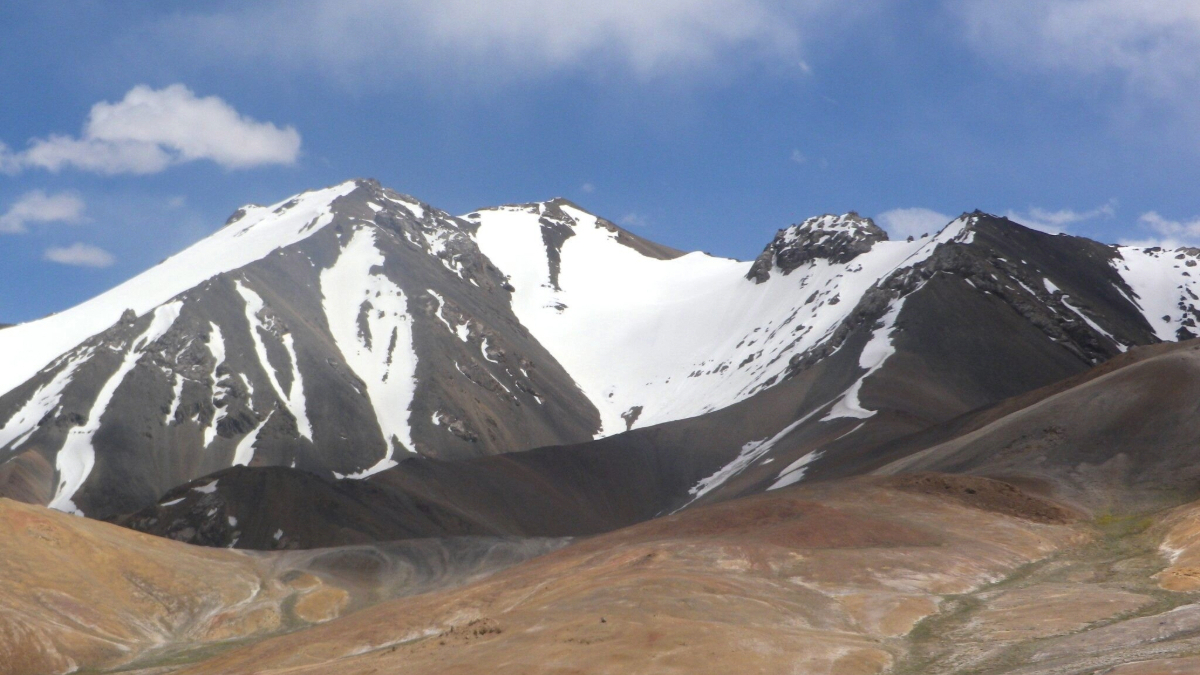
Tajik scientists have warned that glaciers in the Pamir Mountains are melting at an alarming rate, including in high-altitude areas previously considered relatively stable, following the country’s first direct winter glacier measurements since independence.
The research expedition took place between 6 and 15 May on Glacier No. 457 in the upper basin of the Nukhchashma River, also known as Tokuzbulak, a tributary of the Gunt River.
The study was conducted by specialists from the University of Central Asia’s Mountain Societies Research Institute and Tajikistan’s National Academy of Sciences as part of the United Nations-backed initiative, the ‘Decade of Action for Cryospheric Sciences 2025–2034’.
Scientists analysed snow accumulation, density and distribution across the glacier to measure its winter mass balance. According to researchers, these were the first direct winter field observations of glacier snow dynamics conducted in Tajikistan since the country gained independence.
Researchers said the findings revealed a critical situation for glaciers in the region. According to University of Central Asia researcher Hofiz Navruzshoev, Glacier No. 457 has lost more than one metre in thickness during the latest observation period alone.
Scientists also reported that seasonal snow cover in the glacier’s accumulation zone above 5,100 metres has nearly disappeared over the past five years. This is particularly concerning because accumulation zones normally act as long-term snow storage areas where compacted snow replenishes glacier ice reserves.
“If that zone no longer accumulates snow, the glacier loses mass even before lower-altitude melting is considered,” researchers explained.
Growing risks for Central Asia’s water security
Experts warned that glacier melt in Tajikistan could have serious consequences for water security across Central Asia. Tajik glaciers feed major regional rivers that support agriculture, hydropower generation and drinking water supplies for millions of people downstream.
Previous glacier monitoring in Tajikistan was mainly limited to summer expeditions and satellite imagery. Researchers said the latest expedition represented an important step towards building regional expertise in cryospheric sciences and improving long-term climate monitoring systems.
The scientists conducted the expedition under difficult weather conditions at elevations of around 5,000 metres, facing snowfall, strong winds and limited visibility while collecting snow reserve data from five research sites.
International concern over glacier preservation
The findings come amid growing international concern over glacier loss linked to climate change. The United Nations has repeatedly warned that accelerating glacier melt threatens billions of people worldwide, particularly communities dependent on glaciers for freshwater and energy production.
Researchers said the new data would help improve assessments of glacier loss in the Pamirs and strengthen Tajikistan’s ability to forecast long-term changes in regional water availability.


















What is your opinion on this topic?
Leave the first comment