live Trump sees 'progress' in Israel-Lebanon talks as Hezbollah rejects ceasefire
U.S. President Donald Trump said he sees progress between Israel and Lebanon after talks with Netanyahu, while Hezbollah has rejected a new ceasefire ...
In a parliamentary vote on Wednesday (22 April), Turkish lawmakers approved legislation designed to protect minors from harmful online content. Passed after lengthy deliberations, the measure includes an outright ban on social media use by children under 15.
The bill requires social media platforms to verify users’ ages, strengthen parental oversight controls, and remove any material deemed potentially harmful to children.
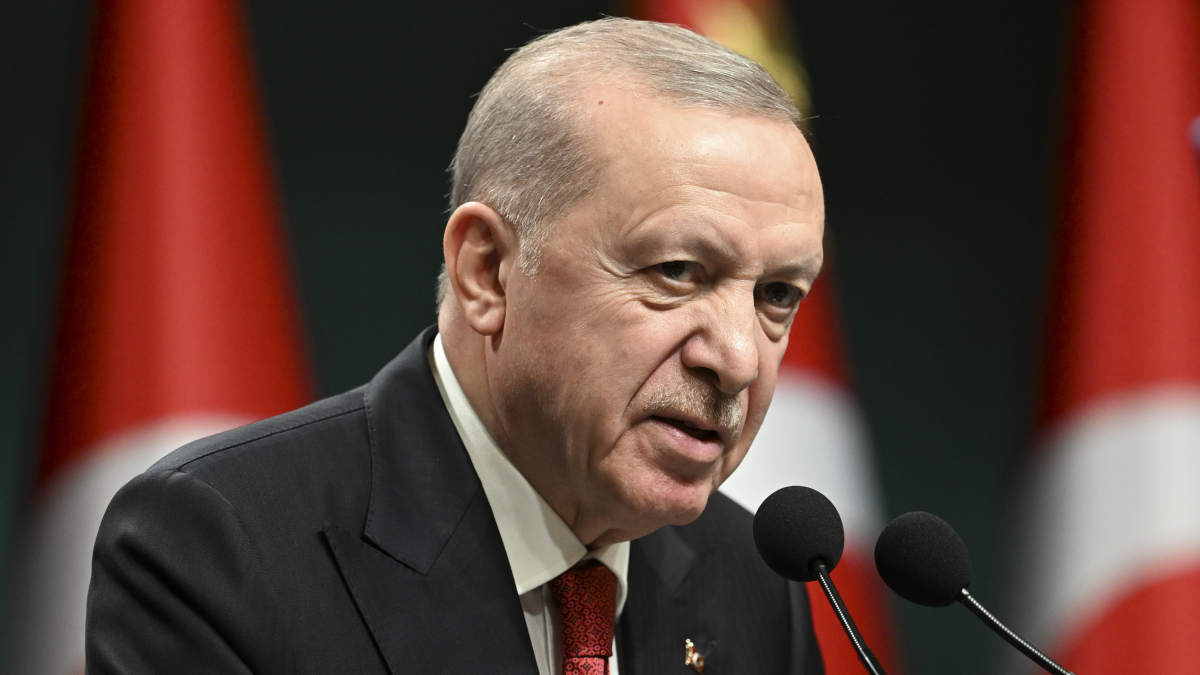
The legislation must still receive final approval from President Recep Tayyip Erdoğan, which is expected within the next two weeks. Once signed into law, the new regulations are set to come into force within six months.
Under the new regulatory framework, platforms will be responsible for ensuring that users under the age of 15 cannot create accounts.
They must also introduce enhanced parental controls, including tools to manage account settings, limit screen time, and restrict in-app purchases (i.e. transactions made via mobile applications).
In addition, platforms will be required to remove advertising that targets children if it is considered deceptive or harmful.
If ordered, companies must remove objectionable content immediately or face financial penalties. Failure to comply with a content removal order within 30 days will result in a ban on local advertising, while repeated violations could lead to bandwidth reductions of up to 90 per cent.
Calls to restrict children’s access to harmful online content intensified last week after southeastern Türkiye was shaken by two consecutive school shootings that left nine people dead.
Subsequent investigations revealed that the two young perpetrators - one of whom was a 14-year-old student - were active players of violent online games, raising concerns about the potential impact of such content on minors.
Last December, Australia became the first country to ban social media use for children under 16. Several other nations are now reportedly considering similar restrictions.

Iran’s Revolutionary Guards (IRGC) said in a statement that its Aerospace Force did not strike the Kuwait Airport passenger terminal on Wednesday, and that the destruction was instead caused by a failed U.S. Patriot missile.
Israel and Lebanon have agreed to implement a ceasefire after U.S.-backed talks in Washington. The deal requires Hezbollah to halt attacks and withdraw from southern Lebanon, while both sides will resume direct talks later this month aimed at reaching a broader agreement.
Five Azerbaijani citizens have been killed and three others injured following drone attacks on two cargo vessels in the Sea of Azov, Azerbaijan's Foreign Ministry said on Friday.
As Armenia heads toward parliamentary elections on 7 June, the country's relationship with Azerbaijan is emerging as one of the defining issues of the campaign, with analysts and international observers highlighting the role of regional politics in shaping voters’ mindsets.
The U.S. House of Representatives has approved legislation that would provide new aid to Ukraine and impose additional sanctions on Russia, marking the latest instance of Republican lawmakers breaking ranks with President Donald Trump and party leaders.
Azerbaijan is once again at the centre of global climate diplomacy, hosting World Environment Day 2026 and bringing together international leaders, policymakers and organisations to address urgent environmental challenges.
The Eighth Global Environment Facility (GEF) Assembly has concluded in Samarkand, bringing together representatives from 186 countries to set environmental priorities and approve new funding for climate, biodiversity and sustainable development initiatives.
The United Nations Assistance Mission in Afghanistan (UNAMA) has warned ahead of World Environment Day that Afghanistan's worsening water crisis is disproportionately affecting women and girls, who bear much of the responsibility for securing water for their families.
Azerbaijan is increasingly positioning itself as a strategic bridge between East and West, using a combination of diplomacy, energy cooperation and regional connectivity to expand its international influence.
Urbicide is as much about destroying a community’s identity as it is about destroying its physical space, according to a new study examining the cities of Grozny in Chechnya, Aghdam in Azerbaijan and Aleppo in Syria.
You can download the AnewZ application from Play Store and the App Store.
What is your opinion on this topic?
Leave the first comment