Afghanistan and Uzbekistan have agreed to strengthen research and policy cooperation following a roundtable in Tashkent focused on trade, connectivity and regional ties, according to official statements from both sides.
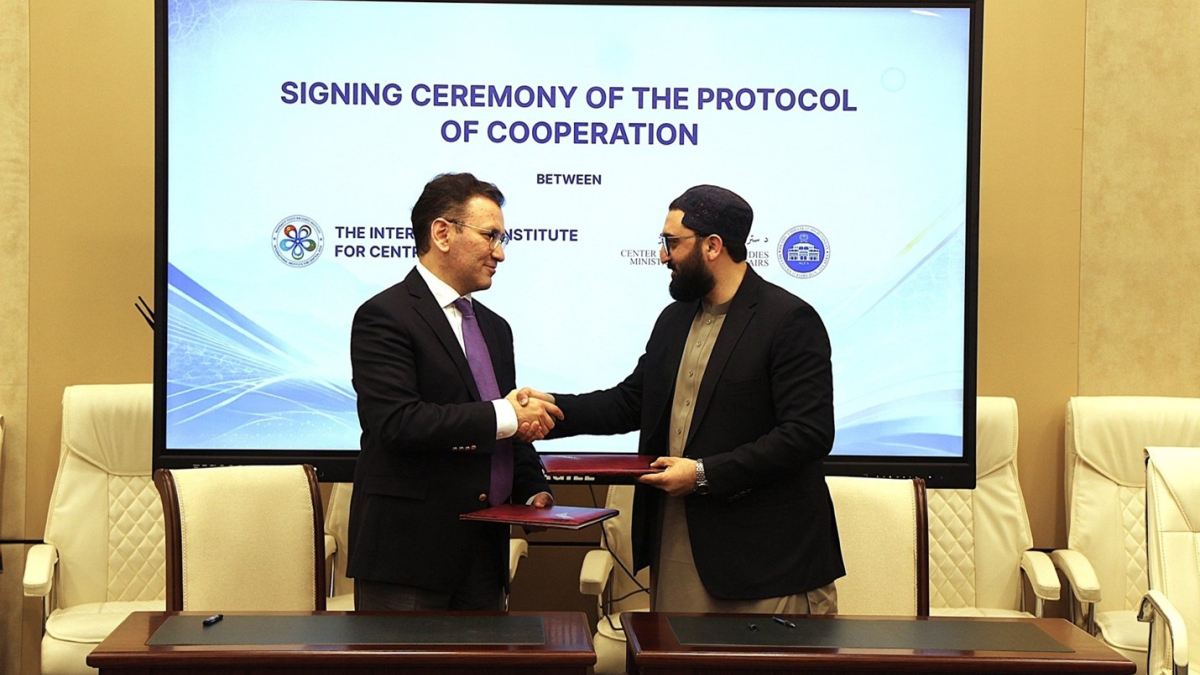
The Afghanistan Centre for Strategic Studies (CSS) said its delegation joined Uzbek experts at the event, titled “Central Asia–Afghanistan Consultative Dialogue: What Next for Bilateral and Multilateral Cooperation?” The meeting was co-organised with the International Institute for Central Asia (IICA) on 13 April, according to the institute.
The latest talks appear to build on the first Central Asia–Afghanistan Consultative Dialogue held in Kabul, with officials framing the process as part of a broader push for practical regional engagement.
In a statement published by the Afghan embassy in Uzbekistan, officials said the two sides reviewed the outcomes of the consultative meeting and discussed next steps. “During the meeting, the two sides discussed and exchanged views on expanding bilateral and multilateral cooperation between Central Asia and Afghanistan, as well as on academic, economic, and trade relations and regional connectivity,” the statement said.
The IICA also said it had signed a Protocol of Cooperation with Afghanistan’s CSS, formalising a research partnership between the two institutions. Summarising the agreement, IICA Director Javlon Vakhabov said, “We attach particular importance to cooperation between think tanks in further advancing our partnership. The expert community plays a crucial role not only in providing intellectual support for political dialogue, but also in generating new ideas and practical proposals for promising areas of bilateral and regional cooperation.”
Abdul Hai Qanit, Director of the CSS under Afghanistan’s foreign ministry, said the agreement created a foundation for longer-term collaboration between the two sides. He also called for practical cooperation on shared water challenges. “The Amudarya River Basin is not merely a geographic space, but a shared ecosystem and lifeline for millions of people in the region,” he said. “In the context of mounting water stress and climate change, cooperation ceases to be a choice and becomes a necessity.”
Both sides said they were ready to expand expert exchanges and launch joint initiatives on regional security, trade, transport, logistics, water and energy.
















What is your opinion on this topic?
Leave the first comment