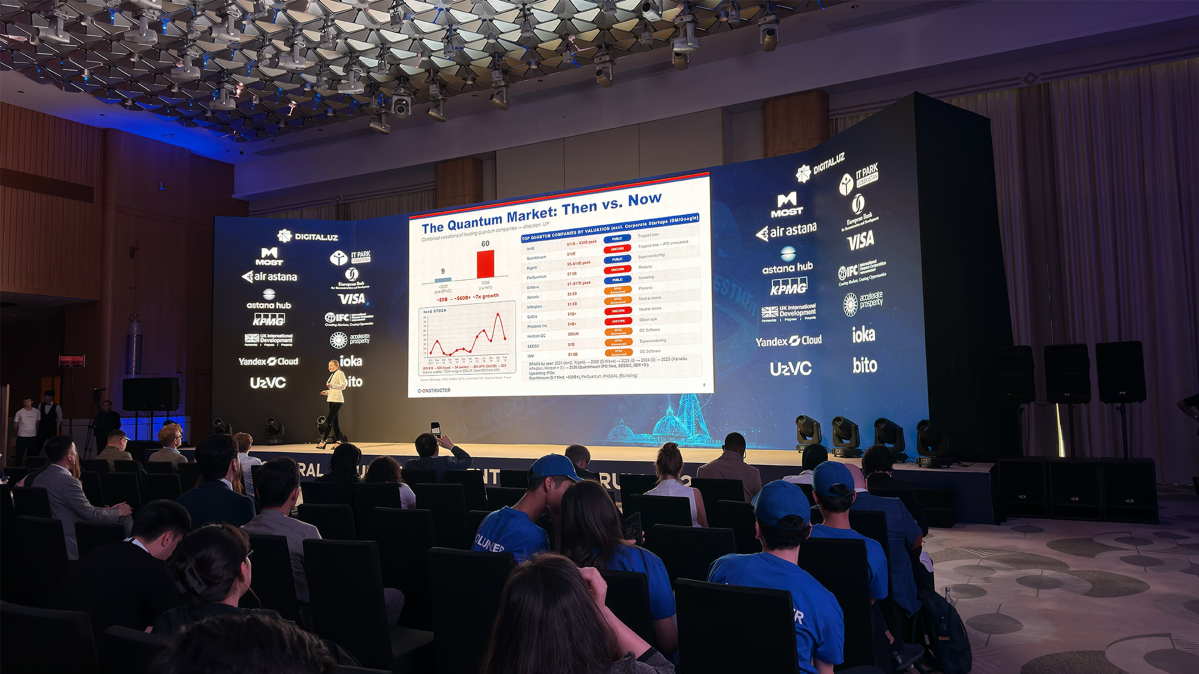
The Central Eurasian Venture Forum has brought together investors, start-ups and technology leaders in Tashkent, highlighting the region’s rapidly expanding innovation ecosystem and growing investor interest in AI and digital solutions.
The forum serves as a platform to connect entrepreneurs with venture capital, while facilitating cross-border partnerships and investment opportunities across Central Eurasia.
Strong growth and investment momentum
Over its four editions, the forum has attracted participants from more than 50 countries, drawing over 4,800 attendees, including more than 300 investors and business angels. More than 400 start-ups have been showcased, with over 10 memorandums and agreements signed and preliminary investment deals totalling approximately $34 million.
These figures reflect the increasing maturity of the regional start-up ecosystem, particularly in Uzbekistan, where government-backed initiatives are actively supporting innovation.
Speaking to AnewZ, Feruza Adilkhodjayeva, Head of PR and Marketing at IT Park Ventures, said venture funding in the country is developing rapidly, supported by strong institutional backing.
She noted that in 2025 alone, the fund invested in more than 70 start-ups across sectors such as healthcare, education and artificial intelligence, adding that AI-driven projects will remain a key priority for 2026.
Startups scaling and attracting investment
Start-ups participating in the forum are reflecting this upward trend, moving from early-stage development towards scaling and attracting further investment.
Akzhan Dzhekaev, representing the start-up Moon AI, told AnewZ that the company has evolved from an agency into a fully fledged start-up since its founding in 2024, securing early investment and expanding its team to around 20 people.
He explained that the platform enables small and medium-sized businesses to create AI agents without programming skills, describing the project as part of a broader effort to democratise access to technology for entrepreneurs.
Policy reforms shaping the ecosystem
The forum comes amid broader economic reforms aimed at strengthening Uzbekistan’s investment climate and digital economy.
President Shavkat Mirziyoyev has outlined plans to establish a Tashkent International Financial Centre and an International Digital Technologies Centre, alongside the introduction of Islamic finance mechanisms.
Authorities aim to attract more than $50 billion in investment, while the financial centre alone is expected to generate an additional $20–25 billion by 2030, create up to 15,000 high-skilled jobs and contribute up to 1% of annual GDP growth.
At the same time, the digital technologies centre is expected to attract up to 1,000 companies, generate more than 300,000 jobs and reach $5 billion in export potential, with a strong focus on artificial intelligence, data technologies and start-up development.
Regional hub in the making
As discussions at the forum highlighted, Uzbekistan is increasingly positioning itself as a key player in the regional innovation landscape, combining policy reform with growing investor interest.
Participants noted that continued cooperation between governments, investors and start-ups will be essential to sustaining growth. This trajectory, experts say, places Uzbekistan in a strong position to emerge as a competitive and relevant player in the global innovation ecosystem.















What is your opinion on this topic?
Leave the first comment