British Prime Minister Keir Starmer laid down the gauntlet to challengers on Tuesday (12 May), as he defied calls to resign at a meeting of Cabinet, telling ministers that there had been no official move to trigger a leadership contest.
"The Labour Party has a process for challenging a leader and that has not been triggered," Starmer told his Cabinet, according to his Downing Street office.
"The country expects us to get on with governing. That is what I am doing and what we must do as a Cabinet,” he added.
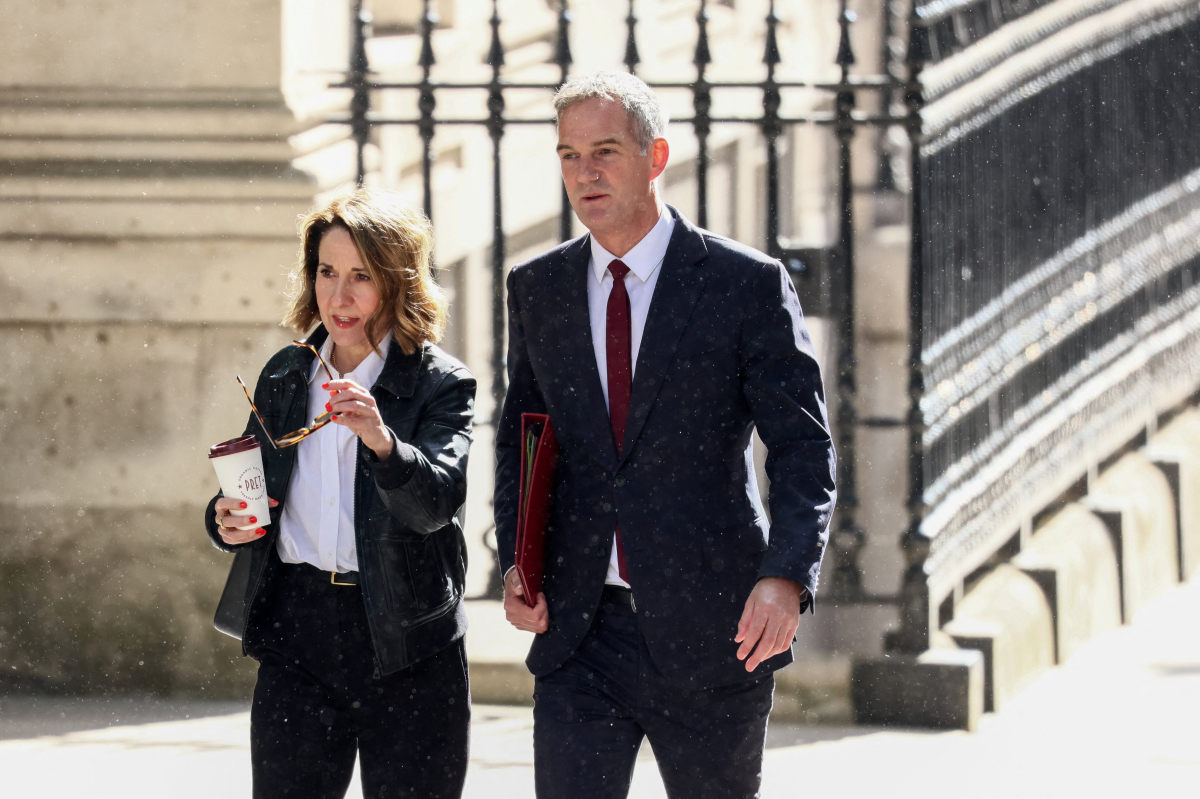
Leaving the Cabinet meeting, four senior ministers voiced their support for Starmer, including Science and Technology Secretary Liz Kendall.
She told reporters outside Downing Street that the Prime Minister had her “full support.”
MPs tell Labour leader to go
Starmer, who has been in the top job for less than two years, has faced growing calls to quit since his Labour Party were heavily defeated in English local elections and elections for the Scottish and Welsh parliaments last week.
By mid-Tuesday afternoon, 89 Labour MPs had publicly called for Starmer to step down, including the first minister, Miatta Fahnbulleh, who resigned as Minister for Devolution, Faith and Communities, minutes before Starmer’s Cabinet meeting began
Under Labour party rules, a leadership challenger needs the backing of 20% of Labour MPs, 81 members as of May 2026, to trigger an official leadership contest.
However at present it remains unlikely that there is a single candidate that MPs who have resigned would back, as they are from various ideological wings of the party.
Removing Starmer now, or forcing him to set a departure date, would likely favour Health Secretary Wes Streeting.
Several allies of Streeting, who is considered to be on the right of the party, have already resigned, including Joe Morris, a ministerial aide to the Health Secretary.
Ministerial level resignations increase
By Tuesday afternoon, Safeguarding Minister Jess Phillips, an ally of Streeting, had also resigned from the government.
In her resignation letter, she criticised Starmer for "rarely" making an argument, which she said left opportunities "stalled and delayed."
Alex Davies-Jones became the third minister to quit shortly after Philipps. A few hours later, Zubir Ahmed, a Health minister, became the fourth minister to resign.
"It is clear from recent days, that the public across the UK has now irretrievably lost confidence in you as Prime Minister," he wrote in his resignation letter to Starmer.
Contenders to replace Starmer
Possible challengers from the soft left such as Greater Manchester Mayor Andy Burnham and former Deputy Prime Minister Angela Rayner face obstacles to running.
Burnham is currently not an MP in Westminster and would have to first find another Labour minister willing to stand aside and then win a by-election before he could stand.
Rayner, meanwhile, faces an ongoing investigation by the UK’s tax department into her tax affairs, although she denies any intentional wrongdoing.
Starmer had sought to shore up his position on Monday when he promised to act more boldly and with extra urgency to tackle problems facing Britain.
In the speech, he said the country would never forgive the Labour Party if it embarked on a leadership challenge, when it had promised to bring an end to political chaos in the country which has had six Prime Ministers in the last decade.




















What is your opinion on this topic?
Leave the first comment