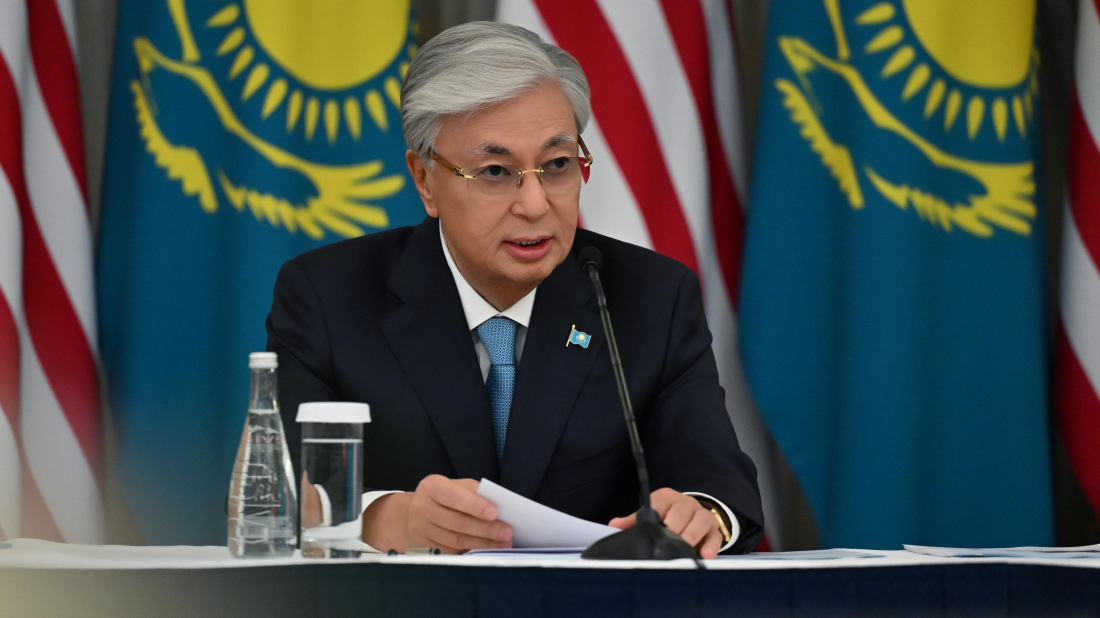
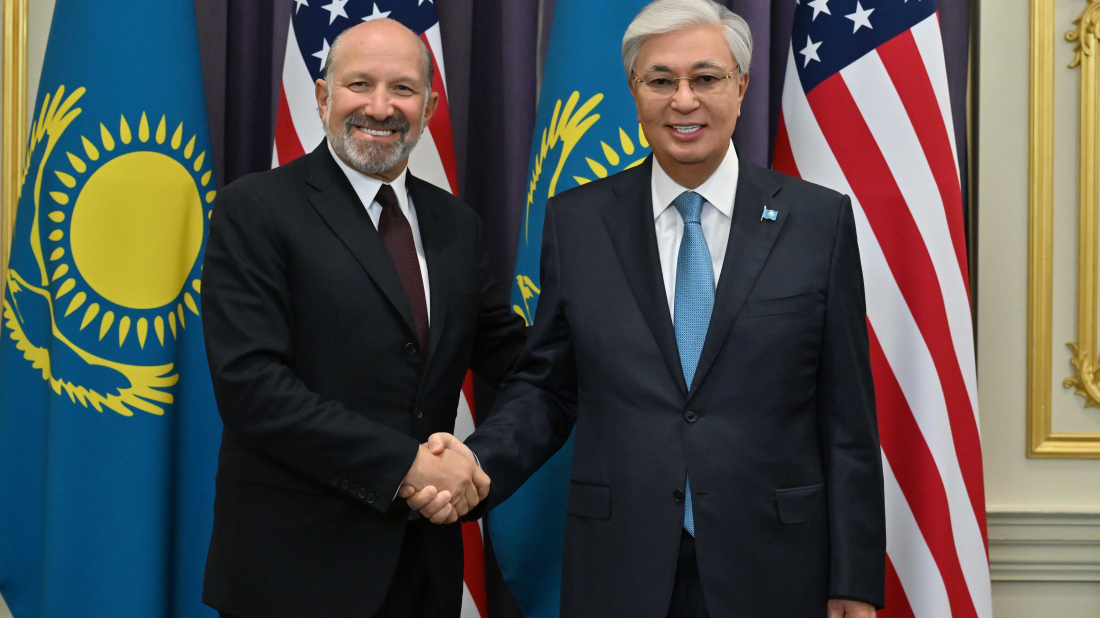
President of Kazakhstan Kassym-Jomart Tokayev is currently on a working visit to New York, where he has held a series of bilateral meetings with representatives of major businesses and international organisations.
Discussions have focused on large-scale investment projects with the potential to develop into long-term partnerships, signalling a strengthening of economic and strategic ties between Kazakhstan and the United States.
An historic agreement valued at $4.2 billion has been signed for the supply and production of locomotives. Under this contract, the American company Wabtec will manufacture 300 freight locomotives at a plant in Astana.
The deal was concluded following direct negotiations between Presidents Kassym-Jomart Tokayev and Donald Trump in New York.
During a roundtable with American business representatives, President Tokayev highlighted key areas for cooperation, including geological exploration, uranium mining and processing, and the expansion of existing energy projects.
Kazakhstan supplies around 40% of the world’s uranium, with nearly 25% of US uranium imports originating from Kazakhstan.
"In line with the priorities of the United States in the field of energy, we are also promoting clean, efficient and environmentally safe energy solutions based on coal, which accounts for more than 70% of power generation in Kazakhstan," President Tokayev said.
"Having some of the largest coal reserves in the world, we share the U.S. approach that regards it as a reliable and safe source of energy, at least for the foreseeable future. Our energy strategy is based on four components: oil, gas, coal and uranium. And we intend to firmly adhere to this principle.” he added.
The United States remains Kazakhstan’s largest investor, with total investments exceeding $100 billion and more than 630 American companies currently operating in the country.
He also had a significant meeting with Chevron Chairman and CEO Michael Wirth. Since Kazakhstan’s independence, Chevron has invested approximately $55 billion in the country, with a quarter of its total oil production derived from Kazakh fields.
Discussions focused on expanding the Tengiz oil field, developing gas projects at Karachaganak, and diversifying export routes, including the Middle Corridor.
President Tokayev underlined Kazakhstan’s intention to reduce dependence on traditional export routes and highlighted new logistics solutions as critical to sustainable energy development.
Digital transformation remains a priority for American involvement with President Tokayev meeting with David Zapolsky, Senior Vice President of Amazon, to discuss projects with the Ministry of Artificial Intelligence and Kazakhtelecom.
Amazon views Kazakhstan as a regional hub for satellite communications. A distribution agreement was signed between Amazon Kuiper and Kazakhtelecom, with plans to establish infrastructure in Almaty, Akkol, and Aktau. The investment is estimated at $200 million.
Among Kazakhstan’s strategic partners is Cerberus Capital Management whose CEO Frank Bruno, met with President Tokayev to discuss Cerberus’ role in financing infrastructure for the Trans-Caspian International Transport Route.
Tokayev invited Cerberus to participate in projects along the route and highlighted that since the historic peace agreement between Azerbaijan and Armenia in Washington, the Middle Corridor’s importance has grown, with cargo traffic increasing six fold in the past five years.
President Tokayev also met Stephen Schwarzman, Chairman and Co-Founder of Blackstone, to discuss mutually beneficial investment cooperation.
Blackstone’s large-scale investments in infrastructure and technology closely align with Kazakhstan’s priorities in economic diversification, innovation, and sustainable growth.
Joint projects for constructing data centres in Kazakhstan were proposed, alongside potential cooperation in asset management to finance technology and fast-growing companies. Blackstone is the world’s largest investment firm, with a market capitalisation exceeding $218 billion.
Agriculture was highlighted as a priority sector. Kazakhstan ranks sixth globally by arable land and is among the top ten grain exporters. President Tokayev invited American companies to engage in Kazakhstan’s agricultural potential.
“We invite American companies to participate in the realisation of Kazakhstan’s agricultural potential. We welcome PepsiCo and Mars’ plans to create modern export-oriented factories," he said.
"These projects will strengthen Kazakhstan’s export potential and provide an opportunity for our products to enter new regional markets. To further strengthen our partnership, we propose creating a joint Agro-Innovation Programme aimed at developing sustainable agriculture, water resource management, and digitalisation of agriculture.” Tokayev added.
On the sidelines of the 80th United Nations General Assembly session, Tokayev also held a series of high-level meetings. Among them were talks with the President of Montenegro, the UN Secretary-General, the President of the European Council, and the President of Ukraine Volodymyr Zelenskyy.













What is your opinion on this topic?
Leave the first comment