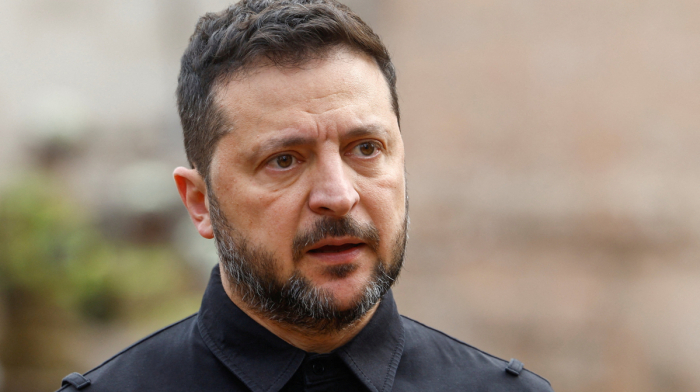
U.S. lawmakers accuse Bondi of concealing names of Epstein associates
A Republican lawmaker accused on Wednesday (11 February) Attorney General Pam Bondi of concealing the names of Jeffrey Epstein’s powerful associates...
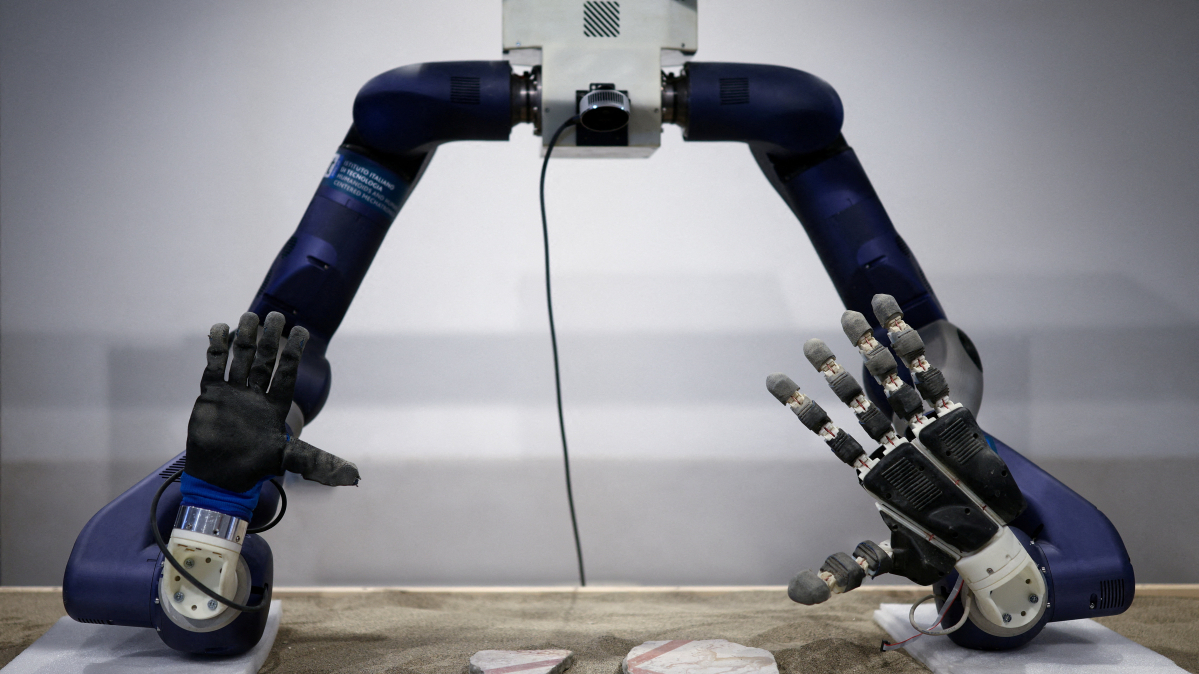
Pompeii's ancient Roman frescoes, shattered and buried for centuries, could get a second life thanks to a pioneering robotic system designed to support archaeologists in one of their most painstaking tasks: reassembling fragmented artefacts.
The technology, developed under an EU-funded project called RePAIR, combines advanced image recognition, AI-driven puzzle-solving, and ultra-precise robotic hands to accelerate traditionally slow and often frustrating restoration work.
Launched in 2021 and coordinated by Venice's Ca' Foscari University, the robotic project showcased in Pompeii on Thursday brought together international research teams that have used the archaeological site as their testing ground.
The experimental project "actually started from a very concrete necessity to recompose fragments of frescoes that had been destroyed during the Second World War," said the site's director Gabriel Zuchtriegel.
Researchers believe the technology could transform restoration practices worldwide.
The robot uses twin arms equipped with flexible hands in two sizes and vision sensors to identify, grip and assemble fragments without damaging their delicate surfaces.
The once-thriving city of Pompeii, near Naples, and its surrounding countryside were submerged by volcanic ash when Mount Vesuvius exploded in AD 79.
Researchers focused on frescoes preserved in a fragmentary state in Pompeii's storerooms -- two large ceiling paintings which were damaged during the initial eruption and later shattered by bombing in World War Two, and frescoes from the so-called 'House of the Gladiators' which collapsed in 2010.
Replicas were created during this initial testing phase to avoid risking the original pieces.
While the robotics teams worked on designing and building the system, experts in artificial intelligence and machine learning developed algorithms to reconstruct the frescoes, matching colours and patterns that may not be visible to the human eye.
Experts say the task is similar to solving a giant jigsaw puzzle, with extra difficulties such as missing pieces and no reference image of the final result.
"It's like you buy four or five boxes of jigsaw puzzles. You mix everything together, then you throw away the boxes and try to solve four or five puzzles at the same time," said Marcello Pelillo, the Venice university professor who coordinated the project.

The United States and Azerbaijan signed a strategic partnership in Baku on Tuesday (10 February) encompassing economic and security cooperation as Washington seeks to expand its influence in a region where Russia was once the main power broker.
“Peace is not just about signing treaties - it’s about communication, interaction and integration,” Sultan Zahidov, leading adviser at the AIR Center, told AnewZ, suggesting U.S. Vice President JD Vance's visit to the South Caucasus could advance the peace agenda between Azerbaijan and Armenia.
Greek Prime Minister Kyriakos Mitsotakis arrived in Ankara on Wednesday, where Turkish President Recep Tayyip Erdoğan held an official welcoming ceremony at the Presidential Palace, marking the start of high-level talks between the two NATO allies.
Europe heads into the Munich Security Conference, 13 February, amid deepening unease over U.S. policy, as President Donald Trump’s hard-line stance on defence, trade and territory fuels doubts about Washington’s long-term commitment to transatlantic security.
The European Union is preparing a further expansion of its sanctions against Russia, with Central Asia emerging for the first time as a distinct point of focus.
A Republican lawmaker accused on Wednesday (11 February) Attorney General Pam Bondi of concealing the names of Jeffrey Epstein’s powerful associates. The claim was made during a heated House hearing on the Justice Department’s handling of the files.
Start your day informed with AnewZ Morning Brief: here are the top news stories for the 12th of February, covering the latest developments you need to know.
The U.S. House of Representatives narrowly backed a measure on Wednesday (11 February) disapproving President Donald Trump's tariffs on Canada, a rare rebuke of the president and leaders of his party in the Republican-majority House.
Russia has attempted to "fully block" Meta Platforms-owned WhatsApp in the country, a company spokesperson told Reuters on Wednesday, as Moscow promotes home-grown platforms and seeks greater control over its internet space.
The suspect in a deadly school shooting in western Canada was an 18-year-old woman who allegedly killed her mother and stepbrother before attacking her former school. Investigators have not provided a motive for what is being described as one of the worst mass killings in Canada.
You can download the AnewZ application from Play Store and the App Store.
What is your opinion on this topic?
Leave the first comment