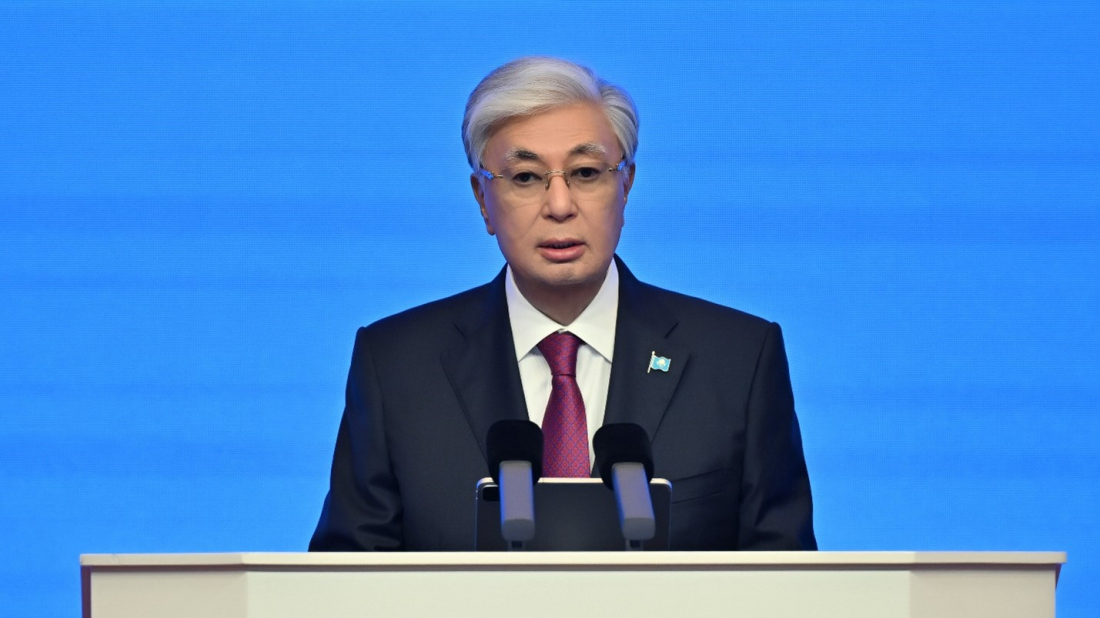
Kazakhstan and China have recently signed more than 70 agreements and contracts worth over $15 billion during the 8th meeting of the Kazakhstan–China Business Council held in Beijing. The event brought together President Kassym-Jomart Tokayev and China’s First Vice Premier Ding Xuexiang.
During the meeting, President Tokayev spoke about Kazakhstan’s growing investment potential. He described China as a reliable neighbour, a close friend, and a long-standing strategic partner. He noted that China has already invested $27 billion into Kazakhstan’s economy. Over 6,000 Chinese companies operate across various sectors in Kazakhstan, including big names like CNPC, CITIC, SINOPEC and Huawei. Cooperation between the two nations covers transport, energy, industry, agriculture and innovation.
A major focus was the ambitious new project of building Alatau City, a future hub for innovation, the crypto industry and technology entrepreneurship. Tokayev expressed strong support for the agreement signed with China State Construction Engineering Corporation and stressed the importance of starting construction without delay. Alatau City will cover 88,000 hectares, making it bigger than Almaty, and will include 12 former villages plus part of the city of Konaev. The plan is to turn Alatau into an export-oriented trade and logistics centre.
In the industrial sector, a polyethylene plant is being built in the Atyrau region in partnership with Sinopec. This facility will have a capacity of 1.25 million tonnes per year, backed by $7.4 billion in investments. There are also plans to modernise the Shymkent oil refinery with support from CNPC, along with renewable energy projects in collaboration with China Power International Holding and China Energy. In the Mangystau region, work will soon begin on a 160 MW gas-steam power plant with China Huadian Corporation. Nuclear energy cooperation with CNNC is also on the table.
The metals industry is set to expand too. In the Zhambyl region, Fujian Hengwang Investment will build a steel plant with a capacity of 3 million tonnes per year. Meanwhile, Jiaxin International will develop a tungsten ore processing plant in the Almaty region. In Almaty itself, preparations are underway for a new multi-brand car factory capable of producing 120,000 vehicles annually, including brands such as GWM, Chery and Changan, alongside a facility for BYD electric buses. China Glass is also moving forward with a new glass factory project.
Kazakhstan remains a crucial partner for China’s Belt and Road Initiative. Today, about 85 per cent of freight traffic between China and Europe passes through Kazakhstan. This year, a second railway track was added to the Dostyk–Moyynty section, increasing the corridor’s capacity fivefold. In 2024 alone, 4.5 million tonnes of cargo moved along the Trans-Caspian route, a 62 per cent increase from the previous year, with plans to double this to 10 million tonnes in the near future. Kazakhstan and China have already completed joint projects like the dry port in Xi’an and a terminal at Lianyungang port. President Tokayev noted that the capacity of the China–Europe transit corridor through Kazakhstan will increase five times, further strengthening the country’s role as a key trade and logistics hub.
The signed agreements reflect Kazakhstan’s pragmatic approach to developing economic cooperation with China, aimed at attracting investment and modernising infrastructure, while leveraging the country’s strategic geographic position.













What is your opinion on this topic?
Leave the first comment