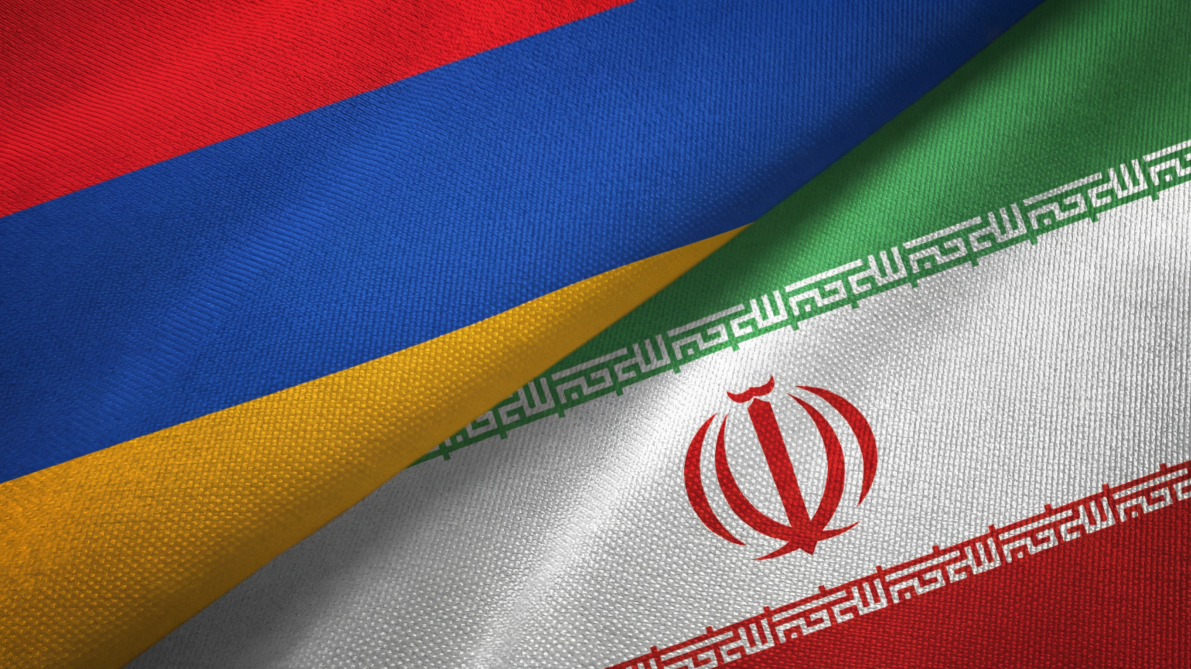
The foreign ministries of Armenia and Iran held political consultations in Yerevan, according to official statements.
The talks were led by Armenian Deputy Foreign Minister Vahan Kostanyan and Iran’s Deputy Foreign Minister for Political Affairs Majid Takht-Ravanchi.
During the meeting, the sides discussed a wide range of issues concerning bilateral Armenia–Iran relations, as well as matters related to regional and international developments. They exchanged views on prospects for expanding cooperation in energy, infrastructure, healthcare, agriculture, tourism and other sectors.
The discussions also covered the implementation of specific programmes, including new opportunities expected to arise from the implementation of the “Trump Route” (TRIPP) project.
AnewZ’s Dilek Tuna spoke to Zaur Gasimov, a scholar from the Turkish-German University, to gain insights into the significance of this visit in the current context.
In her conversation with Zaur Gasimov, Dilek Tuna asked about the importance of the diplomatic engagement between Armenia and Iran, especially considering the current situation in Iran. Gasimov shared his thoughts on the matter, offering a nuanced analysis of the visit and its implications.
Gasimov started by acknowledging the difficult position Iran finds itself in: "Iran is in economic turmoil and in a social one as well. The protest demonstrations cover, meanwhile, the entire country from the north to the south."
He also discussed the diplomatic visit to Yerevan, highlighting that it wasn’t a major delegation focused on strengthening economic relations:
"The visit to Yerevan is conducted by a senior diplomat, but it is also a Deputy Minister of Foreign Affairs. We don't have a huge delegation representing several ministries going to Armenia. It's not about boosting of economic relations. The military aspect, it's not headed by the Deputy Minister of Defence or by other ministries, which would have an impact on real strategic relations between two countries."
Gasimov cautioned against overestimating the importance of the visit itself, suggesting that the true significance lies in the aftermath. He emphasised, "I wouldn't overestimate this visit. And, the aftermath of the visit is much more important than the visit itself."
He went on to explain that the visit served as an opportunity for Armenia to reaffirm its political and economic commitments to Azerbaijan, which Iran might not necessarily agree with: "And, the visit will become an opportunity or it already became an opportunity to hear again by Yerevan, the commitment of the present-day government in Armenia to keep with TRIPP route, to keep on dialogue, political dialogue, economic dialogue with Baku."
Gasimov pointed out that this is something Iran is not content with and, more importantly, something it can no longer alter: "That's all actually Iran is not content with, but that's all what Iran cannot change or even alter anymore."
Finally, Gasimov wrapped up his analysis by reiterating that, while the visit itself might not have much immediate impact, it is part of a larger, ongoing process. "The visit is interesting on the margins of the everyday 24-hour protests in the country. In the same time, as I have told, I wouldn't overestimate it."
In her interview with Zaur Gasimov, AnewZ’s Dilek Tuna gained valuable insight into the significance of Iran's recent diplomatic visit to Armenia amidst ongoing unrest.
Gasimov cautioned against overestimating the visit's immediate impact, suggesting that the true importance lies in the long-term implications and the broader geopolitical context. While the visit highlights Armenia's commitment to ongoing dialogue with Azerbaijan, Iran’s influence over these developments is waning, and its discontent is unlikely to alter the course of regional diplomacy.












What is your opinion on this topic?
Leave the first comment