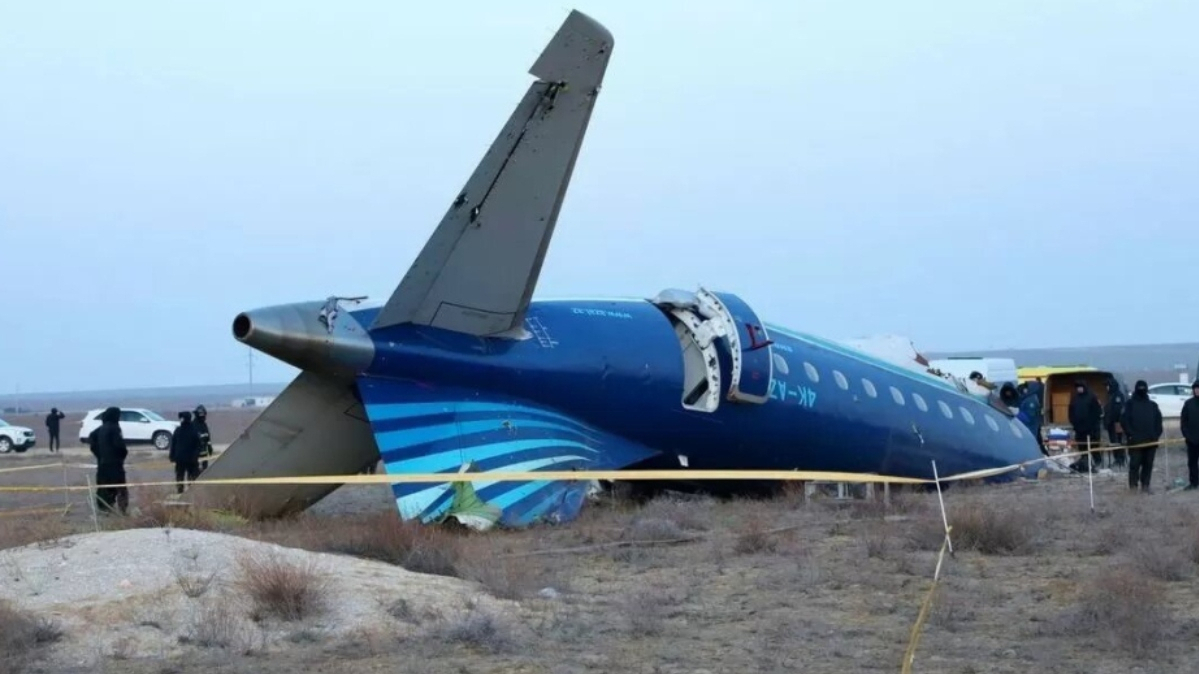
The controversial closure of the criminal case concerning the tragic crash of AZAL flight 1, which was shot down by Russian air defence systems last year while approaching Grozny, has uncovered a crucial new detail, according to Minval Politika.
On September 2, 2025, a secret "special conference" was held under the leadership of the Commander-in-Chief of the Russian Aerospace Forces to discuss the case involving the AZAL aircraft.
The meeting, which was attended by key military figures including Major General Alexander Tolopilo, First Deputy Commander of the 11th Air Force and Air Defence Army, resulted in a decision to focus on “improving interaction” in the announcement of the "Carpet" signal—aimed at preventing similar incidents from occurring in the future.
This move has sparked further controversy as it was Tolopilo who had issued the order to shoot down the AZAL plane. Despite the devastating consequences of his command, he was allowed to participate in the meeting, deliver a report, and resume his official duties without facing any public accountability for the disaster.
Minval Politika’s investigation reveals that all official probes into General Tolopilo have now been closed, further compounding the sense of impunity surrounding the tragedy.
This development follows Russian President Vladimir Putin’s promise to Azerbaijani President Ilham Aliyev late last year in Dushanbe, where he assured Aliyev that the investigation into the incident would be completed, and those responsible would face punishment.
However, this pledge raises an important question: how can Putin’s assurances be reconciled with the fact that charges against Tolopilo were dropped prior to the meeting between the two leaders on October 9?
The timing suggests that either the Russian president was fully aware of the situation or Russia's Investigative Committee, led by Alexander Bastrykin, misinformed him.
Minval Politika reached out to the Russian Investigative Committee for clarification regarding the closure of the case, but the committee declined to comment on the matter. An official inquiry has been submitted asking on what procedural basis the decision was made.
Furthermore, the Russian Embassy in Baku also refused to comment on the closure of the case, further fuelling concerns over the lack of transparency in the investigation.
The tragic downing of AZAL flight 1 continues to be a sore point in relations between Russia and Azerbaijan, and an apparent lack of accountability raises significant doubts about the Russian authorities’ commitment to justice and transparency.
As the investigation remains shrouded in secrecy, the people of Azerbaijan, along with the families of those lost, continue to seek answers.











What is your opinion on this topic?
Leave the first comment