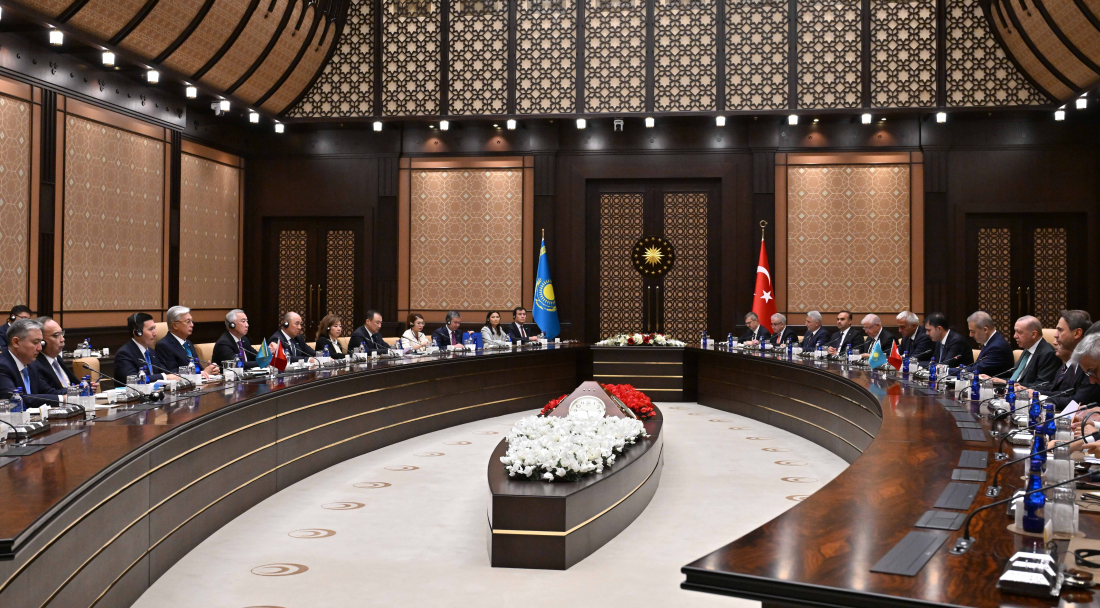
The 5th meeting of the Kazakhstan–Türkiye High-Level Strategic Cooperation Council, chaired by the two countries’ leaders was held on Tuesday in Ankara. The meeting was focused on strengthening cooperation in the areas of economy, transport, and investment.
Turkish President Recep Tayyip Erdogan warmly welcomed President Kassym-Jomart Tokayev, saying, “Welcome to your second homeland!”
He emphasized the great importance Türkiye places on cooperation with Kazakhstan, noting that bilateral relations have now reached the level of a strategic partnership.
Erdogan expressed a commitment to further strengthening this positive momentum across trade, defense industry, agriculture, tourism, and culture. Highlighting Kazakhstan as one of Türkiye’s largest trading partners, he stated: “We will continue our efforts to increase trade turnover to $15 billion.”
The two leaders highlighted the solid foundation of Kazakh–Turkish cooperation, rooted in shared historical and spiritual values, and reaffirmed their mutual commitment to elevating the partnership to a new level.
"We are committed to elevate our bilateral relationship to new heights..., we reaffirm our shared intention to expanding cooperation. We have both the necessary resources and strong motivation to achieve this. A comprehensive legal framework has been established between our two countries, with more than sixty treaties and agreements currently in force. Today, several additional bilateral agreements are set to be signed,” - President Tokayev stated at the Council's meeting.
Kazakhstan's Presidential Office reported that the meeting placed significant focus on expanding bilateral trade, which reached $5 billion in 2024. Tokayev emphasized Kazakhstan’s willingness to supply Türkiye with at least 34 categories of goods, valued at approximately $1 billion, and urged for an increase in Turkish exports to Kazakhstan.
Transport and logistics were highlighted as key sectors for collaboration. Tokayev pointed to Kazakhstan’s strategic priority of developing of the Trans-Caspian International Transport Route and expressed interest in attracting Turkish investment in the development of modern railways, logistics hubs, land ports, and shipbuilding facilities.
President Tokayev affirmed that Kazakhstan is "a reliable partner and always ready to support Turkish investors."
Expansion of energy cooperation was also reviewed, including opportunities to increase Kazakh oil exports through the Baku–Tbilisi–Ceyhan pipeline.
Tokayev invited Turkish companies to participate in projects aimed at addressing Kazakhstan’s electricity shortages and expressed confidence in the beneficial collaboration between KazMunayGas and Türkiye Petroleum.
The president highlighted incentives introduced in Kazakhstan’s new tax code, including a royalty framework aimed at promoting deeper processing of raw materials. He also encouraged Turkish businesses to collaborate in establishing an investment fund and to actively participate in forming joint ventures in the mining and natural resources sectors.
Agriculture was highlighted as another vital sector for growth. Currently, Kazakhstan exports one-quarter of its grain, one-third of its cotton, and over one-quarter of its grain gluten to Türkiye.
President Tokayev noted that 23 agricultural investment projects totaling $1.3 billion are underway in Kazakhstan with Turkish participation—18 of which are already operational and exporting to international markets.
To support positive growth in tourism and further develop multifaceted bilateral relations, a decision was made to implement a 90-day visa-free regime for Turkish citizens traveling to Kazakhstan.
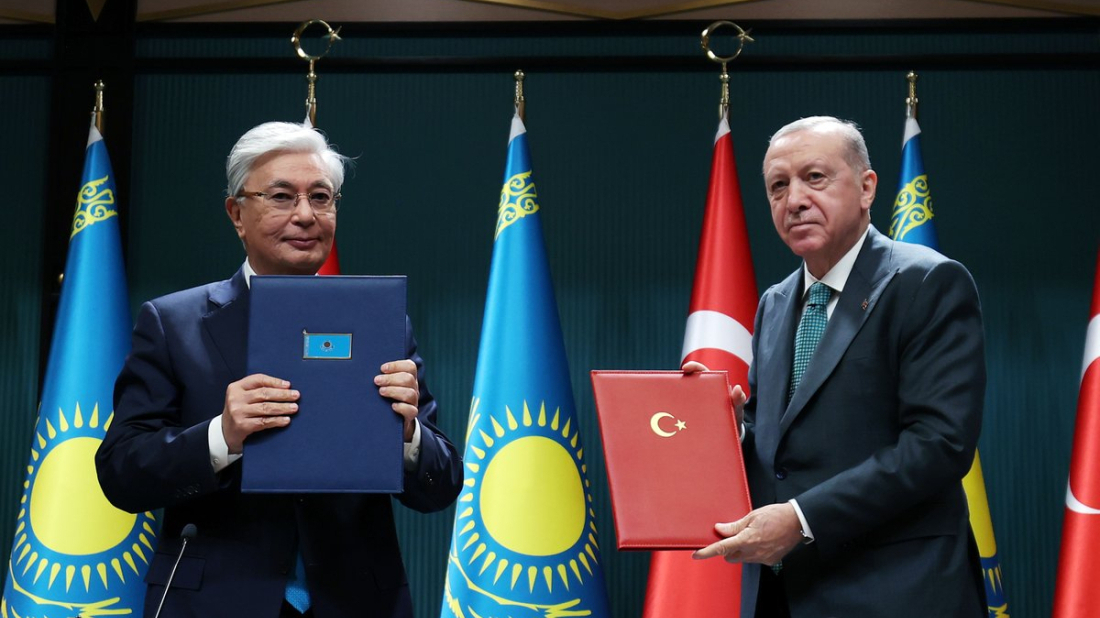
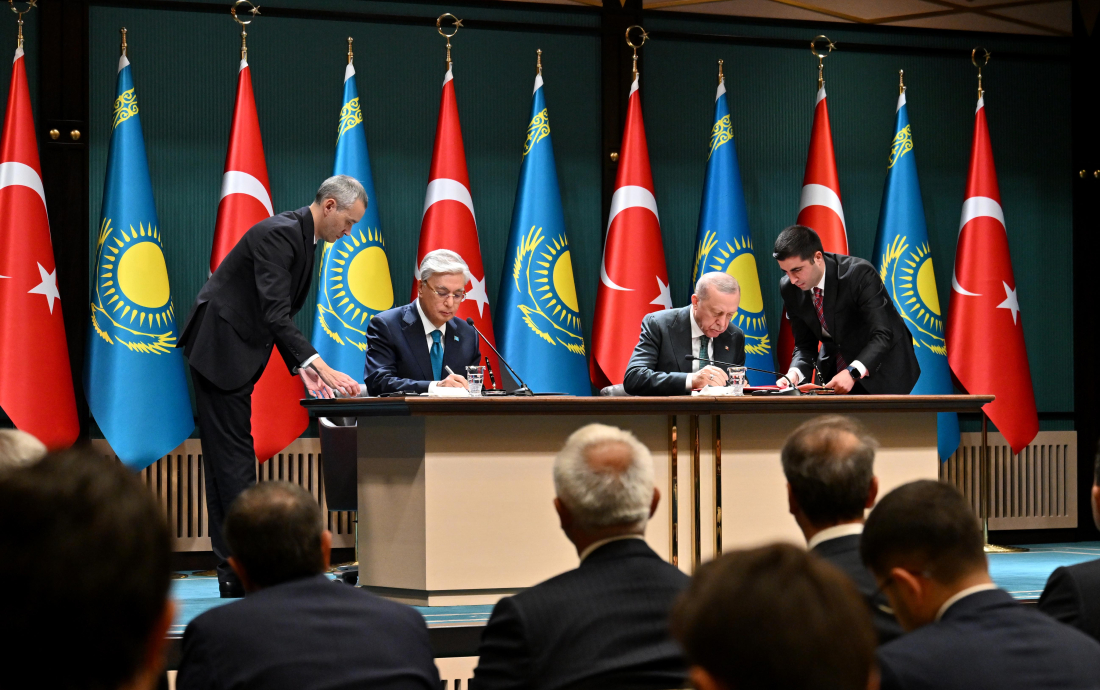
Following the talks, Kassym-Jomart Tokayev and Recep Tayyip Erdogan signed a Joint Declaration and the Decision of the 5th meeting of the High-Level Strategic Cooperation Council between the Republic of Kazakhstan and the Republic of Türkiye.












What is your opinion on this topic?
Leave the first comment