The European Commission’s decision to grant the Black Sea Submarine Cable project the status of a Project of Mutual Interest is more than a technical upgrade—it is a geopolitical message.
In accelerating a new east–west energy corridor, the EU is not only strengthening ties with Georgia and Romania but also circumventing Russia’s traditional dominance over regional energy routes.
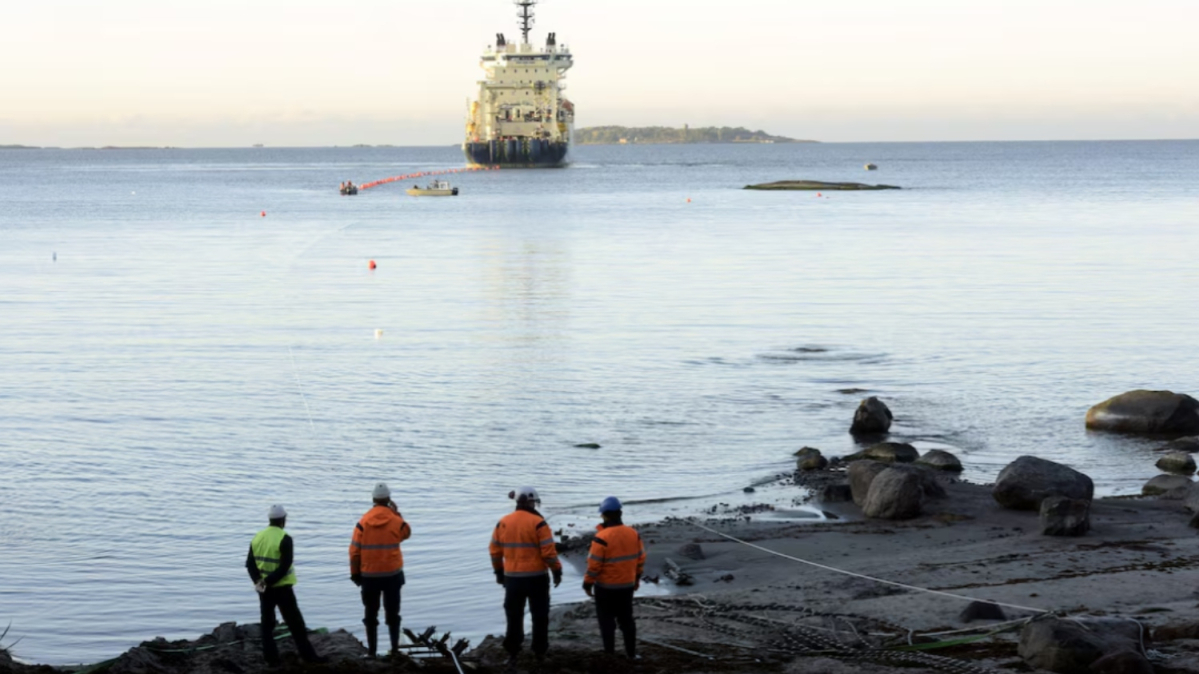
The cable, stretching 1,155 kilometres across the Black Sea, aims to transmit 1,300 MW of clean electricity directly into the EU grid.
Backed by feasibility studies and now officially supported through the EU’s regulatory framework, it represents one of the most ambitious cross-regional energy integration projects of the decade.
Though Moscow has no direct involvement in the project, Russia’s relevance is unmistakable.
For decades, Russia controlled or influenced most east-to-west energy pathways—pipelines, transit routes, maritime flows.
The war in Ukraine and Europe’s subsequent drive to dismantle energy dependency on Russia have reshaped that landscape entirely.
The Black Sea Submarine Cable fits perfectly into that new reality as it creates a non-Russian energy route from the Caspian region to Europe which bypasses Russian territory and territorial waters entirely.
It alo strengthens Georgia and Romania as strategic connectors between Europe and the South Caucasus while reducing Russia’s leverage over regional electricity and gas flows.
In geopolitical terms, this is the most significant corridor Moscow cannot block, disrupt or influence.
South Caucasus at the Center: Georgia’s Leverage, Azerbaijan’s Opportunity
Georgia’s role as the only secure, non-Russian transit state between the Caspian and Europe has long been understood. But this project gives that geography new strategic weight.
Azerbaijan, too, stands to gain. As Baku expands its wind and solar generation capacity, the submarine cable opens potential new routes for exporting renewable energy westward.
It complements existing pipelines and creates a new platform for Caspian-to-Europe energy diversification—a strategic priority for Brussels since 2022.
This creates a triangular alignment between Azerbaijan, Georgia and the EU forming a corridor that bypasses both Russia and Iran.
Tbilisi: “No One Can Defeat Geography”
In response to the European Commission’s decision, Georgian Parliament Speaker Shalva Papuashvili emphasised the broader geopolitical meaning of the project.
Referring to attempts by some European officials to exclude Georgia from regional discussions, Papuashvili stated:
“No one can defeat geography.”
His message was clear that Georgia’s geographic position makes it indispensable, regardless of political fluctuations in Brussels or elsewhere.
With EU backing now formalised, that geographic advantage is cemented into hard infrastructure.
If fully realized, the Black Sea Submarine Cable could become the most important non-Russian energy corridor developed since the restoration of independence in the South Caucasus.










What is your opinion on this topic?
Leave the first comment