The AnewZ Opinion section provides a platform for independent voices to share expert perspectives on global and regional issues. The views expressed are solely those of the authors and do not represent the official position of AnewZ
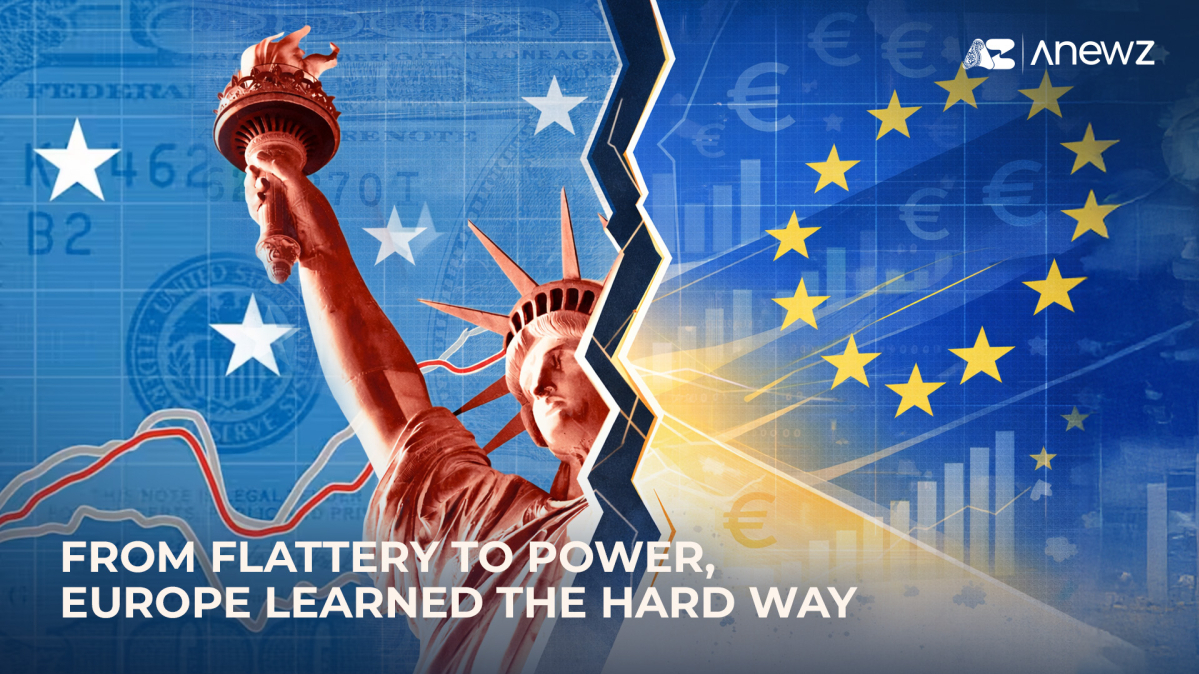
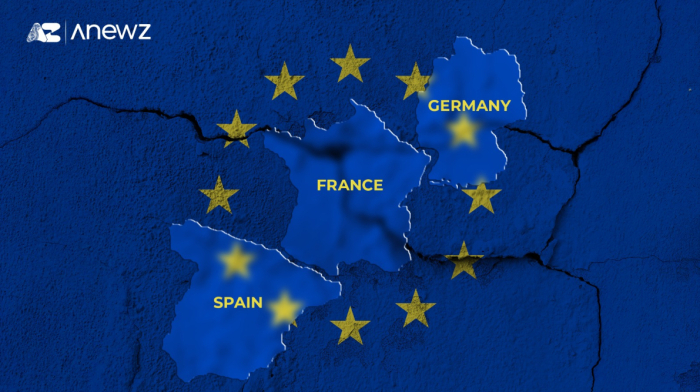
As the U.S. grows increasingly unpredictable, historical alliances are under immense pressure. Since WWII, Europe and the U.S. have shared a robust, multifaceted relationship. Once driven by Cold War rivalry and the Soviet threat, this alliance now faces serious challenges.
President Donald Trump, in his second term, has launched an unprecedented assault on Europe. He has treated allies with disdain, often diverging from the Western consensus on human rights, democracy and globalisation.
In the 2025 national security strategy, his government suggested Europe was suffering from civilisational decline and labelled its leaders as “weak.” His constant lectures to European leaders on what they should do led NATO Secretary General Mark Rutte to famously refer to him as “daddy.”
Trump’s stance on Ukraine also contrasts sharply with Europe’s. While the U.S. pushes for a peace agreement, Europe fears a hasty resolution that disregards its interests. In its national security strategy, the U.S. blamed Europe, accusing it of “unrealistic expectations” about how the war might end.
Though Europe has managed to pacify Trump with a blend of flattery and concessions, the relationship remains volatile, often descending into one crisis after another. European leaders initially yielded to Trump’s demands. At the 2025 NATO Summit in The Hague, after some hesitation, member states agreed to raise their defence budgets to 5% of GDP. Yet, six months later, Trump dismissed NATO’s contributions, stating in an interview at the World Economic Forum (WEF) in Davos, “We’ve never needed them, we have never really asked anything of them.”
Another crisis was avoided when the EU struck a trade deal with the U.S. in July 2025, reducing tariffs on EU exports from 30% to 15%. However, tensions reignited when Trump proposed acquiring Greenland, threatening 10% to 25% tariffs on eight European nations; Denmark, Norway, Sweden, France, Germany, the UK, the Netherlands and Finland, who opposed violating Denmark’s sovereignty.
Trump also suggested acquiring Canada, declaring that the border was an “artificially drawn line” that could be redrawn through force and persuasion. He even posted an AI-generated image on social media depicting the U.S. flag over Canada, Greenland, and Venezuela.
Europe’s Strategic Turn
After failing to meet Trump’s demands, Europe has finally decided that enough is enough. A series of tit-for-tat responses to the Greenland threat, including French President Emmanuel Macron’s suggestion of invoking the anti-coercion instrument against the U.S. and the threat of reciprocal tariffs, led to a peaceful resolution. European leaders presented a united front.
While Europe successfully averted an all-out crisis for now, it understands that reactive measures alone are no longer enough to protect its collective interests. It seems Europe has heeded the advice of former EU High Representative for Foreign Affairs and Security Policy, Josep Borrell, who stated seven years ago that “the EU needs to learn to speak the language of power.”
This shift is evident in the EU’s recent trade deal with India, hailed as “the mother of all deals” by the EU Chief. The agreement reflects a shared sense of economic threat. Prime Minister Modi, seeking alternatives after President Trump imposed 50% tariffs on Russian oil, has turned to stronger ties with Europe. Similarly, the EU Chief has engaged the Middle East, culminating in a historic first EU-Jordan summit aimed at strengthening their strategic partnership.
A new realisation
British Prime Minister Keir Starmer also undertook a four-day tour of China with a large delegation of 60 businesses and cultural organisations, marking the first such visit since 2018. "As one of the world’s biggest economic players, a strategic and consistent relationship with them is firmly in our national interest. That does not mean turning a blind eye to the challenges they pose - but engaging even where we disagree," he said before the trip.
All this signals a new realisation in Europe: flattery no longer works. To safeguard its economic and security interests in an unpredictable U.S. environment, Europe must embrace the Balance of Power theory, as outlined by Stephen Walt in Origins of Alliances: "States form alliances primarily due to their collective perception of threats - and not power alone."
While the U.S. is not an adversary, under Trump it is emerging as a growing threat to European interests. It’s time Europe heeds Canadian Prime Minister Mark Carney’s speech at the WEF: “In a world of great-power rivalry, the countries in between have a choice: Compete with each other for favour, or combine to create a third path with impact.”
















What is your opinion on this topic?
Leave the first comment