U.S. President Donald Trump said on Saturday that the United States has begun negotiations with European leaders over Greenland and that an agreement is already taking shape.
He made the remarks while speaking to reporters aboard Air Force One as he travelled from Washington to Florida.
“We have started a negotiation,” Trump said in response to questions about contacts with European leaders.
“I think it’s going to be a good deal for everybody, a very important deal actually from a national security point of view,” he added. “I think we’re going to make a deal there.”
Trump said consensus had already been reached on a number of issues and claimed Europe also wanted the United States to conclude an agreement.
On 21 January, after talks with NATO Secretary General Mark Rutte, Trump said the outline of a possible Greenland deal had emerged. According to U.S. media reports, a draft discussed would preserve Denmark’s sovereignty over Greenland while updating the 1951 defence agreement, potentially allowing the U.S. to establish military bases and so-called “defence zones” if NATO considers it necessary.
Danish Prime Minister Mette Frederiksen later said Rutte had no mandate to negotiate on Denmark’s behalf and stressed that discussions had returned to traditional diplomatic channels.
Trump’s renewed focus on Greenland has revived strong opposition in Denmark, where many see the territory as an integral part of the Danish realm and reject any suggestion of U.S. control.
Public anger over Trump remarks
Public anger has also been fuelled by separate remarks from Trump last week in which he questioned the extent of European participation in the Afghanistan war, suggesting that allies had largely stayed “off the front lines” while U.S. forces bore the burden of fighting.
Those comments prompted a backlash from European leaders and veterans’ groups, who say they misrepresent the scale of allied sacrifices over two decades of conflict.
Denmark was among the most active combat contributors to the U.S.-led mission in Afghanistan. Despite its small population, the country lost 44 service members in the war, giving it one of the highest per-capita casualty rates among coalition partners, comparable to that of the United States.
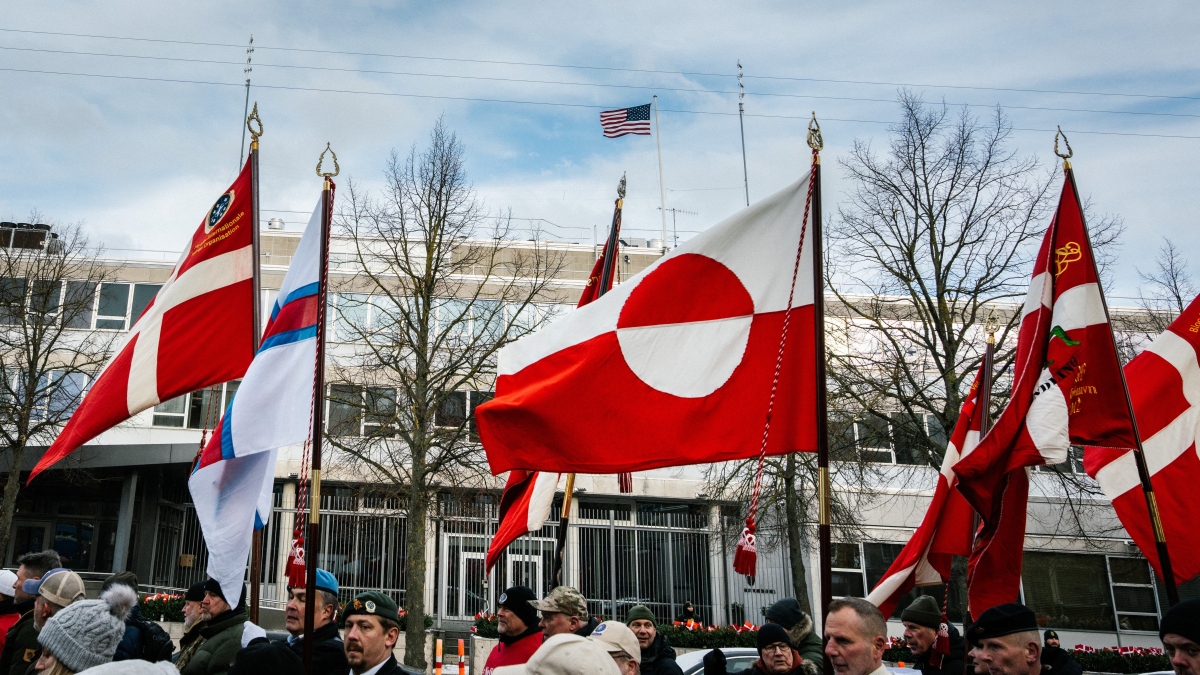
Against this backdrop, hundreds of people gathered outside the U.S. Embassy in Copenhagen on Saturday (31 January) to show solidarity with Danish veterans and honour the country’s war dead.
Demonstrators planted Danish flags embroidered with the names of fallen soldiers and observed a moment of silence. Many wore medals earned during NATO deployments.
Retired Danish Lieutenant Colonel Niels Christian Koefoed, who served in Afghanistan, said the protest was meant to underline that each casualty represented a human life, not just a statistic.
“Behind every flag there is a person, a soldier, a young man,” he said.
Afghanistan veteran Jesper Larsen said Trump’s remarks were painful for those who fought and lost friends.
“I lost a very close friend and colleague,” Larsen said. “I think he owes all my combat friends an apology.”













What is your opinion on this topic?
Leave the first comment