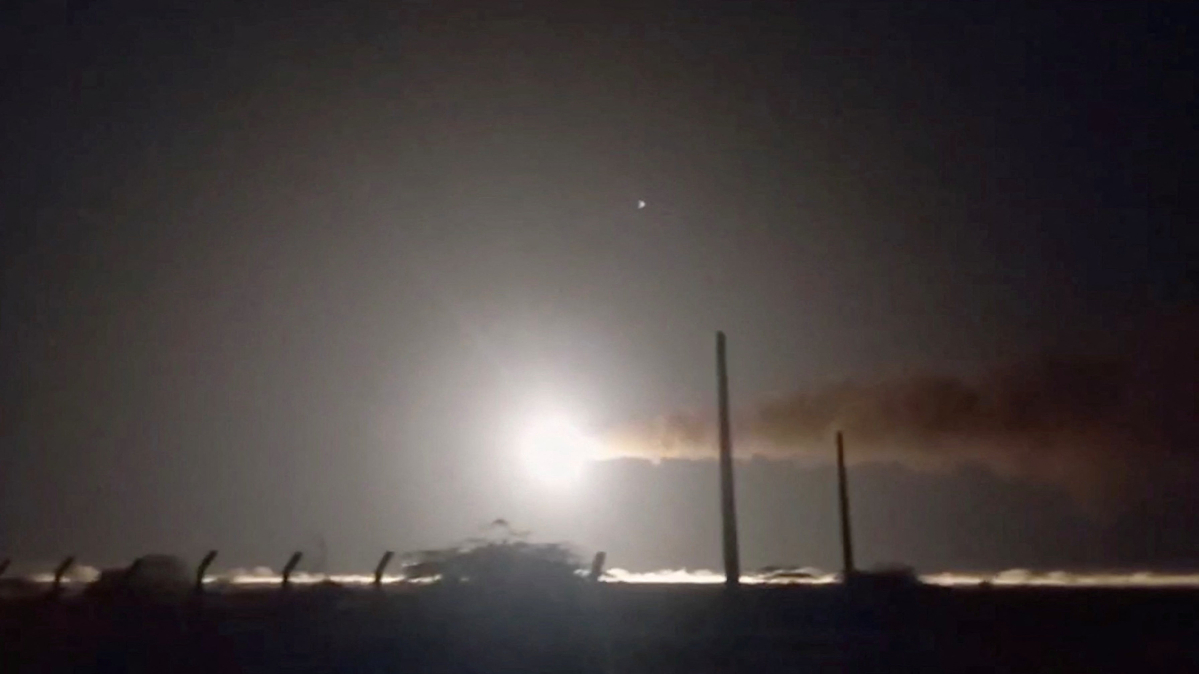
The U.S. military said it carried out retaliatory strikes against Iran on Thursday (7 May), as Iran’s military leadership accused Washington of violating a Pakistani-mediated ceasefire agreed to back in April.
U.S. Central Command (CENTCOM) said it had targeted Iranian military sites responsible for attacks on U.S. forces in the Strait of Hormuz, after it said Tehran launched an attack on three U.S. Navy destroyers transiting the sea passage.
In a statement, CENTCOM said it had “eliminated inbound threats and targeted Iranian military facilities responsible for attacking U.S. forces including missile and drone launch sites; command and control locations; and intelligence, surveillance and reconnaissance nodes”.
No U.S. military assets were hit by the Iranians, the U.S. military said.
"CENTCOM does not seek escalation but remains positioned and ready to protect American forces," the statement added.
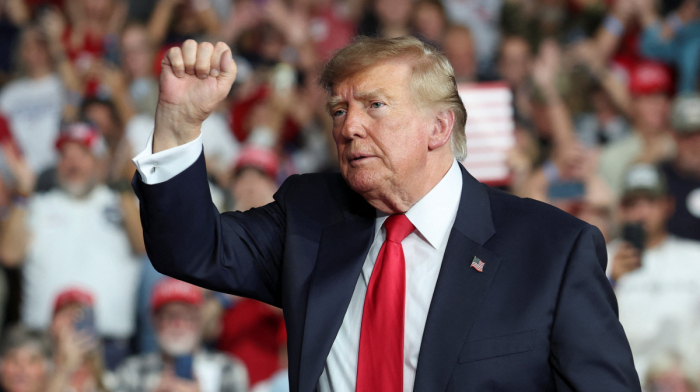
President Donald Trump said on Thursday three U.S. Navy destroyers transited out of the Strait of Hormuz under fire, adding that the American destroyers were not damaged but "great damage was done to Iranian attackers."
"Three World Class American Destroyers just transited, very successfully, out of the Strait of Hormuz, under fire. There was no damage done to the three Destroyers, but great damage done to the Iranian attackers," Trump wrote on Truth Social.
"They were completely destroyed along with numerous small boats," he said.
Iran accuses U.S. of ceasefire breach
But Iran’s Joint Military Command, which represents the Iranian military and Islamic Revolution Guards Corps (IRGC), said Washington’s attacks on several Iranian cities and an Iranian oil tanker in the Strait of Hormuz were a breach of the ceasefire.
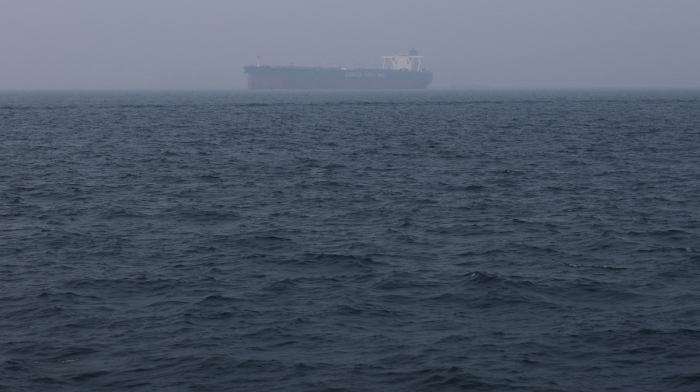
The U.S. targeted "an Iranian oil tanker travelling from Iran's coastal waters near Jask toward the Strait of Hormuz, as well as another vessel entering the Strait of Hormuz near the Emirati port of Fujairah," a spokesperson for Iran's Joint Military Command said in a statement carried by state media.
"At the same time, with the cooperation of some regional countries, they carried out air attacks on civilian areas along the coasts of Bandar Khamir, Sirik, and Qeshm Island,” the spokesperson added.
Meanwhile, U.S. President Donald Trump told ABC News on Thursday that the ceasefire with Iran remained in place despite the new strikes, a reporter for the American broadcaster said on X.
Earlier, a reporter for U.S. news channel Fox News said on X that an unnamed senior U.S. official had confirmed that the U.S. military carried out strikes on Iran’s Qeshm Port and Bandar Abbas.
According to the report, the American official said the strikes did not mean an end to the ceasefire announced on 8 April.
The fresh U.S. strikes came as Washington awaited Tehran’s response to a peace proposal sent to it via mediator Pakistan.
The proposal is intended to bring about a lasting and formalised halt to fighting between the two countries, while leaving the most contentious issues - such as Iran's nuclear programme and the reopening of the Strait of Hormuz - unresolved for now.














What is your opinion on this topic?
Leave the first comment