Iran’s parliamentary speaker has warned that Tehran still faces the risk of military or terrorist attacks, despite reports that a peace agreement with the U.S. could be announced this week.
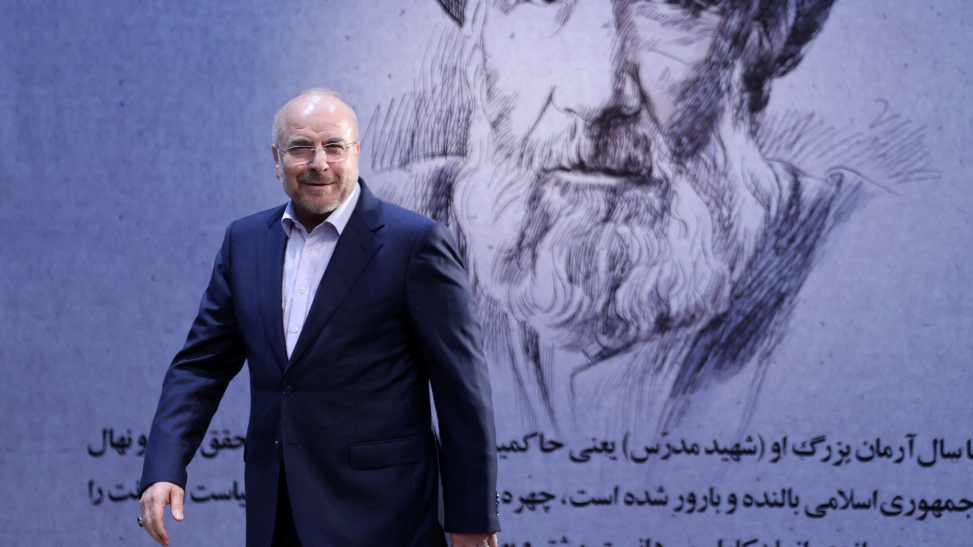
Iran’s Parliamentary Speaker Mohammad Bagher Ghalibaf has said Tehran does not rule out renewed “military or terrorist attacks”, despite reports of a possible peace agreement with the U.S. to be announced this week.
“We do not underestimate the possibility of a military attack, especially a terrorist attack,” parliament news agency ICANA quoted Iran’s chief negotiator as saying.
Ghalibaf made the remarks in his second audio message in a week to Iranians on Wednesday, focusing on post-war economic woes.
He added that “the enemy” was attempting to undermine national unity through economic pressure, media campaigns and psychological warfare.
Distrust of the U.S. remains
His comments on possible military action and terrorist attacks appeared to reference past Israel–U.S. conflicts in June 2025 and February 2026, as well as the killing of Iranian officials, at a time when Iranian and U.S. negotiators were engaged in indirect talks and exchanging draft proposals and counterproposals.
Senior Iranian officials have since stressed that the Islamic Republic does not trust the United States.
“Any effective negotiation requires an end to the war and guarantees that hostile actions will not be repeated,” President Masoud Pezeshkian told his French counterpart in a phone call on Wednesday evening.
According to the President’s Office website, he also said that “U.S. behaviour has diverted the path of diplomacy towards threats, pressure, and sanctions”.
Signals amid reported peace process
In another sign of distrust, Mohammad Marandi, a member of the media team accompanying Iranian negotiators in Islamabad in April, emphasised Tehran’s readiness for a “potential major attack.”
“The Islamic Republic of Iran is fully prepared for a potential major attack before Trump’s trip to China,” he said in a post on X, rejecting Axios reports of an imminent Iran–U.S. arrangement.
Meanwhile, a fresh verbal exchange between Iran and the U.S. emerged after Ghalibaf mocked U.S. media reports of a possible agreement, writing on X that “Operation Trust Me Bro” had failed and been replaced by “Operation Fauxios.”
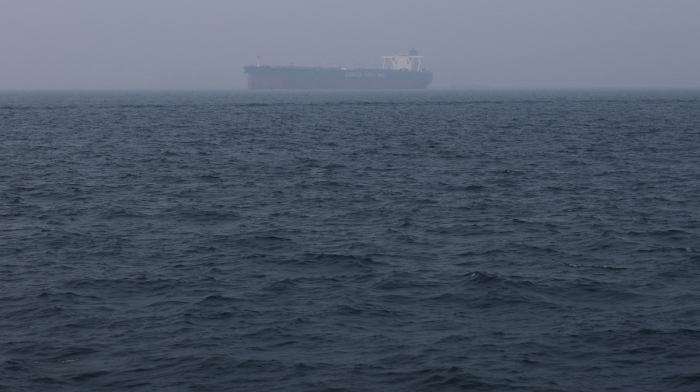
“Operation Trust Me Bro failed. Now back to routine with Operation Fauxios,” wrote Iran’s top negotiator, dismissing reports of a possible deal after U.S. President Donald Trump suggested an agreement was close and paused a naval escort operation in the Strait of Hormuz.
China talks and regional diplomacy
Foreign Minister Abbas Araghchi, who visited Beijing on Wednesday ahead of the planned visit by the U.S. president on 14–15 May, said he had a “constructive” meeting with his Chinese counterpart and welcomed China’s proposals on regional peace and stability.
“I have had a constructive meeting with Chinese Foreign Minister Wang Yi in Beijing. Both sides reaffirmed Iran's right to uphold national sovereignty and national dignity,” he wrote on X.
In an interview with Iran’s state-owned IRIB TV, Araghchi added: “Our Chinese friends also believe that Iran after the war is different from Iran before it” and “has gained an improved international status and proven its capability and authority.”
“Therefore, a new era of cooperation between Iran and other countries is ahead,” he said.
Criticism of Washington’s approach
Foreign Ministry spokesman Esmaeil Baghaei urged Washington to avoid “dictation, deception, extortion, and coercion” in a post on X.
“The concept of ‘negotiations’ requires, at the very least, a genuine attempt to engage in discussions with a view to resolving the dispute (ICJ, Judgment of 1 April 2011, para. 157). It needs ‘good faith’, then, meaning that ‘negotiations’ is not ‘disputation’; nor is it ‘dictation’, ‘deception’, ‘extortion’ or ‘coercion’.”
In a separate post, also believed to be directed at U.S. officials, Baghaei cited Barbara W. Tuchman’s book The March of Folly: From Troy to Vietnam, warning against “wooden-headedness” in state decision-making.
“Wooden-headedness, the source of self-deception, is a factor that plays a remarkably large role in government.
“It consists in assessing a situation in terms if preconceived fixed notions while ignoring or rejecting any contrary signs. It is acting according to wish while not allowing oneself to be deflected by the facts,” Baghaei said.
Local media quotes MP and former foriegn minister, Manouchehr Mottaki, as saying Iran is set to respond to Washington's plan before the weekend.












What is your opinion on this topic?
Leave the first comment