While the U.S. and Iran exchange strong messages over the Strait of Hormuz, their words may be misunderstood and lead to wider instability across the whole of the Middle East, according to a Baku-based political commentator.
Tensions between the U.S. and Iran are fuelling uncertainty across the region, despite claims from Washington that progress is being made towards a new agreement with Tehran.
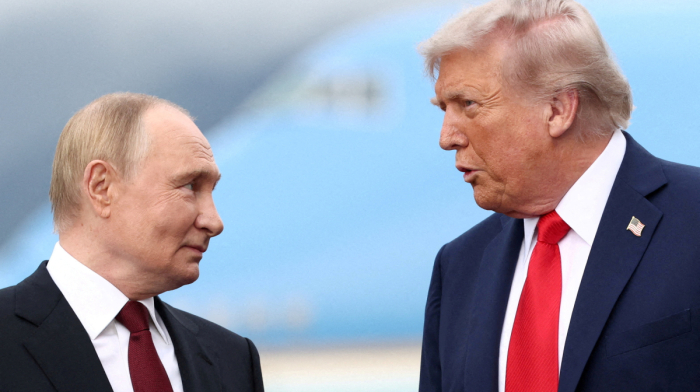
U.S. President Donald Trump has said there has been “great progress” in talks with Iran, while Iranian state media has accused Washington of backing down after failing to secure control over the Strait of Hormuz, one of the world’s most important energy routes.
Speaking to AnewZ, Political commentator and Baku State University lecturer, Aytan Gurbanova, said the crisis is being shaped as much by political messaging as by military action.
'A battle of narratives and perceptions'
“This confrontation isn’t driven only by military calculation or economic pressure,” Gurbanova said. “It’s equally a battle of narratives and perceptions.”
She said both Washington and Tehran are seeking to present themselves as acting from positions of strength. According to her, the U.S. continues to portray itself as a defender of regional stability, while Iran frames its stance around sovereignty and resistance to external pressure.
Gurbanova warned that the growing use of strategic signalling by both sides could increase the risk of miscalculation.
“Military movements, political statements and calibrated responses are designed to demonstrate strength and determination,” she said. “The danger is that such signals can easily be misread, increasing the risk of unintended escalation.”
'Controlled confrontation' rather than ceasefire
Despite increasing discussion of a possible ceasefire, Gurbanova said the current situation does not amount to genuine de-escalation.
“At a broader level, this is not a genuine ceasefire,” she said. “What we are witnessing is controlled confrontation.”
She argued that both sides appear willing to tolerate a limited level of tension, provided it does not escalate into direct conflict. In her view, this reflects a broader trend in international politics, where states rely on carefully calibrated actions while avoiding steps that could trigger major war.
Strait of Hormuz remains central to crisis
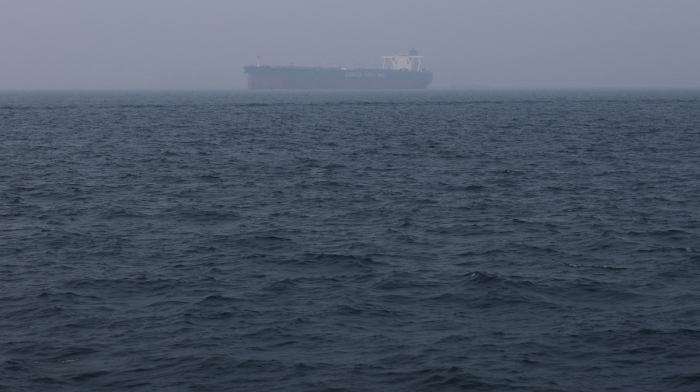
The Strait of Hormuz remains at the centre of the crisis. Roughly a fifth of the world’s oil passes through the narrow waterway, making any instability there a serious concern for global markets.
Gurbanova said even the threat of disruption can have significant economic consequences.
“Iran or the United States of America do not necessarily need to fully block the strait for there to be global consequences,” she said. “Even uncertainty, unpredictability or limited disruptions can influence oil prices, shipping routes and international decision-making.”
She added that energy has increasingly become “a geopolitical tool with global implications”, extending the impact of the crisis far beyond the Gulf region.
Gulf tensions risk wider regional escalation
Regional tensions have also intensified following reports that the United Arab Emirates activated its air defences for a second consecutive day after missiles and drones launched from Iran were reportedly detected over the Gulf.
According to Gurbanova, the latest developments show the crisis is no longer confined to a confrontation between Tehran and Washington.
“This situation is no longer confined to a bilateral confrontation,” she said. “It is gradually becoming a broader regional issue.”
She warned that conflicts in the Middle East have often expanded through miscalculation rather than deliberate planning, particularly in highly tense environments where critical infrastructure and energy facilities remain vulnerable.
At the same time, Gurbanova said the crisis could reshape political and security alliances across the Gulf, as regional states seek closer coordination in response to growing instability.
However, she cautioned that deeper co-operation could also sharpen geopolitical rivalries in the longer term, making a sustainable regional settlement even harder to achieve.











What is your opinion on this topic?
Leave the first comment