Pakistan’s Prime Minister Shehbaz Sharif said Iran and the United States, along with their allies, have agreed to an immediate two-week ceasefire covering all areas, but Israel says the deal excludes Lebanon. Tel Aviv says the U.S. is committed to achieving shared goals in upcoming negotiations.
⦿ 18:54 GMT | UPDATE
Summary
The live blog is now closing. We'll be back tomorrow. Please find a round-up of today's main events below.
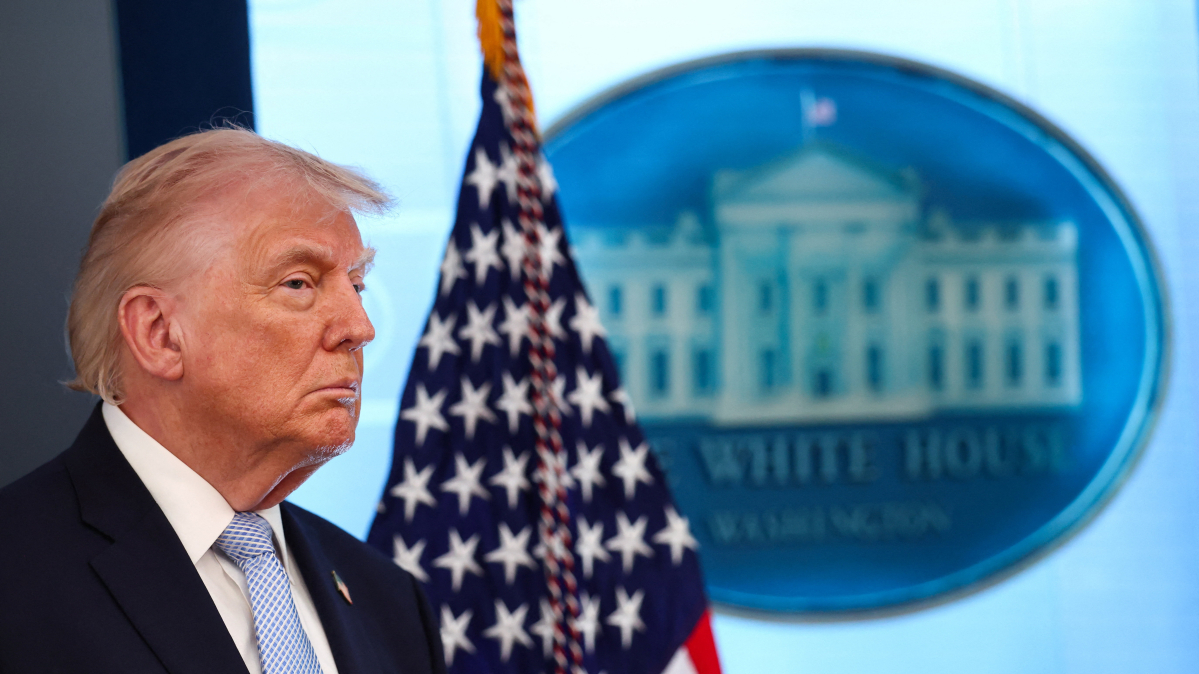
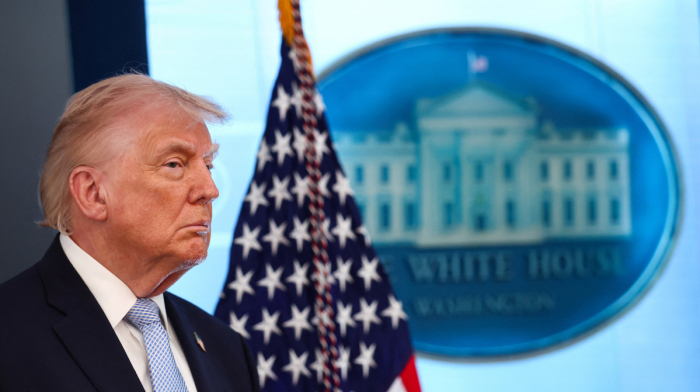
- U.S. President Donald Trump said Iran talks will be held behind closed doors and warned only one set of U.S.-approved terms would be accepted.
- Iran indicated it could hand over its enriched uranium stocks, according to White House spokeswoman Karoline Leavitt.
- U.S. and Iranian delegations are set to arrive in Pakistan for talks, with negotiations expected to begin soon.
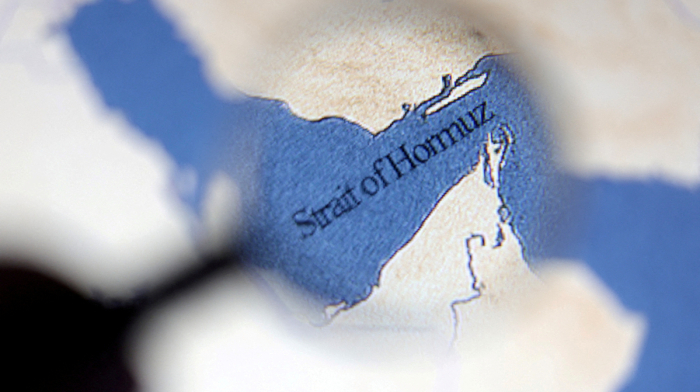
- Iran warned ships in the Strait of Hormuz they could be targeted without permission, despite a fragile ceasefire.
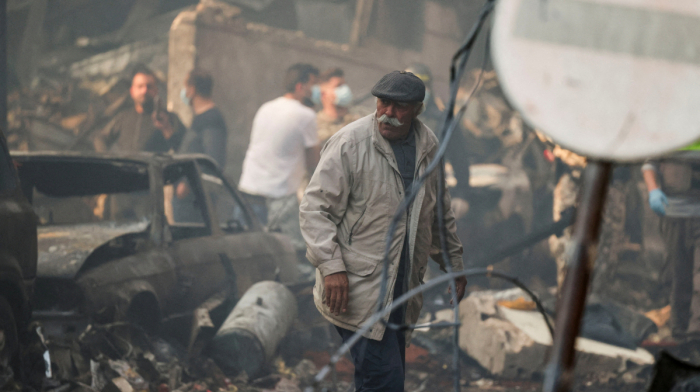
- Israel carried out its heaviest strikes on Lebanon, with dozens killed, as fighting continues outside the ceasefire.
⦿ 18:50 GMT | UPDATE
Tehran signals doubts over ceasefire as delegation heads to Islamabad
Reuters
Iran’s Parliament Speaker Mohammad Baqer Qalibaf said three key clauses of a proposed 10-point framework had already been violated ahead of planned talks with the United States in Pakistan, casting doubt on the viability of negotiations.
Qalibaf cited breaches including continued fighting in Lebanon, an alleged “intruding drone” in Iranian airspace, and the denial of Iran’s right to uranium enrichment, arguing that under such conditions a ceasefire or negotiations were unreasonable.
Pakistani sources said Qalibaf is expected to travel to Islamabad alongside Foreign Minister Abbas Araqchi for talks with U.S. officials scheduled to begin Friday.
⦿ 18:49 GMT | UPDATE
UAE seeks clarity on Iran ceasefire, demands full reopening of Hormuz
Reuters
The UAE said it will seek clarification on the terms of the U.S.-Iran two-week ceasefire to ensure Tehran’s full commitment to halting attacks and the “unconditional reopening” of the Strait of Hormuz, a foreign ministry spokesperson said.
The spokesperson added that any lasting solution must take a comprehensive approach, addressing Iran’s nuclear and military capabilities as well as its regional proxies, underscoring Gulf concerns despite the ceasefire.
⦿ 18:13 GMT | UPDATE
Iran to surrender enriched uranium as U.S. sends team to Pakistan talks
Reuters
Iran has indicated it will turn over its stocks of enriched uranium, White House press secretary Karoline Leavitt said.
She also stated that Israeli Prime Minister Benjamin Netanyahu expressed support for President Donald Trump’s approach to Iran during a Tuesday night call.
Lebanon is not included in the terms of the two-week ceasefire between the U.S. and Iran, Leavitt added.
Leavitt also said that Trump is dispatching his Iran negotiating team, led by Vice President JD Vance, to Pakistan for talks, with the first round scheduled for Saturday.
⦿ 18:02 GMT | UPDATE
Trump says NATO “failed the test” during Iran war
Reuters
U.S. President Donald Trump has sharply criticised the alliance during the ongoing Middle East crisis.
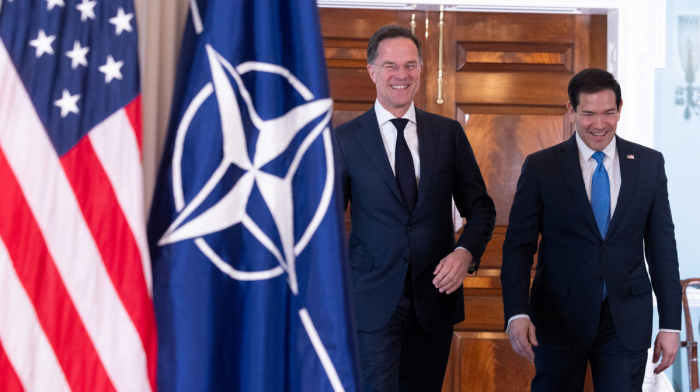
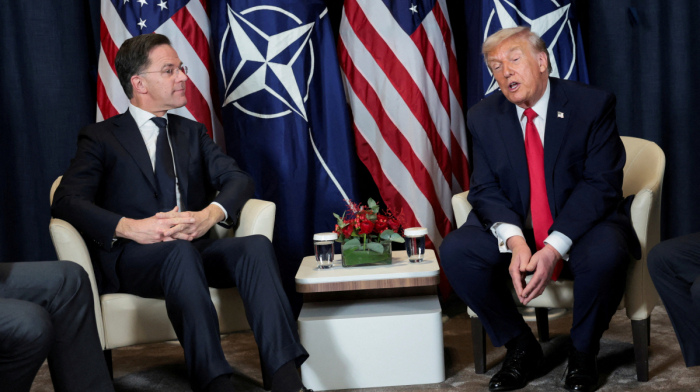
Trump told reporters, ahead of talks with NATO Secretary‑General Mark Rutte, that NATO was “tested and they failed” during the Iran war because many allies refused to support U.S. and Israeli operations or join efforts to reopen the Strait of Hormuz.
⦿ 17:38 GMT | UPDATE
Updated Iran peace plan seen as “reasonable” by U.S. officials
Reuters
White House press secretary Karoline Leavitt said on Wednesday that Iran has put forward a more reasonable proposal to end the Middle East war after initially presenting terms that the United States deemed unacceptable during earlier negotiations.
Leavitt told reporters that the revised framework from Tehran appears to offer a workable basis for talks that could lead to a diplomatic settlement.
⦿ 17:29 GMT | UPDATE
Israel launches largest wave of strikes on Lebanon
Reuters
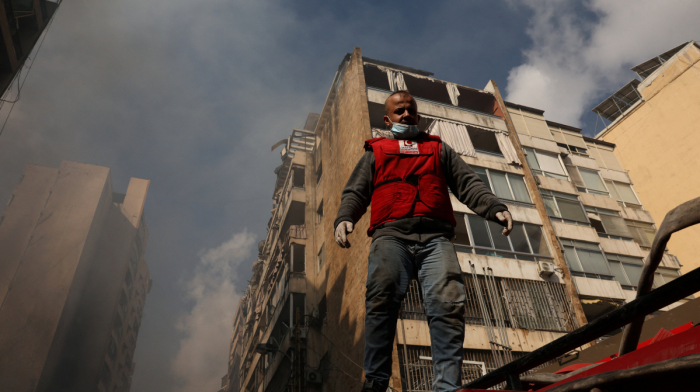
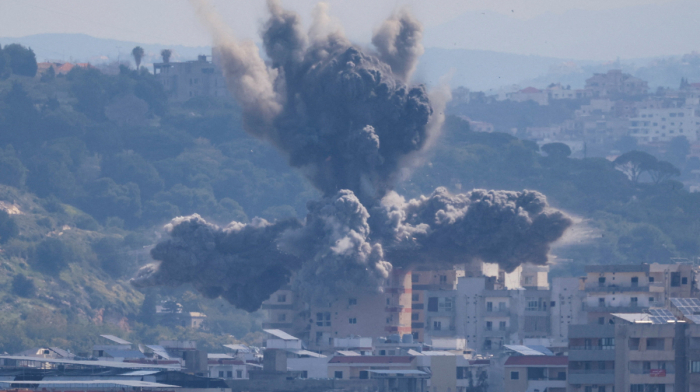
Israel has carried out its heaviest wave of strikes on Lebanon since the conflict escalated, launching intense air attacks across Beirut, the Bekaa Valley and southern regions, even as Hezbollah halted its attacks under a disputed U.S.–Iran ceasefire.
The strikes reportedly targeted more than 100 Hezbollah positions, killing over 100 people and injuring hundreds more according to Lebanon’s health ministry, with hospitals overwhelmed and civilians fleeing.
⦿ 17:14 GMT | UPDATE
Israel’s Ben Gurion Airport set to reopen as ceasefire holds
Reuters
Israel’s transport ministry said on Wednesday that Ben Gurion Airport will resume full operations at midnight following the announcement of the U.S.-Iran ceasefire, marking a major step toward normalising travel after months of disruption.
Several reports say the resumption is part of a wider gradual reopening of aviation in the region, though foreign carriers may return more slowly depending on security and demand.
⦿ 16:43 GMT | UPDATE
EU chief urges closer EU-Gulf security ties amid Iran conflict
Reuters
EU foreign policy chief Kaja Kallas said on Wednesday that while the two-week U.S.-Iran ceasefire brings some relief, uncertainty remains in the Gulf region.
Speaking after talks in Riyadh with Saudi Foreign Minister Prince Faisal bin Farhan and GCC Secretary General Jasem Albudaiwi, Kallas highlighted that the Iran crisis has underlined the need for a stronger EU‑Gulf partnership, particularly on security and defence cooperation.
⦿ 16:35 GMT | UPDATE
Trump dismisses ‘fake’ deal terms, says Iran negotiations will stay private
Reuters
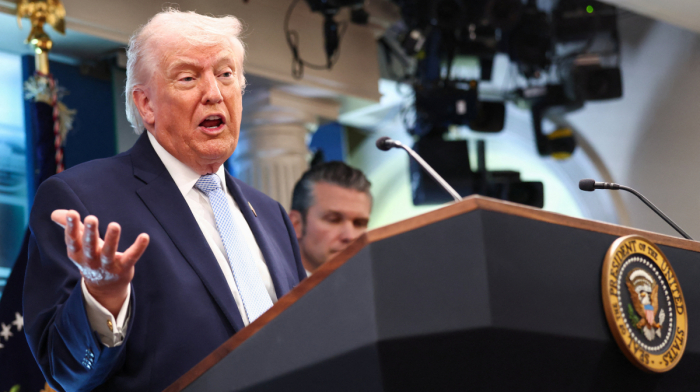
President Donald Trump said on Wednesday that negotiations with Iran over the conflict will be held behind closed doors and warned against misleading documents circulating outside official channels.
He described those purporting alternative terms as “fraudsters and charlatans,” saying “there is only one group of meaningful ‘POINTS’ that are acceptable to the United States” and that those will form the basis of the confidential talks.
⦿ 16:25 GMT | UPDATE
World Bank, IMF, UN warn Middle East crisis fuels global food insecurity
Reuters
The heads of the World Bank, IMF, and UN World Food Program warned on Wednesday that soaring oil, gas, and fertiliser prices linked to the Middle East conflict are driving food price increases and rising food insecurity.
They stressed that the most vulnerable populations in low‑income, import-dependent countries will bear the brunt of the crisis. The agencies pledged to monitor developments and coordinate all available tools to support affected communities.
⦿ 16:15 GMT | UPDATE
Israeli strikes in Lebanon kill 89, injure 700
Reuters
Lebanon’s Health Ministry reported that Israeli strikes across the country on Wednesday killed 89 people and wounded 700, according to a ministry spokesperson speaking to Reuters.
Among the dead were 12 medics in southern Lebanon. The strikes targeted various locations, including areas with civilian infrastructure, and come amid ongoing conflict outside the scope of the U.S.–Iran ceasefire.
⦿ 14:43 GMT | UPDATE
EU monitors energy shock, says no immediate oil supply threat
Reuters
The European Commission’s oil coordination group said after its Wednesday meeting that it does not currently see any urgent risk to oil supply in April, despite price increases tied to the Iran crisis.
An EU official said the bloc is preparing “a toolbox of concrete actions” to help member states mitigate the impact of the crisis, including energy‑saving measures and contingency planning, though no immediate supply shortfall is expected.
The Commission continues to monitor markets and work with member states and partners as conditions evolve.
⦿ 14:42 GMT | UPDATE
Islamabad talks with Iran set to happen soon, Trump says
Reuters
U.S. President Donald Trump said that in‑person talks with Iran are expected to happen “very soon,” according to a report in the New York Post.
He indicated these discussions could take place in Islamabad, Pakistan, following the two‑week ceasefire between Washington and Tehran.
Trump noted that Vice President JD Vance might not attend the talks due to security concerns, even as key members of his negotiating team (including special envoy Steve Witkoff and adviser Jared Kushner) are expected to participate.
⦿ 14:41 GMT | UPDATE
Iran threatens to destroy ships attempting Hormuz transit without approval
Reuters
Iranian naval forces have threatened to destroy any vessel attempting to pass through the Strait of Hormuz without Tehran’s permission, according to shipping sources, underscoring continued tensions despite the ceasefire.
Messages broadcast to ships warned that “any vessel trying to travel… will be targeted and destroyed,” reinforcing Iran’s stance that transit remains restricted and subject to military coordination.
⦿ 14:41 GMT | UPDATE
U.S. and Iran delegations to arrive in Pakistan for talks on Friday
Reuters
Delegations from the United States and Iran are set to arrive in Pakistan on Friday for talks, Prime Minister Shehbaz Sharif said, as part of efforts to move toward a longer-term settlement following the ceasefire.
The meeting in Islamabad is expected to mark the first in-person negotiations between the two sides since the war began, with Pakistan positioning itself as a key mediator.
⦿ 14:37 GMT | UPDATE
Tehran metro displays photos of Christians reportedly killed in strikes
Touraj Shiralilou
Photos shared by correspondent Touraj Shiralilou from Holy Mary Metro Station in Tehran are said to show images of Assyrian Christians from Iran killed in Israeli attacks in July 2025 and in U.S. and Israeli strikes in 2026.
⦿ 13:19 GMT | UPDATE
Iran to approach peace talks with US with caution, Iranian ambassador to UN says
Iran will approach peace talks with the U.S. with far more caution than in previous negotiations due to a big gap in trust, and the war will affect the future legal regime of the Strait of Hormuz, the Iranian ambassador to the U.N. in Geneva said on Wednesday.
The United States and Iran have agreed to a two-week ceasefire brokered by Pakistan, suspending a six-week-old war that has killed thousands, spread across the Middle East and caused unprecedented disruption to the world's energy supplies.
U.S. President Donald Trump announced the agreement late on Tuesday, two hours before a deadline he had set for Iran to open the blockaded Strait of Hormuz or face the destruction of its "whole civilisation".
⦿ 13:15 GMT | BREAKING
Lebanese Health Minister says Israeli strikes across Lebanon leave dozens dead, hundreds wounded.
⦿ 13:12 GMT | UPDATE
Saudi Arabia's oil pipeline bypassing Hormuz damaged in Iranian attack, source says
Reuters
Saudi Arabia's crucial East-West oil pipeline, currently its only outlet for crude exports, was hit in an Iranian attack and other facilities in the kingdom were also targeted, an industry source told Reuters on Wednesday.
The pipeline was diverting around 7 million barrels per day (bpd) from the kingdom's oil heartland in the east to the Red Sea port of Yanbu after Iran effectively shuttered the Strait of Hormuz, trapping huge volumes of oil and gas and sending world energy markets skyrocketing.
Flows through the pipeline are expected to be affected, the source said, adding damage was being assessed. That could exacerbate what experts have called the world's worst energy crisis.
Aramco uses about 2 million bpd domestically, leaving roughly 5 million bpd for export. Yanbu loadings averaged a near-capacity 4.6 million bpd in the week starting March 23, shipping data shows, despite attacks targeting the hub on March 19.
Iran's Islamic Revolutionary Guard Corps (IRGC) said in a statement on Wednesday it hit several targets across the region with missiles and drones, including what it called oil facilities of American companies in Yanbu.
⦿ 13:10 GMT | UPDATE
Iranian Oil Refining Company confirms attack on Lavan refinery, Shana reports
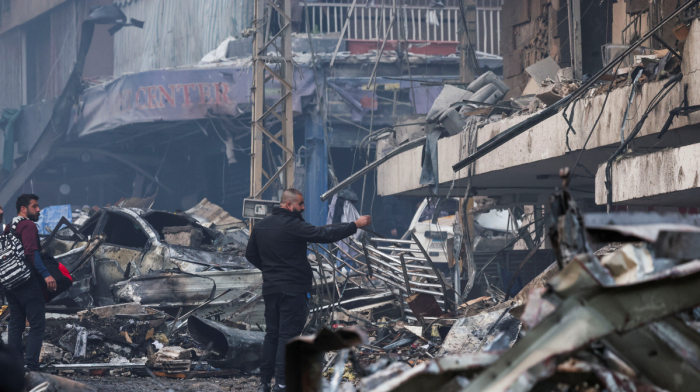
An oil refinery on Iran's Lavan Island was targeted in an "enemy attack" on Wednesday, which caused no casualties, the National Iranian Oil Refining and Distribution Company said, according to the Oil Ministry's news outlet, Shana.
The company said the facility was hit at around 10 a.m. (0630 GMT), adding that safety and firefighting teams were working to contain the blaze and secure the site.
Asked whether Israel's military was involved in a strike on the refinery, Israeli military spokesperson Lieutenant Colonel Nadav Shoshani told reporters: "No, (we) weren't involved".
⦿ 13:05 GMT | BREAKING
Lebanese PM says Israel ignoring regional, international ceasefire efforts
⦿ 12:57 GMT | BREAKING
First ship passes through the Strait of Hormuz with Iran's permission after the ceasefire - state TV
⦿ 12:50 GMT | BREAKING
Hegseth says Strait of Hormuz is open, U.S. military will ensure Iran complies with ceasefire
U.S. Defense Secretary Pete Hegseth said on Wednesday that the Strait of Hormuz is open and the U.S. military would be "hanging around" in the Middle East to ensure Iran complies with the ceasefire.
He added that the United States has had a decisive military victory over Iran and that Tehran's missile program has been functionally destroyed.
Hegseth and General Dan Caine, chairman of the Joint Chiefs of Staff, spoke to reporters a day after President Donald Trump pulled back from the brink of a threatened full-on assault on Iran on Tuesday night, two hours before a deadline he had set for Tehran to open the blockaded Strait of Hormuz.
Caine said U.S. military objectives in Iran have been met but the ceasefire is a pause and forces remain ready to resume combat.
Hegseth said the U.S. military was "hanging around" in the Middle East to ensure Iran complies with the two-week ceasefire and to monitor the country's enriched uranium stockpile.
⦿ 12:39 GMT | UPDATE
Iran could open Strait of Hormuz in a controlled way ahead of meeting with US, senior Iranian official says
Iran could open the Strait of Hormuz in a limited and controlled way on Thursday or Friday ahead of a meeting between U.S. and Iranian officials in Pakistan, a senior Iranian official, involved in the talks, told Reuters on Wednesday.
"If an understanding on a framework for talks is reached, the strait could be opened "limited, under Iran's control," the official said.
"Coordinating with Iranian military will be mandatory for all ships. Still the ceasefire is fragile, however, we prefer lasting peace but Iran has no fear to return to war if the U.S. wants go the same way."
⦿ 12:02 GMT | UPDATE
Europe and Canada call on all sides to uphold ceasefire
Reuters
Several European leaders and Canadian Prime Minister Mark Carney have issued a joint call for the United States and Iran to swiftly reach a diplomatic settlement to end their conflict.
In a statement released on Wednesday, they urged “quick progress towards a substantive negotiated settlement,” and also called on all parties to fully implement the ceasefire, including in Lebanon.
⦿ 11:49 GMT | UPDATE
Israeli military claims major offensive against Hezbollah
Reuters
The Israel Defense Forces said on Wednesday it carried out the largest strikes against Hezbollah in Lebanon since this war began, hitting militant infrastructure including deep within civilian areas, as part of its ongoing campaign against the group.
The military says the intensified attacks are aimed at degrading Hezbollah’s capabilities, though this campaign continues even as a separate U.S.-Iran ceasefire holds elsewhere.
There has been no immediate independent confirmation or detailed comment from Hezbollah on the scale of the strikes reported by the Israeli military.
⦿ 11:48 GMT | UPDATE
Trump signals cooperation with Tehran, sets strict sanctions on arms providers
Donald Trump via Truth Social, Reuters
Following the announcement of a two-week ceasefire with Iran, U.S. President Donald Trump said the United States will work closely with Tehran, which he described as having undergone “regime change,” to discuss tariff and sanctions relief.
Trump added that “there will be no enrichment of uranium” for Iran. He stated that U.S. will assist in digging up and removing all of the deeply buried (B‑2 Bombers) nuclear “dust.”
He added that the material has been under precise satellite surveillance by Space Force.
Trump also warned that any country supplying Iran with military weapons would face immediate 50% tariffs with no exemptions.
Meanwhile, White House spokeswoman Karoline Leavitt noted that while in-person talks are under discussion, nothing is final until announced by the President or the White House.
⦿ 11:33 GMT | UPDATE
EU warns Iran conflict will prolong energy crisis
Reuters
The energy crisis caused by the Iran conflict is unlikely to be short-lived, an EU Commission spokesperson warned on Wednesday.
Anna-Kaisa Itkonen said around 8.5% of the bloc’s LNG, 7% of its oil, and 40% of its jet fuel and diesel pass through the Strait of Hormuz, which Iran has largely blocked during the war.
⦿ 11:30 GMT | UPDATE
UK's FM urges Iran to end attacks on shipping and hostilities in Lebanon
Reuters
Britain will work with shipping, insurance, and energy sectors to restore confidence in the Strait of Hormuz “as quickly as possible,” British foreign minister Yvette Cooper said on Wednesday, following a U.S.-Iran ceasefire.
Cooper urged Iran to immediately stop mining, drone attacks, and any efforts to block commercial shipping, while also calling for an urgent end to hostilities in Lebanon.
⦿ 11:03 GMT | UPDATE
Norwegian ships hold off in Strait of Hormuz
Reuters
The two-week U.S.–Iran ceasefire has not yet provided enough clarity for Norwegian ships to resume transit through the Strait of Hormuz, the Norwegian Shipowners’ Association (NSA) said on Wednesday.
NSA CEO Knut Arild Hareide noted that while ceasefire signals exist, the Gulf remains unpredictable, and shipowners will only resume sailings when safe passage is assured. The disruption has forced rerouting, suspended sailings, and costly workarounds for global shipping.
Denmark’s Maersk also said normal operations cannot resume yet, while French President Emmanuel Macron indicated that around 15 countries are coordinating efforts to restart traffic through the critical waterway.
⦿ 10:51 GMT | UPDATE
Türkiye's Erdoğan welcomes Iran war ceasefire
Reuters
Turkish President Recep Tayyip Erdoğan on Wednesday welcomed the ceasefire in the Iran war, calling for its full implementation on the ground and warning against provocations or sabotage.
Erdoğan expressed hope that the truce would hold and that the region could return to peace after months of conflict, emphasising that Türkiye would continue to support efforts toward a lasting resolution.
⦿ 10:34 GMT | UPDATE
European Commission stresses Strait of Hormuz is global public good as ceasefire holds
Reuters
The European Commission declined to comment on potential future measures to secure traffic in the Strait of Hormuz amid the U.S.–Iran ceasefire.
“We have the news of the ceasefire. We're welcoming it. As the High Representative (Kaja Kallas) has said, we have a window in terms of mediation that needs to stay open and then we take it from there,” Spokesperson Anouar El Anouni said during a press briefing.
He emphasised that the Strait of Hormuz is a global “public good” that should remain open for all.
⦿ 10:22 GMT | UPDATE
Pentagon’s $200 Billion request for Iran war scaled back
Reuters
The United States is expected to significantly scale back its request for additional funding for the war with Iran, the Washington Post reported on Wednesday, citing U.S. officials.
The total funding is now likely to be between $80 billion and $100 billion, less than half of the more than $200 billion initially proposed by the Pentagon last month.
⦿ 10:20 GMT | UPDATE
Oil refinery on Lavan Island hit in 'enemy attack,' no casualties
Reuters
An oil refinery on Iran’s Lavan Island was hit in what Iranian authorities described as an “enemy attack” on Wednesday, the National Iranian Oil Refining and Distribution Company said.
The facility’s safety and firefighting teams are working to contain the blaze and secure the site, and no casualties have been reported so far.
The attack came just hours after a fragile ceasefire was announced in the broader U.S.-Iran-Israel conflict.
⦿ 09:57 GMT | UPDATE
Iran confirms participation in U.S. talks in Islamabad
Reuters
Iranian President Masoud Pezeshkian has confirmed that Tehran will take part in upcoming negotiations with the United States in Islamabad aimed at resolving the conflict, according to a statement from the office of Pakistani Prime Minister Shehbaz Sharif.
The talks come amid a fragile ceasefire and growing diplomatic efforts led by Pakistan to bring both sides to the table, with Islamabad emerging as a key venue for negotiations to end the war.
⦿ 09:54 GMT | UPDATE
Italy refuses to patrol Hormuz Strait unless UN-led
Reuters
Italy will not send naval forces to patrol the Strait of Hormuz following the U.S.-Iran ceasefire unless it is part of a United Nations-led initiative, Deputy Prime Minister and Infrastructure Minister Matteo Salvini said on Wednesday.
Salvini, serving in Prime Minister Giorgia Meloni’s government, added, “It is not on the agenda. We have already said that we will not send ships unless there is a United Nations initiative.”
⦿ 09:52 GMT | UPDATE
Kuwait intercepts wave of Iranian drones
Reuters
Kuwait reported on Wednesday that its air defences have been intercepting a wave of Iranian drones launched since 05:00 GMT, according to the army.
Some of the drones reportedly targeted vital oil facilities, power stations, and water desalination plants, causing significant infrastructure damage, while Kuwaiti forces continue defensive operations to protect critical assets.
⦿ 09:52 GMT | UPDATE
Thai Foreign Minister: 3 sailors killed in Hormuz ship attack
Reuters
Thailand confirmed on Wednesday that three crew members of a Thai-flagged vessel attacked in the Strait of Hormuz last month have died, Foreign Minister Sihasak Phuangketkeow said.
The attack caused an explosion in the stern and a fire in the engine room, while 20 crew members were rescued by the Omani navy. Sihasak added that he plans to travel to Oman in mid-April to coordinate with Iran on securing safe passage for nine Thai ships still stranded in the Strait.
One Thai oil tanker passed safely through the waterway late last month without paying to escape the blockade.
⦿ 09:50 GMT | UPDATE
Kremlin welcomes U.S.-Iran ceasefire
Reuters
The Kremlin said on Wednesday it welcomed the ceasefire between the United States and Iran and hopes the pause in hostilities will give Washington time and scope to resume peace talks on other conflicts, including in Ukraine.
Kremlin spokesman Dmitry Peskov said Moscow also hopes the U.S. and Iran will have direct contacts in the coming days to continue peace discussions, reflecting Russia’s interest in broader diplomatic engagement following the de‑escalation.
⦿ 09:32 GMT | UPDATE
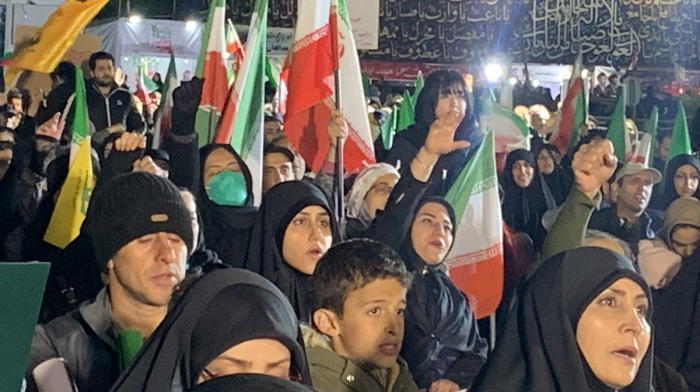
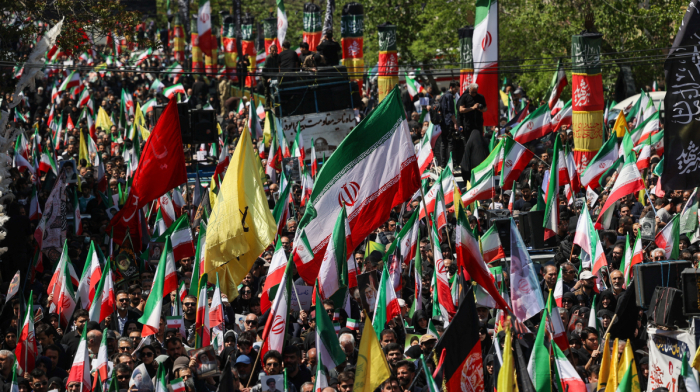
Tehran crowds chant against ceasefire and U.S. talks
Touraj Shiralilou
People in downtown Tehran chant slogans against the ceasefire and the planned talks with the United States.
⦿ 09:18 GMT | UPDATE
Poland welcomes Iran ceasefire, hopes for lasting peace
Reuters
Poland’s Defence Minister Władysław Kosiniak-Kamysz has welcomed the reported two-week ceasefire in the U.S.-Iran war, calling it a “positive sign” and expressing hope it could lead to a permanent end to hostilities.
Speaking to reporters, he said the development should be built upon, adding, “Let’s hope for a continuation of this process, leading to a permanent ceasefire.”
⦿ 09:03 GMT | UPDATE
Pope Leo welcomes ceasefire with 'Great satisfaction.'
Reuters
Pope Leo XIV on Wednesday said that he welcomed the announcement of a two-week ceasefire in the Iran war with "great satisfaction".
The Pope has earlier spoken out in condemnation of the conflict and on Tuesday said that U.S. President Donald Trump's threats against the people of Iran were "unacceptable".
⦿ 08:35 GMT | UPDATE
Türkiye backs Iran ceasefire, pledges support for Islamabad negotiations
Reuters
The Turkish foreign ministry said on Wednesday that the country welcomed a ceasefire in the Iran war and said it would support negotiations set to take place in Islamabad.
Türkiye emphasised the importance of the ceasefire being fully implemented and said all parties must adhere to the agreement.
⦿ 08:28 GMT | UPDATE
India welcomes U.S.-Iran ceasefire, urges de‑escalation and free navigation through Hormuz
Reuters
India said on Wednesday it welcomed the two‑week ceasefire agreed between the United States and Iran, reiterating that de‑escalation, dialogue and diplomacy are essential to bringing an early end to the conflict.
The deal was reached less than two hours before President Donald Trump’s deadline for Tehran to reopen the Strait of Hormuz or face sweeping attacks.
India’s foreign ministry said the fighting had caused immense human suffering and disrupted global energy supplies and trade, adding that it expects freedom of navigation and the uninterrupted flow of commerce through the Strait of Hormuz to be upheld.
⦿ 08:17 GMT | UPDATE
Israel's military announces ceasefire in the campaign against Iran
Reuters
The Israeli military said on Wednesday it has ceased fire in the campaign against Iran in accordance with directives from the top leadership of the country. This follows the U.S. announcement of a two-week ceasefire with Iran.
⦿ 08:06 GMT | UPDATE
Spain PM: 'will not applaud those who set the world on fire just because they turn up with a bucket.'
Reuters
Spanish Prime Minister Pedro Sánchez welcomed the announcement of a two‑week ceasefire between the United States and Iran on Wednesday, but criticised Washington for having sparked the conflict, without naming the administration directly.
“The Spanish government will not applaud those who set the world on fire just because they turn up with a bucket,” sánchez wrote on X.
While he said ceasefires were always welcome, he warned that “momentary relief must not make us forget the chaos, the destruction and the lives lost,” and called for “diplomacy, international law and PEACE” to prevail.
⦿ 07:29 GMT | UPDATE
Hezbollah pauses attacks as Lebanon’s role in the ceasefire is contested - Sources
Reuters
Reuters reports that Hezbollah stopped attacks on northern Israel and Israeli troops inside Lebanon in the early hours of Wednesday, according to three Lebanese sources close to the group, following the announcement of a U.S.-Iran ceasefire.
Pakistan’s prime minister, Shehbaz Sharif, who played a key mediating role, said the two‑week truce would include Lebanon, where fighting between Israel and the Iran-backed group erupted in early March. Iran had previously pushed for Lebanon to be covered by any deal, but Israeli Prime Minister Benjamin Netanyahu said the ceasefire would not apply there, as Israel issued a new evacuation order for a southern city, signalling further strikes.
Lebanon’s army on Wednesday urged displaced families to delay returning home, warning of continued attacks and the danger of unexploded ordnance.
⦿ 07:13 GMT | UPDATE
The world came 'perilously close' to disaster - Spain's Foreign Minister
Reuters
Spain's foreign minister, Jose Manuel Albares, said on Wednesday that the world came "perilously close" to disaster after U.S. President Donald Trump threatened to wipe out Iranian civilization in his ultimatum to Tehran before the announcement of a ceasefire.
Albares also stressed that it was too early to determine whether the conflict was definitively over, "When the leader of a military superpower makes such threats, I take them seriously," he added.
⦿ 07:06 GMT | UPDATE
Macron: Ceasefire must include Lebanon
Reuters
French President Emmanuel Macron has welcomed the ceasefire agreement between the U.S. and Iran, describing the announcement as “a very good thing”. He said the terms of the ceasefire must be fully respected across the region and welcomed Iran’s indication that it would work towards reopening the Strait of Hormuz.
Macron warned, however, that the situation in Lebanon remains critical and said any U.S.-Iran ceasefire must also include Lebanon, stressing the need for broader regional stability.
⦿ 06:36 GMT | UPDATE
Indonesia welcomes the ceasefire and asks for all parties to respect sovereignty
Reuters
Indonesia has welcomed the ceasefire in the Iran war and called on all parties to respect sovereignty, territorial integrity and diplomacy, Foreign Ministry spokesperson Yvonne Mewengkang said on Wednesday.
Two weeks ago, Indonesia was seeking around 80 trillion rupiah (about $5 billion) in budget savings to help cushion the economic impact of the U.S.-Israeli-Iran war.
⦿ 06:29 GMT | UPDATE
Starmer to visit the Middle East for talks on keeping the Strait of Hormuz open after ceasefire
Reuters
British Prime Minister Keir Starmer will travel to the Middle East to meet Gulf partners and support efforts to maintain the reopening of the Strait of Hormuz following a ceasefire between the United States and Iran, his office said on Wednesday.
Starmer said he welcomed the agreement, adding: “I welcome the ceasefire agreement reached overnight, which will bring a moment of relief to the region and the world.”
During the visit, he is expected to hold talks with allies on ensuring the reopening of the vital shipping route remains permanent.
⦿ 06:23 GMT | UPDATE
Ukraine welcomes U.S.-Iran ceasefire and says 'American decisiveness works.'
Reuters
Ukraine has welcomed the ceasefire agreed between the U.S and Iran, as well as the unblocking of the Strait of Hormuz, with Foreign Minister Andrii Sybiha praising Washington’s role in achieving the deal.
Writing on X on Wednesday, Sybiha called for the same resolve to be applied to Russia’s war on Ukraine, saying: “American decisiveness works. We believe it is time for sufficient decisiveness to force Moscow to cease fire and end its war against Ukraine.”
⦿ 06:11 GMT | UPDATE
Germany welcomes U.S.-Iran ceasefire, urges swift diplomatic push for lasting peace
Reuters
German Chancellor Friedrich Merz said on Wednesday that the German government welcomed the two‑week ceasefire agreed between the U.S and Iran, stressing the need to push quickly towards a diplomatic solution. “the aim now must be to negotiate a lasting end to the war in the coming days,” he said in a statement, adding: “this can only be achieved through diplomatic channels.”
Foreign Minister Johann Wadephul also welcomed the agreement, writing on x: “I welcome the decision by the warring parties to agree to a ceasefire in the Iran war.” he said the truce “must be the crucial first step towards lasting peace, for the consequences of the war continuing would be incalculable.”
The German government said it would take appropriate measures to ensure freedom of navigation in the Strait of Hormuz, confirmed it remains in close contact with the U.S. and other partners, and thanked Pakistan for brokering what it described as an important ceasefire agreement.
⦿ 06:00 GMT | UPDATE
Oman welcomes the ceasefire announcement
Anadolu
Oman has welcomed the ceasefire announcement between Iran and the U.S., while urging intensified efforts to address the root causes of the crisis and achieve a lasting solution.
Oman was targeted by Iran in retaliatory attacks following the joint U.S.-Israeli strike.
⦿ 05:54 GMT | UPDATE
President Tokayev welcomes the Middle East ceasefire agreement
AnewZ
President of Kazakhstan, Kassym-Jomart Tokayev, has welcomed the agreement on a full ceasefire in the Middle East, according to Presidential Press Secretary Aibek Smadiyarov. The President expressed support for efforts aimed at stabilising the region and reducing tensions.
⦿ 05:49 GMT | UPDATE
Malaysia and Japan welcome the U.S.-Israel-Iran ceasefire, praise diplomatic efforts
Anadolu
Leaders across Asia have welcomed the newly announced two‑week ceasefire between the United States, Israel and Iran, expressing cautious optimism that it could help open the door to a broader resolution of the conflict in the Middle East.
Malaysia’s Prime Minister, Anwar Ibrahim, described the agreement as a “positive development”, pointing to a proposed 10‑point plan from Iran that he said had been received favourably by Washington.
While Japan’s chief cabinet secretary, Minoru Kihara, also described the ceasefire as a positive step, saying meaningful de‑escalation remained a priority and expressing hope the temporary truce could lead to a final, lasting agreement.
⦿ 05:39 GMT | UPDATE
Iranians gather after the two-week ceasefire agreement was announced
Reuters
Varying emotions and reactions as Iranians gather following the two-week ceasefire agreement between the U.S., Israel, Iran and their allies.
The countries are now expected to engage in negotiations in the next two weeks, with a focus on and hopes of a permanent settlement.
⦿ 04:22 GMT | UPDATE
Trump says the U.S. will help ease shipping congestion in the Strait of Hormuz after the ceasefire
Anadolu
The United States will help ease shipping congestion in the Strait of Hormuz following the newly agreed two‑week ceasefire with Iran, President Donald Trump said on Wednesday.
“There will be lots of positive action! Big money will be made. Iran can start the reconstruction process,” Trump wrote on his Truth Social platform, a day after announcing he had agreed “to suspend the bombing and attack of Iran for a period of two weeks.”
⦿ 04:11 GMT | UPDATE
Markets rally and oil prices have fallen sharply following the ceasefire agreement
Reuters
Oil prices fell sharply below $100 per barrel, stocks rallied and the dollar weakened on Wednesday as a two‑week ceasefire in the Middle East sparked a wave of relief across global markets.
The agreement raised hopes that oil and gas shipments through the Strait of Hormuz could resume after weeks of disruption caused by heightened tensions following U.S. and Israeli strikes on Iran that started in late February.
Markets reacted swiftly, with crude prices tumbling and equities jumping across the U.S., Europe and Asia, while investors moved out of the dollar, which had benefited from safe‑haven demand.
Despite the strong initial response, analysts cautioned that sentiment remains fragile, noting that confidence will depend on whether negotiations progress and shipping traffic through Hormuz returns to normal.
⦿ 04:03 GMT | UPDATE
Australia welcomes the U.S.-Israel-Iran ceasefire, urges de‑escalation and protection of civilians
Anadolu
Australia has welcomed an agreement between the United States, Israel and Iran on a two‑week ceasefire aimed at opening the door to negotiations to end the conflict in the Middle East.
Prime Minister Anthony Albanese said Canberra had been calling for de‑escalation for some time, after U.S. President Donald Trump announced he would suspend bombing and attacks on Iran following a deadline he had set for Tehran to reopen the Strait of Hormuz.
Albanese warned that the prolonged conflict, including the effective closure of the strait and attacks on commercial shipping and energy infrastructure, had caused unprecedented disruption to global energy supplies and rising fuel prices.
⦿ 03:57 GMT | UPDATE
Trump hails ceasefire as 'total and complete victory,' says framework in place for lasting deal
Reuters
The President of the United States, Donald Trump, claimed the ceasefire amounted to a clear win, telling AFP in a brief call that it was a “total and complete victory”, insisting there was “no question about it”. He said any eventual peace agreement would cover Iran’s nuclear material and argued that the foundations for a longer‑term deal were already in place.
He added that negotiations were based on what he described as a 15‑point framework, saying most of the elements had already been agreed upon. “We’ll see what happens. We’ll see if it gets there,” Trump said, stressing that there was a strong structure for a more durable agreement beyond the two‑week ceasefire.
⦿ 03:52 GMT | UPDATE
UN Secretary-General welcomes the U.S.-Iran ceasefire, urges lasting peace in the Middle East
Anadolu
United Nations Secretary-General Antonio Guterres has welcomed the announcement of a two‑week ceasefire between the United States and Iran, describing it as a critical step toward easing the conflict in the Middle East. His spokesman, Stephane Dujarric, said Guterres urged all parties to respect international law and fully adhere to the terms of the ceasefire to create space for a lasting and comprehensive peace.
The comments followed U.S. President Donald Trump’s announcement that Washington would suspend bombing and attacks on Iran for two weeks.
Guterres stressed that an immediate halt to hostilities is essential to protect civilians and reduce the humanitarian toll of the crisis. He also praised the diplomatic efforts led by Pakistan, alongside other countries, in helping to broker the agreement.
⦿ 03:20 GMT | UPDATE
Israel says it backs the ceasefire, but stresses that it does not apply to Lebanon
Reuters
Israel has said in a statement that the two-week ceasefire does not include Lebanon.
A report by the BBC states that Israel pledged its support for President Trump's decision to suspend strikes against Iran for two weeks, subject to Iran immediately opening the straits and stopping all attacks on the U.S., Israel and countries in the region.
Israel also supports the U.S. effort to ensure that Iran no longer poses a nuclear, missile and terror threat to America, Israel, Iran's Arab neighbours and the world.
The United States has told Israel that it is committed to achieving these goals, shared by the U.S., Israel and Israel's regional allies, in the upcoming negotiations.
⦿ 03:12 GMT | BREAKING
Iran, U.S. agree to ceasefire
Reuters
U.S. President Donald Trump agreed to a two-week ceasefire with Iran on Tuesday, less than two hours before his deadline for Tehran to reopen the Strait of Hormuz or face devastating attacks on its civilian infrastructure.
The announcement came just before a 20:00 EDT (01:00 BST) (00:00 GMT) deadline set by U.S. President Donald Trump, who had threatened nationwide attacks if no deal was reached.
Pakistan Prime Minister Shehbaz Sharif, who has been mediating the negotiations, said the ceasefire was “effective immediately” and welcomed the development, inviting all delegations to Islamabad on Friday, 10 April, to continue talks aimed at reaching a conclusive agreement to settle remaining disputes.
Iran’s Foreign Minister, Abbas Araghchi, said Iran’s military would halt its operations across the Gulf, provided that U.S. and Israeli attacks against Iran also stop. He added that safe transit through the Strait of Hormuz would be permitted for two weeks, coordinated with the Iranian armed forces.
Following the announcement, the white house claimed the ceasefire as a victory for the United States, even as Israel had yet to issue a formal response. White House Press Secretary Karoline Leavitt said President Trump and the U.S. military made the agreement possible, adding that the deal included the reopening of the Strait of Hormuz. She noted that “Operation Epic Fury” had been planned as a four‑to‑six‑week campaign and said the U.S. had achieved and exceeded its core military objectives in just 38 days.
READ MORE










What is your opinion on this topic?
Leave the first comment