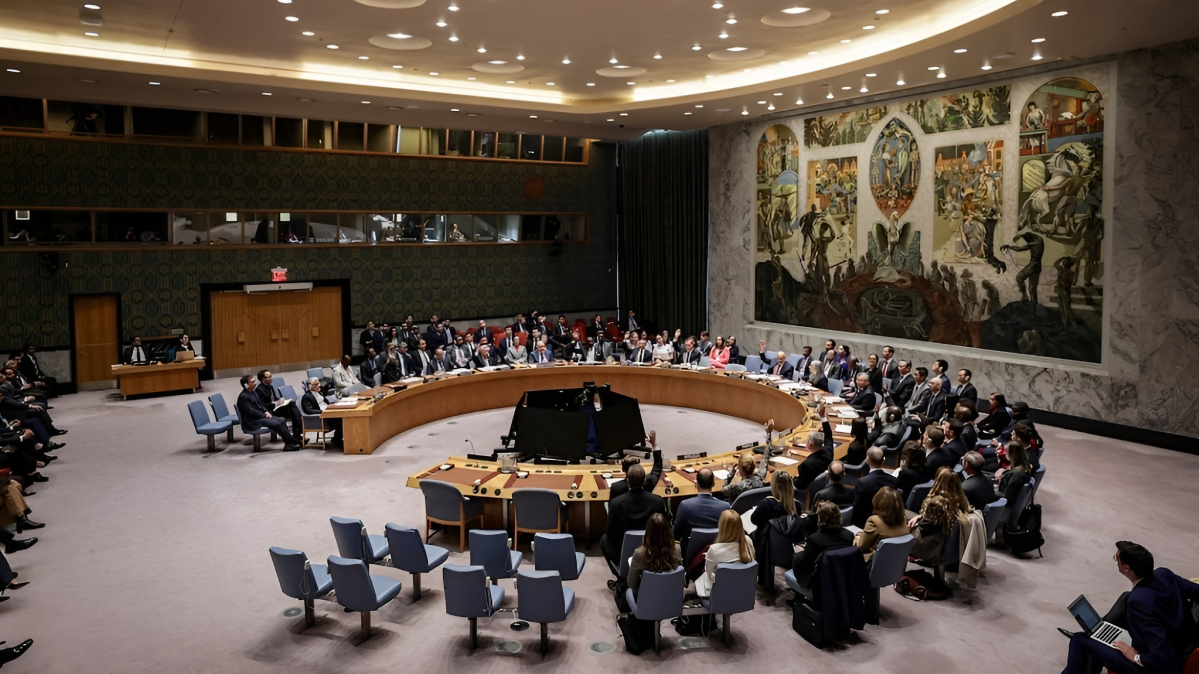
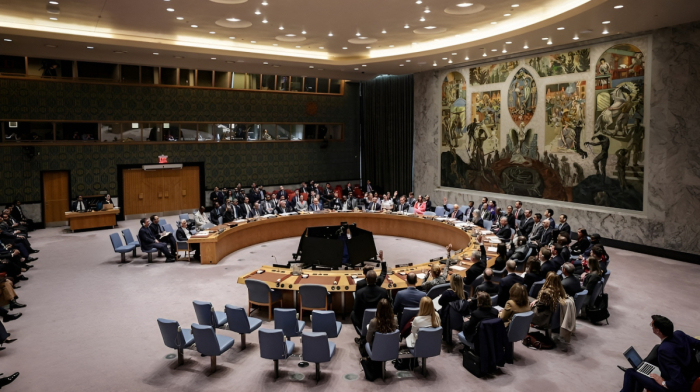
China and Russia vetoed a United Nations Security Council resolution on Tuesday aimed at coordinating defensive efforts to protect commercial shipping in the Strait of Hormuz, leaving no agreed international framework for securing the vital route.
The failure of the resolution leaves the international community without a legal framework to secure the waterway, as the U.S. warns of possible military action.
The 15-member Security Council voted 11 in favour of the resolution, which was formally presented by Bahrain. However, the measure was blocked by negative votes from permanent members China and Russia. Two additional countries abstained.
"The draft resolution has not been adopted, owing to the negative vote of a permanent member of the Council," announced Bahrain's Foreign Minister Abdullatif bin Rashid Al Zayani.
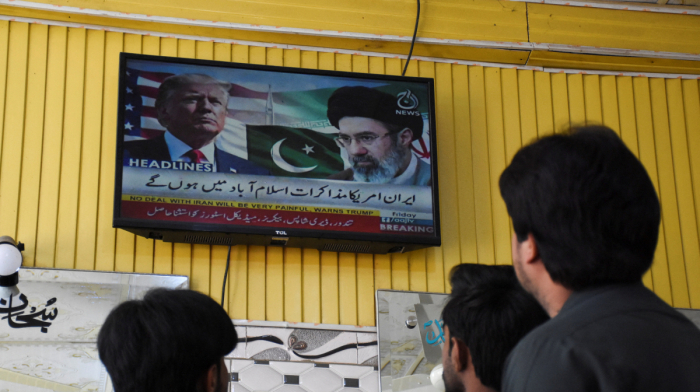
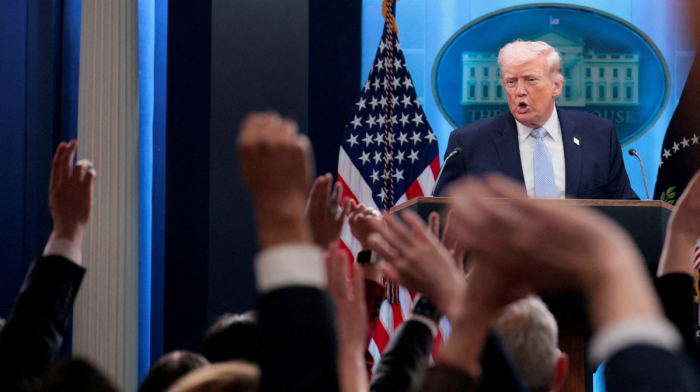
The vote took place amid heightened geopolitical tension. Earlier on Tuesday, U.S. President Donald Trump issued a stark public ultimatum to Tehran, warning that "a whole civilisation will die tonight" if Iran failed to reopen the Strait of Hormuz by Tuesday evening, Washington time.
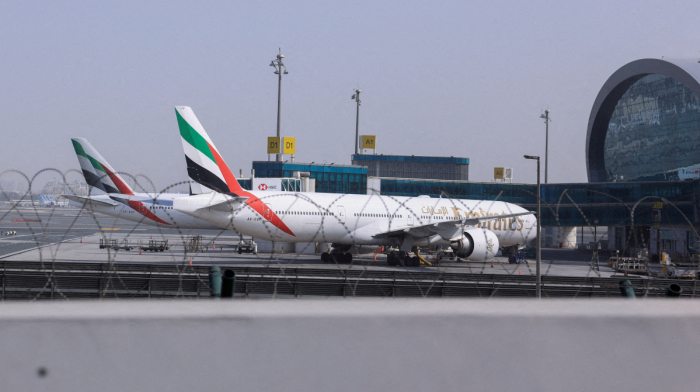
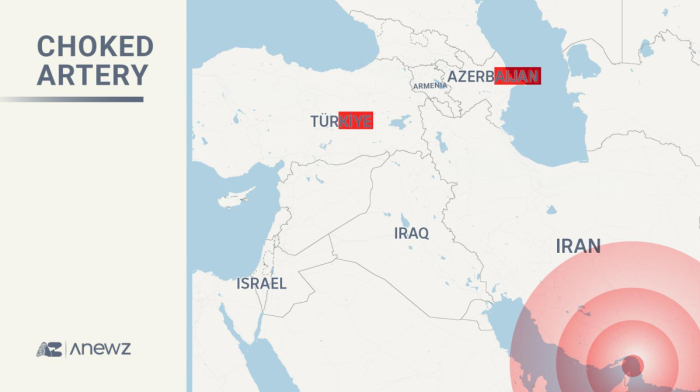
Global oil prices have risen sharply since the U.S. and Israel struck Iranian targets at the end of February, triggering a conflict that has continued for more than five weeks. In response, Tehran has largely sealed off the strait, disrupting a key maritime route that previously carried roughly a fifth of the world’s crude oil and liquefied natural gas.
U.S. condemns 'new low' as Beijing defends veto
The immediate reaction from Washington was swift. Mike Waltz, the U.S. Ambassador to the United Nations, condemned the Russian and Chinese vetoes, calling them "a new low" for the Security Council.
He said Iran’s closure of the strait amounted to both an economic blockade and a humanitarian crisis, disrupting the delivery of medical supplies to regions including the Congo, Sudan and Gaza.
"No one should tolerate that. They are holding the global economy at gunpoint," Waltz told the chamber. "But today, Russia and China did tolerate it. They sided with a regime that seeks to intimidate the Gulf into submission, even as it brutalises its own people."
Waltz added that Iran still had the option "to reopen the strait, to seek peace and to make amends," but warned that the U.S. would act without UN backing if necessary.
"Until then and afterwards, we call on responsible nations to join us in securing the Strait of Hormuz, protecting it, ensuring that it remains open to lawful commerce, to humanitarian goods, and the free movement of the world's goods," he said.
European allies also expressed concern. France’s UN ambassador, Jérôme Bonnafont, said: "The aim was to encourage strictly, purely defensive measures to provide the security and safety for the strait without spiralling towards escalation."
China and Russia defended their vetoes, arguing the resolution was biased against Iran. China’s UN envoy, Fu Cong, said adopting the draft while the United States was issuing threats about the "survival of a civilisation" would have sent the wrong signal to the region.
At a regular briefing in Beijing on Wednesday, China’s foreign ministry said its position was "objective and fair." Spokesperson Mao Ning urged the Security Council to focus on de-escalation.
"The UNSC should not be providing a veneer of legitimacy to unauthorised military actions, giving a pass for the use of force, let alone add fuel to the fire," she said.
Russia’s UN Ambassador Vasily Nebenzya said Moscow and Beijing were preparing an alternative resolution focused on maritime security and a "return to the path of diplomacy."
A watered-down draft fails to bridge the divide
The failure is notable given efforts to dilute the original text to address Chinese and Russian concerns. Bahrain and its Western allies significantly revised the draft before the vote.
The final version removed any authorisation for offensive military force. It also dropped earlier references to binding enforcement under Chapter VII.
Instead, the text "strongly encouraged" states "to coordinate efforts, defensive in nature, commensurate to the circumstances, to contribute to ensuring the safety and security of navigation across the Strait of Hormuz."
It suggested measures such as escorting commercial vessels and endorsed efforts "to deter attempts to close, obstruct or otherwise interfere with international navigation."
Even this limited approach was rejected by Moscow and Beijing, which view any Western naval build-up in the Gulf as provocative.
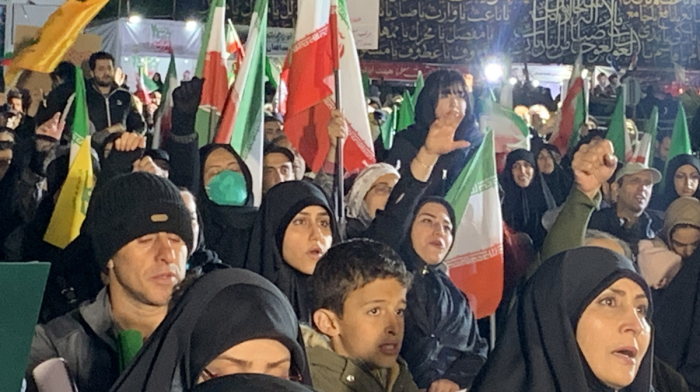
In Tehran, the vetoes were welcomed. Iran's UN Ambassador Amir Saeid Iravani said: "Their action today prevented the Security Council from being misused to legitimise aggression."
He added that UN Secretary-General envoy Jean Arnault was travelling to the Middle East, with a possible visit to Tehran under consideration, subject to security conditions in the region.










What is your opinion on this topic?
Leave the first comment