In a forceful rebuke to Washington’s foreign policy in the Americas, a senior Russian diplomat has declared that Moscow will never abandon Cuba, pledging ongoing support to help the Communist-run island overcome a severe energy crisis linked to the United States embargo.
Russian Deputy Foreign Minister Sergei Ryabkov, speaking at a news conference in Havana early on Friday following intensive bilateral talks, issued a stark warning to the U.S. administration. Quoted extensively by Russian state news agencies, Ryabkov made it clear that Moscow has no intention of stepping back from its strategic, economic and military interests in the Western Hemisphere, regardless of pressure from Washington.
Expanding the energy lifeline
The immediate focus of Ryabkov’s visit was the island’s worsening macroeconomic situation. Cuba’s economy has effectively ground to a halt amid what it describes as a de facto oil blockade imposed by the U.S. following political upheaval in Venezuela earlier this year. This has triggered a severe energy crisis, marked by strict petrol rationing, stalled public transport and persistent rolling blackouts across the country.
Ryabkov confirmed that Moscow’s logistical support would extend beyond the large shipment of crude oil delivered to the island late last month. "I am certain that the events of recent weeks in our relations will have us moving forward to find solutions to the toughest problems... emerging from the illegal and absolutely unacceptable blockade of the island by the US," Ryabkov was quoted as saying, framing U.S. sanctions as a violation of international norms.
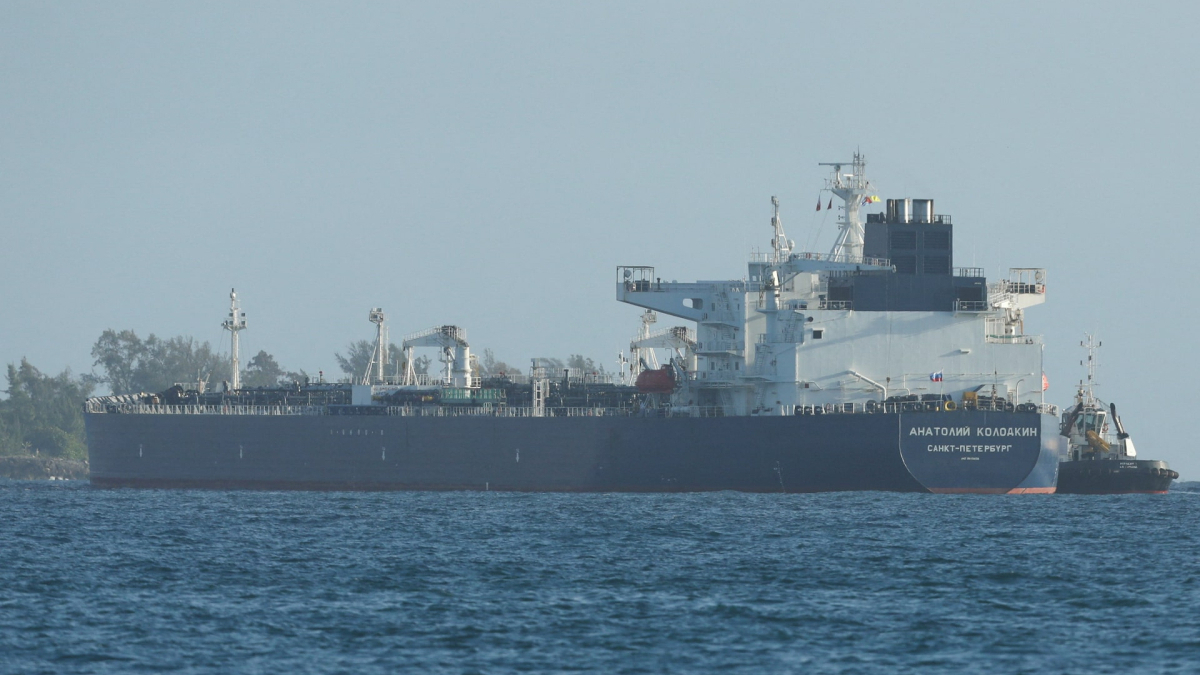
The rhetorical commitment was absolute. "We cannot betray Cuba. That is out of the question. We cannot leave it on its own," he declared. Addressing the acute fuel shortages, Ryabkov said meeting Cuba’s basic energy needs remained a top priority for the Kremlin. "It is too early to say what the specific next logistical steps will be. But it is entirely clear we will not be limiting our supplies to the load that was aboard the tanker Anatoly Kolodkin," he added, indicating that further shipments are being planned.
The arrival of the Russia-flagged Anatoly Kolodkin on 31 March marked a turning point in the crisis. Operating under heavy U.S. sanctions, the vessel docked in Matanzas Bay carrying around 700,000 barrels of Russian Urals crude - the first major delivery since Washington moved to cut off the island’s primary fuel supply. The U.S. State Department later said it had allowed the sanctioned tanker to deliver the cargo strictly for humanitarian reasons, though the episode underscored the limits of U.S. enforcement when challenged by a major power.
Defying Washington in its own backyard
Ryabkov’s remarks in Havana extended beyond economic support, touching on broader geopolitical tensions. He directly criticised policies reminiscent of the Monroe Doctrine emanating from the White House.
"Russia has no plans to walk away from the Western hemisphere, no matter what Washington might say," the agencies quoted him as saying. "They are obsessed with pushing Russia and China out of the region." By linking Russian and Chinese interests, Ryabkov pointed to what he framed as growing resistance to U.S. influence in Latin America.
He also used the platform to criticise wider U.S. military actions, referencing the ongoing conflict in the Middle East. Ryabkov argued that recent U.S. and Israeli strikes on Iran "make it abundantly clear that using force, sweeping economic sanctions, and political diktat do not produce the desired geopolitical results," suggesting such approaches are ultimately counterproductive.
The visit is the latest in a series of moves by Moscow to revive close ties with Cuba, echoing relations during the Soviet era. The Kremlin increasingly views the partnership as a strategic counterbalance to U.S. and NATO influence in Eastern Europe.
The renewed engagement was reinforced earlier this year when Cuban Foreign Minister Bruno Rodríguez Parrilla held high-level talks in Moscow with President Vladimir Putin and Foreign Minister Sergei Lavrov during a visit in February.










What is your opinion on this topic?
Leave the first comment