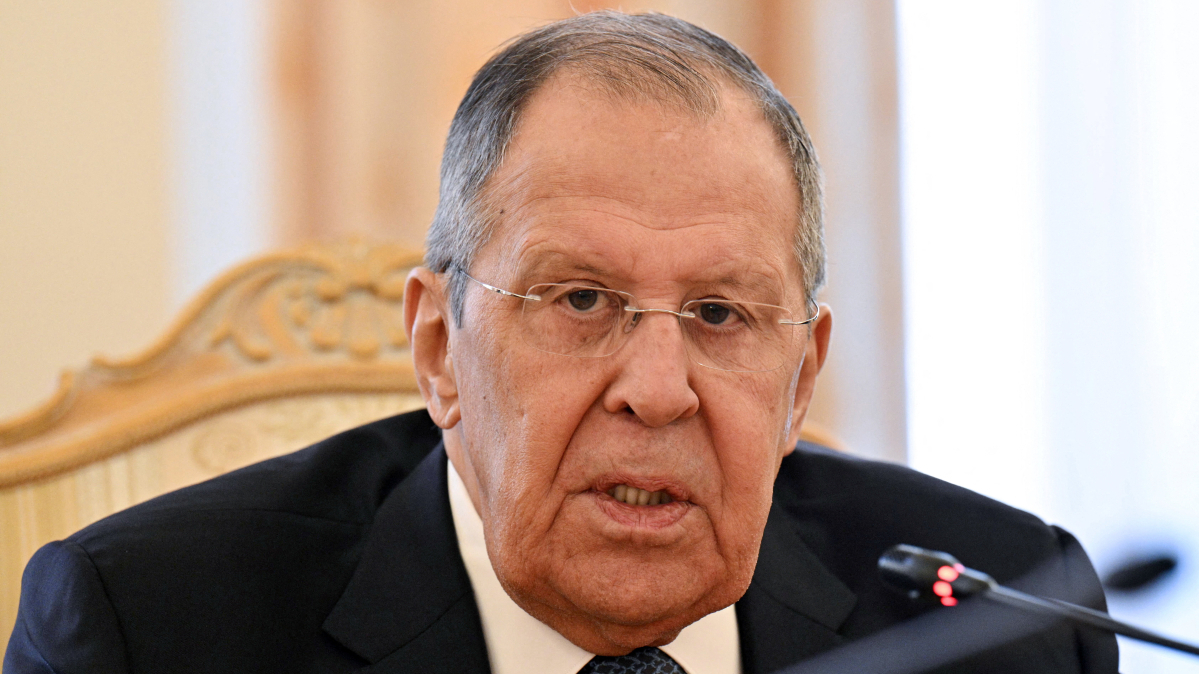
Russian Foreign Minister Sergey Lavrov reaffirmed Russia’s support on Friday (20 February) for the negotiation process between Washington and Tehran amid escalating regional tensions.
In a telephone call with Iranian Foreign Minister Abbas Araghchi, Lavrov expressed Moscow’s backing for negotiations aimed at securing “fair political and diplomatic solutions” that respect Tehran’s legitimate rights.
The discussions, the Foreign Ministry said, are in line with the principles of the Non-Proliferation Treaty.
Noting the call took place at Tehran’s initiative, the statement said Lavrov and Araghchi exchanged views on the current situation surrounding Iran’s nuclear programme, while taking into account the results of indirect U.S.-Iran talks in Geneva, Switzerland.
“Some issues of mutual interest on the bilateral agenda were also discussed,” the statement added.
The U.S. and Iran concluded a second round of indirect negotiations mediated by Oman on Tuesday, with both sides acknowledging progress amid a growing American military buildup in the region.
Shortly after the Geneva talks, U.S. Vice President JD Vance described the process as productive "in some ways," but said Tehran was "not yet willing" to engage on some of Trump's "red lines."
Araghchi said talks showed progress, describing the atmosphere as "more constructive."
Washington has significantly stepped up its military presence in the region, deploying the USS Abraham Lincoln carrier strike group, with the USS Gerald R. Ford aircraft carrier on its way to the region, along with additional fighter jets.
The Geneva meeting was the second round of negotiations since U.S. President Donald Trump ordered strikes on three Iranian nuclear facilities during the 12-day Iran-Israel war last June. The first round was held in Muscat, Oman, on 6 February.
Trump said On Thursday, it will be clear if it is possible to make a deal with Iran "over the next probably 10 days," warning that Washington "may have to take it a step further" if negotiations fall short.
Earlier, the Kremlin called on Iran and all regional partners to "exercise restraint and caution," describing the tensions as "unprecedented."










What is your opinion on this topic?
Leave the first comment