Iran and the United States opened nuclear talks in Oman on Friday, with Tehran calling the meeting a good start and both sides agreeing to continue discussions after returning to their capitals for consultations.
“It was a good start to the negotiations. And there is an understanding on continuing the talks. Coordination on how to proceed will be decided in the capitals,” Abbas Araqchi told Iranian state television.
“If this process continues, I think we will reach a good framework for an understanding.”
Araqchi said officials from both countries held indirect discussions in Muscat through Omani mediation and would now return to their capitals for consultations.
Senior Iranian cleric Ahmad Khatami said Iran would press ahead with uranium enrichment, rejecting international demands for the programme to be suspended as “irrelevant”, according to Iran’s IRNA news agency.
Khatami said Tehran was not seeking to develop an atomic bomb and was not intimidated by the United States.
“Iran does not want nuclear energy for an atomic bomb,” Khatami said, adding that calls for a voluntary suspension of enrichment were “an irrelevant statement”.
There has been no public statement so far from the Trump administration on the Oman talks, which involved Steve Witkoff and Jared Kushner.
Speaking to AnewZ, Dr. Reza Talebi, author and journalist, said there was no additional information so far, with officials “avoiding details on outcomes, timelines and expectations” as the Iranian and U.S. delegations return home for consultations.
Disagreements over scope
Both sides have indicated readiness to revive diplomacy over Tehran’s long-running nuclear dispute with the West.
However, U.S. Secretary of State Marco Rubio said on Wednesday Washington wants the talks to also cover Iran’s ballistic missiles, support for regional armed groups and its treatment of its own people.
An Iranian diplomatic source warned that any presence of U.S. Central Command (CENTCOM) or regional military officials at the talks could jeopardise the indirect negotiations in Oman.
Iran has repeatedly said it wants Foreign Minister Abbas Aragchi and U.S. Middle East envoy Steve Witkoff to focus exclusively on the nuclear issue during the discussions in Muscat.
U.S. officials have said Jared Kushner, President Donald Trump’s son-in-law and an informal adviser who previously helped mediate Gaza ceasefire talks, is also expected to take part.
Meanwhile, the Kremlin said on Friday it hoped negotiations between Iran and the United States in Oman would yield results and lead to de-escalation, urging all sides to show restraint in the meantime.
Earlier, Iran stressed that Araghchi and Witkoff should discuss only nuclear issues during the talks in Muscat.
"Iran enters diplomacy with open eyes and a steady memory of the past year. We engage in good faith and stand firm on our rights. Commitments need to be honoured," Araqchi said on X on Friday ahead of the talks.
"Equal standing, mutual respect and mutual interest are not rhetoric - they are a must and the pillars of a durable agreement."
Security warnings and rising tensions
As tensions remain high, the U.S. virtual embassy in Iran on Friday urged American citizens to leave the country “now” if possible, warning of increased security measures, transport disruptions and ongoing internet restrictions.
The embassy also warned that Americans face a significant risk of questioning, arrest or detention in Iran and advised them to avoid demonstrations and keep a low profile.
Meanwhile, Tehran's leadership remains deeply concerned that U.S. President Donald Trump may still carry out his threats to strike Iran amid a buildup by the U.S. Navy near Iran.
The U.S. naval buildup, which Trump has called a massive “armada”, has followed a bloody government crackdown on nationwide protests in Iran last month, heightening tensions between Washington and Tehran.
White House Press Secretary Karoline Leavitt on Thursday told reporters that Trump was looking to determine whether a deal can be struck but also issued a warning.
"While these negotiations are taking place, I would remind the Iranian regime that the president has many options at his disposal, aside from diplomacy, as the commander-in-chief of the most powerful military in the history of the world," she added.
Trump has warned that "bad things" would probably happen if a deal could not be reached, ratcheting up pressure on the Islamic Republic in a standoff that has led to mutual threats of airstrikes.
Iran has warned it would respond harshly to any military strike and has cautioned neighbouring countries hosting U.S. bases that they could be in the firing line if they were involved in an attack.
"It's very difficult to see them conceding enough in talks tomorrow for the U.S. credibly to be able to claim that it's made a breakthrough. And this, is where I think military conflict is more likely than not," said Edmund Fitton-Brown, a senior fellow at Washington-based think-tank FDD.
Trump's blunt warnings and Iran's vows of counter-strikes have spurred regional governments' efforts to calm the situation.
Turkish President Tayyip Erdoğan said his government was working hard to prevent U.S.-Iran tensions from tipping the Middle East into a new conflict. He has spent years cultivating a close relationship with Trump while expanding Ankara's diplomatic influence across the region.
Speaking to reporters on a return flight from a visit to Egypt, Erdoğan added that talks at the level of the U.S. and Iranian leadership would be helpful after lower-level nuclear negotiations in Oman on Friday.
Tensions ratcheted up this week amid uncertainty over the location and format for the talks, which will follow Tehran’s bloody crackdown on street protests last month.
Asked on Wednesday whether Iran's Supreme Leader Ayatollah Ali Khamenei should be worried, Trump told NBC News, "I would say he should be very worried. Yeah, he should be."
After Trump spoke, U.S. and Iranian officials said the two sides had agreed to shift the talks' location to Muscat after initially accepting Istanbul.
At a press conference in Doha, German Chancellor Friedrich Merz said on Thursday that "great concern" had been expressed about potential escalation in the conflict with Iran during his meetings with officials in a visit to the Gulf region. He urged Iran to end what he called aggression and help bring stability to the region.
Gulf Arab states fear that Iran will carry out its threat to target U.S. bases on their territory if the United States attacks the Islamic Republic.
China, meanwhile, said it supported Iran's legitimate right to the peaceful use of nuclear energy and opposed the "threat of force and sanction pressure."
Uranium enrichment
Negotiators in Oman will have to navigate Iran's red line on discussing its missile programme to reach a deal and avert future military action. Tehran has flatly ruled out talks on its "defence capabilities, including missiles and their range."
Hours before the talks, Iran's state TV said that "one of the country's most advanced long-range ballistic missiles, the Khorramshahr 4", had been deployed at one of the Revolutionary Guards' vast underground missile complexes.
However, Tehran is willing to show "flexibility on uranium enrichment, including handing over 400kg of highly enriched uranium (HEU) and accepting zero enrichment under a consortium arrangement as a solution," Iranian officials told Reuters last week.
Iran also insists that its right to enrich uranium is not negotiable.
Iran says its nuclear activities are meant for peaceful, not military purposes, while the U.S. and Israel have accused it of past efforts to develop nuclear weapons.
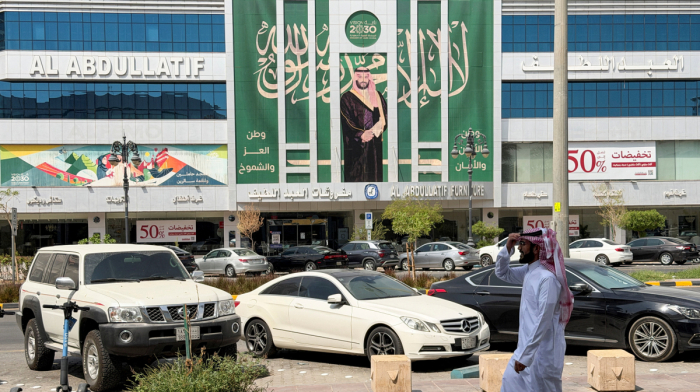
The U.S. has banned government employees working in Saudi Arabia from using airports in the country without special authorisation. It comes after a deadly Houthi strike on Riyadh's King Khalid International Airport killed at least 13 people last week.
U.S. President Donald Trump has called it “a disgrace” that Ukraine has resumed attacks on Russian oil refineries. Attacks are continuing from Russia and Ukraine as media reports say Ukraine has almost run out of Patriot interceptor missiles.
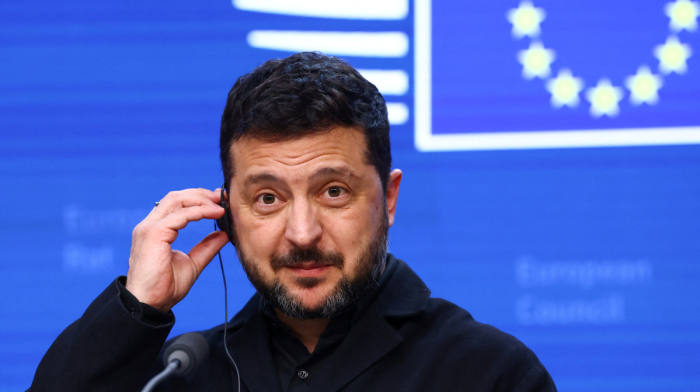
Ukraine is set to restart attacks on Russian oil refineries following a two-day pause, President Volodymyr Zelenskyy said, amid growing tensions with Washington over energy strikes and U.S. military support.
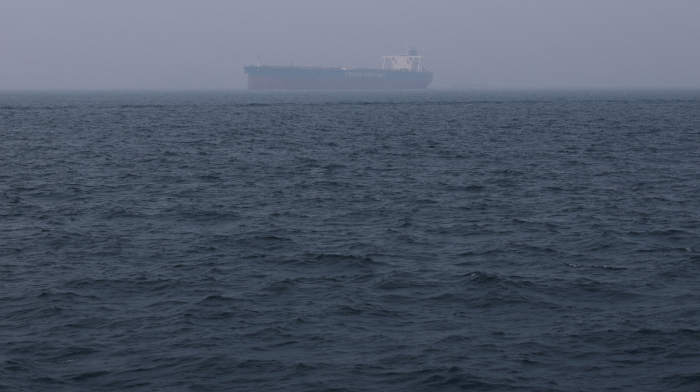
An unknown projectile struck a tanker 68 nautical miles northeast of Saudi Arabia on Friday according to a report released by the United Kingdom Maritime Trade Operations (UKMTO) on Saturday.
Ukrainian President Volodymyr Zelenskyy said on Saturday that a potential meeting between Ukraine, the United States and Russia could take place during the G20 summit in Miami in December, although neither Washington nor Moscow has confirmed the talks.
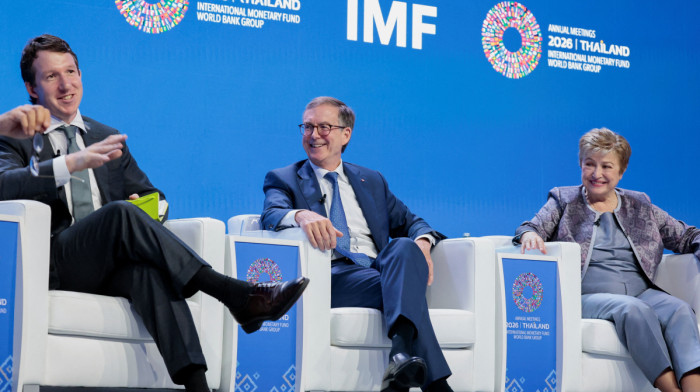
Nearly half of delegates walked out of an International Monetary Fund meeting in Bangkok on Saturday as Russian Finance Minister Anton Siluanov addressed the group, exposing deep divisions over Moscow’s war in Ukraine.
Nationwide protests are set to begin in France on Saturday with students, trade unionists and remnants of the Yellow Vest movement expected to demonstrate against rising living costs amongst others.
European Union leaders wrapped up a summit in Brussels with agreement emerging on several key issues, including support for the automotive industry, trade tensions with China and financing for Ukraine.
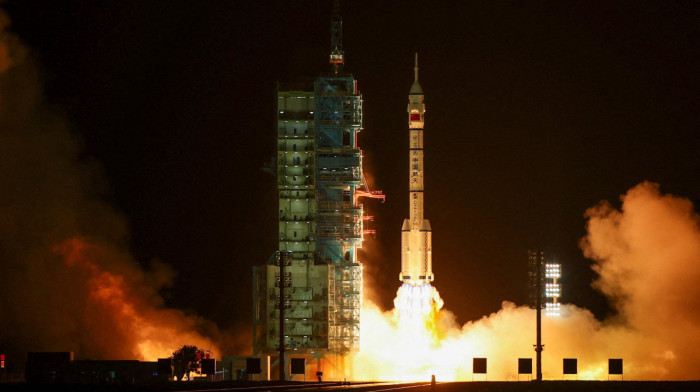
What would you miss most after six months orbiting Earth, 400 kilometres above the ground? For astronauts, a familiar meal can offer a welcome taste of home. China is making that possible, bringing everything from dumplings to Kung Pao chicken to its space station.
Download the AnewZ app
You can download the AnewZ application from Play Store and the App Store.








What is your opinion on this topic?
Leave the first comment