Iran’s Supreme National Security Council (SNSC) announced on Wednesday that ceasefire negotiations with the U.S. are scheduled for Friday (10 April) in Islamabad, stressing that it will enter into two weeks of talks “out of total distrust”.
Pakistan has informed Iran that “the American side, despite all the apparent threats, has accepted Iran’s 10-point principles as the basis for negotiations and has surrendered to the will of the Iranian people,” the council said in a statement.
As a result, it added, “it was decided at the highest level that Iran will hold negotiations with the American side in Islamabad for two weeks and solely based on these principles.”
The council stated that the upcoming talks “do not mean the end of the war” and that Iran will accept the end of the war only when “in view of Iran's acceptance of the principles envisaged in the 10-point plan, its details are also finalised in the negotiations”.
According to the semi-official Mehr News Agency, the following were Tehran’s 10-point conditions for a ceasefire:
1. U.S. should commit, in principle, to guarantee non-aggression;
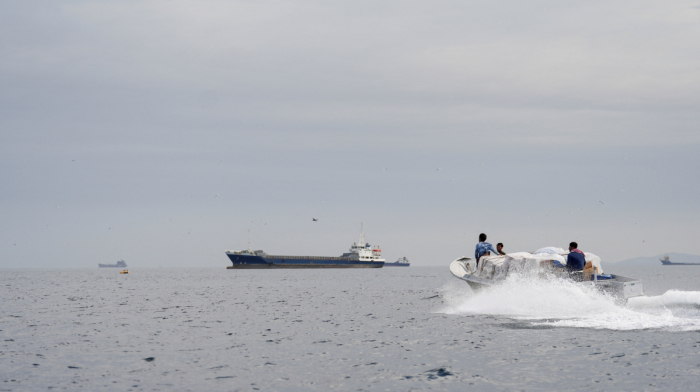
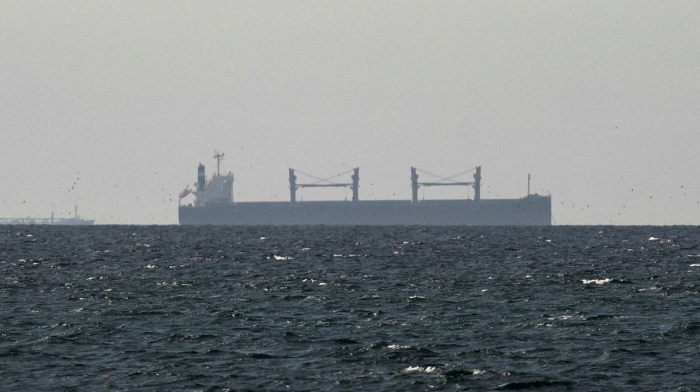
2. Iran continues control of the Strait of Hormuz;
3. Iran’s right to uranium enrichment should be accepted;
4. Lift all primary sanctions;
5. Lift all secondary sanctions;
6. Termination of all United Nations Security Council resolutions;
7. Termination of all IAEA Board of Governors resolutions;
8. Payment of compensation for damages inflicted on Iran;
9. Withdrawal of U.S. combat forces from the region, and,
10. Cessation of the war on all fronts, including against Hezbollah in Lebanon.
Iran’s top security body also said that Tehran will allocate two weeks for the negotiations in Pakistan, stressing Iran steps into the negotiating room “out of total distrust” of the U.S. side.
It was referring to June's attacks from the U.S. last year and at the end of February while Iranian and U.S. negotiators were in the middle of nuclear negotiations mediated by Oman.
Hours before the SNSC ceasefire statement, Foreign Minister Abbas Araghchi, who headed Iran’s negotiating team, said that if Israeli-U.S. attacks stop, the Iranian Armed Forces will also cease their defensive operation.
“If attacks against Iran are halted, our Powerful Armed Forces will cease their defensive operations,” he said in a post on X social platform, which was retweeted by U.S. President Donald Trump.
Trump was ramping up his threats for several weeks until they reached an alarming level of menace of attacking Iran’s power plants and bridges on Tuesday.
“For a period of two weeks, safe passage through the Strait of Hormuz will be possible via coordination with Iran’s Armed Forces and with due consideration of technical limitations,” Araghchi added.
He expressed Iran’s gratitude to the Pakistani Prime Minister Shehbaz Sharif and Field Marshal Munir for their mediation efforts between Tehran and Washington.
On the first day of the two-week ceasefire, Iran will start holding three-day nationwide religious processions at mosques and urban squares to commemorate the 40th day of the death of former Supreme Leader Ayatollah Seyed Ali Khamenei.
He was killed in the Israeli-U.S. air attacks on 28 February.
READ MORE -













What is your opinion on this topic?
Leave the first comment