Syria and Israel meet in Paris as U.S. mediates peace effort
Syrian Foreign Minister Asaad al-Shibani met an Israeli delegation in Paris on Tuesday for talks aimed at boosting stability in southern Syria and the...
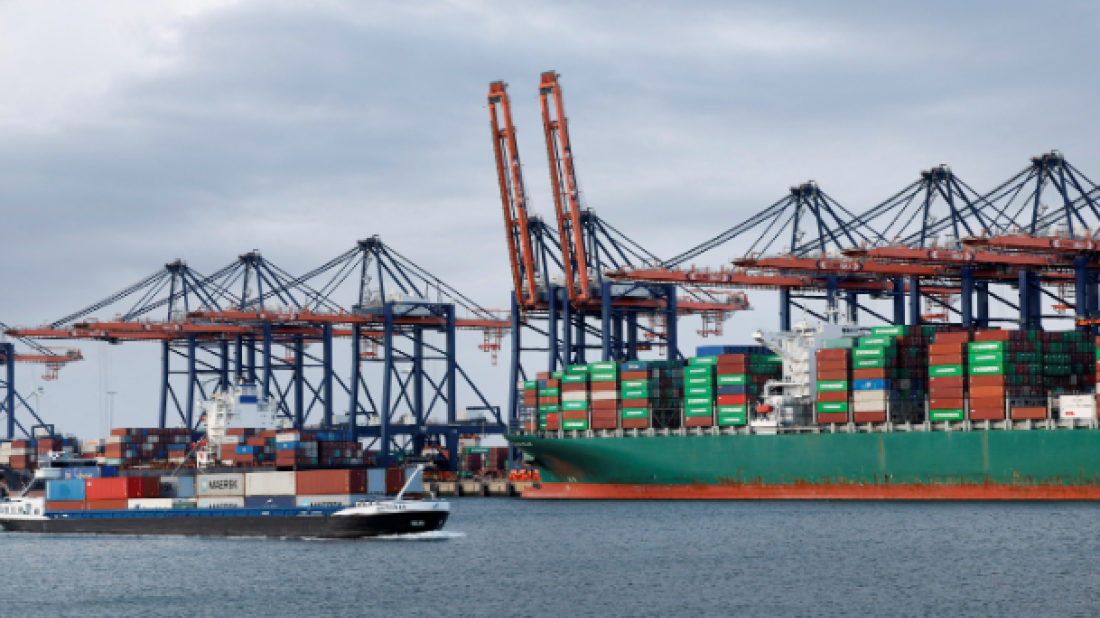
AM Green and the Port of Rotterdam Authority have signed a Memorandum of Understanding to build a major green energy supply chain between India and Northwestern Europe, aiming for annual exports of up to 1 million tons of hydrogen-based fuels and a trade value of USD 1 billion.
In a significant step toward global decarbonization, India’s AM Green and the Port of Rotterdam Authority have partnered to develop a green energy supply corridor between India and Europe. The agreement focuses on the transport of green fuels—including sustainable aviation fuels (SAFs) and bunkering fuels—from India to Europe via Rotterdam, a key European hub for energy logistics and hydrogen imports.
The initiative supports both India’s National Green Hydrogen Mission and Europe’s climate goals. As part of the agreement, both sides will explore the development of terminal and port infrastructure to safely handle hydrogen-based fuels and connect India’s Net Zero Industrial Clusters to European markets.
The envisioned supply chain is expected to handle up to 1 million tons of green fuels annually, enabling USD 1 billion in green energy trade. AM Green, backed by the founders of the Greenko Group, aims to develop 5 million tons of green ammonia production capacity by 2030, equivalent to 1 million tons of green hydrogen.
Boudewijn Siemons, CEO of the Port of Rotterdam Authority, said the collaboration would “lead to a robust and sustainable green energy supply chain between the two regions,” leveraging India’s production capacity and Rotterdam’s advanced port infrastructure.
AM Green founder Anil Chalamalasetty described the partnership as “a significant milestone in establishing a global carbon-free energy ecosystem,” positioning AM Green as a leader in the global clean energy transition.
The partnership marks a major advancement in international green energy collaboration and is set to play a vital role in global efforts to reduce carbon emissions and build sustainable industrial infrastructure.

A powerful eruption at Japan’s Shinmoedake volcano sent an ash plume more than 3,000 metres high on Sunday morning, prompting safety warnings from authorities.
According to the German Research Centre for Geosciences (GFZ), a magnitude 5.7 earthquake struck the Oaxaca region of Mexico on Saturday.
Honduras has brought back mask mandates as COVID-19 cases and a new variant surge nationwide.
The UK is gearing up for Exercise Pegasus 2025, its largest pandemic readiness test since COVID-19. Running from September to November, this full-scale simulation will challenge the country's response to a fast-moving respiratory outbreak.
Kuwait says oil prices will likely stay below $72 per barrel as OPEC monitors global supply trends and U.S. policy signals. The remarks come during market uncertainty fueled by new U.S. tariffs on India and possible sanctions on Russia.
Ocean acidification, caused by rising CO₂, is silently reshaping marine life, threatening shellfish, coral reefs, and coastal communities. Scientists warn its impacts could ripple through food chains, economies, and human livelihoods unless urgent action is taken.
Residents in the Bahamas and Turks and Caicos braced themselves on Monday as Hurricane Erin, the first of the Atlantic season, passed nearby as a Category 4 storm, with winds of 225 kph.
The hurricane was located about 170 km north of Anguilla, with maximum sustained winds near 255 km/h, according to the National Hurricane Center (NHC).
Talks at the United Nations in Geneva to establish a global legally binding treaty on plastic pollution went into overtime on Thursday, with discussions adjourned to Friday.
SOCAR Türkiye, a subsidiary of the State Oil Company of the Azerbaijani Republic, has announced about a cooperation with Turkish Airlines in the field of sustainable aviation fuel. The move is aimed at complying with Türkiye's goal of reducing aviation emissions by 5% by 2030.
You can download the AnewZ application from Play Store and the App Store.
What is your opinion on this topic?
Leave the first comment