Kazakhstan concludes first Kurultai election with turnout at 74.19%
Kazakhstan has concluded its first election to the new unicameral Kurultai, with turnout reaching 74.19 per cent, as vote counting begins following...
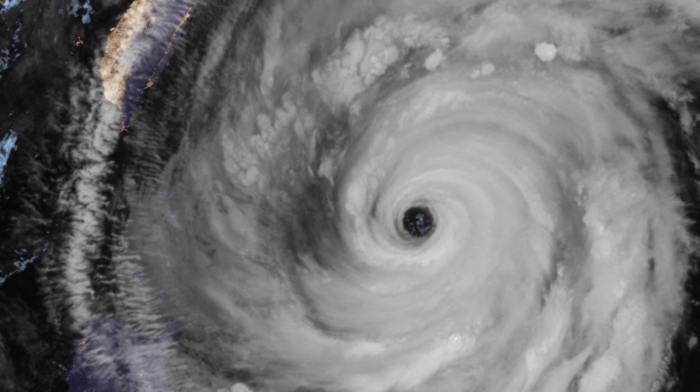
China has maintained its highest-level rainstorm warning after Typhoon Bavi made landfall on the country's eastern coast, urging large-scale evacuations and emergency preparations across several provinces amid fears of severe flooding and landslides
China's National Meteorological Center has maintained a red rainstorm alert — the highest level in the country's four-tier warning system — after Typhoon Bavi made landfall late on Saturday in Zhejiang province before weakening into a tropical storm.
Meteorologists forecast torrential to extreme rainfall across Zhejiang, Fujian, Jiangxi and Anhui provinces, with heavy rain also expected to spread to Hebei, Shandong, Jiangsu, Liaoning and Jilin as the storm moves inland.
Some areas are expected to receive several hundred millimetres of rain within 24 hours, significantly increasing the risk of flooding, flash floods and landslides.
Authorities have expanded emergency response efforts as heavy rain continues across northern China. In Beijing, nearly 96,000 people from more than 36,000 households have been evacuated as a precaution
The capital has already been hit by intense downpours, with the suburban district of Pinggu recording the highest rainfall.
Officials say reservoirs remain below critical levels, while emergency crews continue monitoring water systems and reinforcing flood-control measures as the storm moves inland.
Rainfall is expected to continue through the coming days as Bavi tracks northeast after making landfall.
Residents in affected areas have been advised to avoid unnecessary travel, remain indoors whenever possible and closely follow official weather updates as authorities monitor the risks of flooding, flash floods and landslides.

Iran on Saturday denounced U.S. plans to announce new sanctions that could put further strain on the Islamic Republic's economy and have an impact on its most important trading partners including China.
A large-scale drone attack has hit Russia's Samara region, damaging facilities and disrupting operations at an Ozon logistics complex, according to regional authorities and the company.
Ukrainian President Volodymyr Zelenskyy has rejected calls for a wartime election, arguing that holding a vote while Russia's full-scale invasion continues would divide the country and undermine national unity.
U.S. President Donald Trump said Iran was not ready to make what he called the "right deal" with Washington as tensions persisted over the war and the Strait of Hormuz.
Start your day informed with AnewZ Morning Brief. Here are the top news stories for the 22nd of August, covering the latest developments.
A wildfire in Croatia driven by strong winds descended on the tourist town of Omis overnight, engulfing houses, forcing about 1,000 people to evacuate to safety and injuring dozens, fire brigade and health officials said on Friday.
Rhossi, a rare Kemp’s ridley sea turtle that washed up near death on a Welsh beach in 2023, has returned to Texas after more than two years of rehabilitation in the UK.
Glacier coverage in Kyrgyzstan’s Issyk-Kul Basin has shrunk by 33.7 per cent over the past 70–90 years, according to an updated glacier inventory by Kyrgyzhydromet. The agency says the pace of glacier retreat has accelerated sharply in recent years.
Extreme heat and historically low river levels are forcing nuclear power plants across Southeast Europe to reduce production, increasing pressure on already stretched electricity supplies and prompting governments to call for lower consumption.
Flash floods in Gansu Province in China's northwest last week killed 25 people and injured 23 more, the official Xinhua news agency reported on Sunday, raising earlier death tolls.
You can download the AnewZ application from Play Store and the App Store.
What is your opinion on this topic?
Leave the first comment