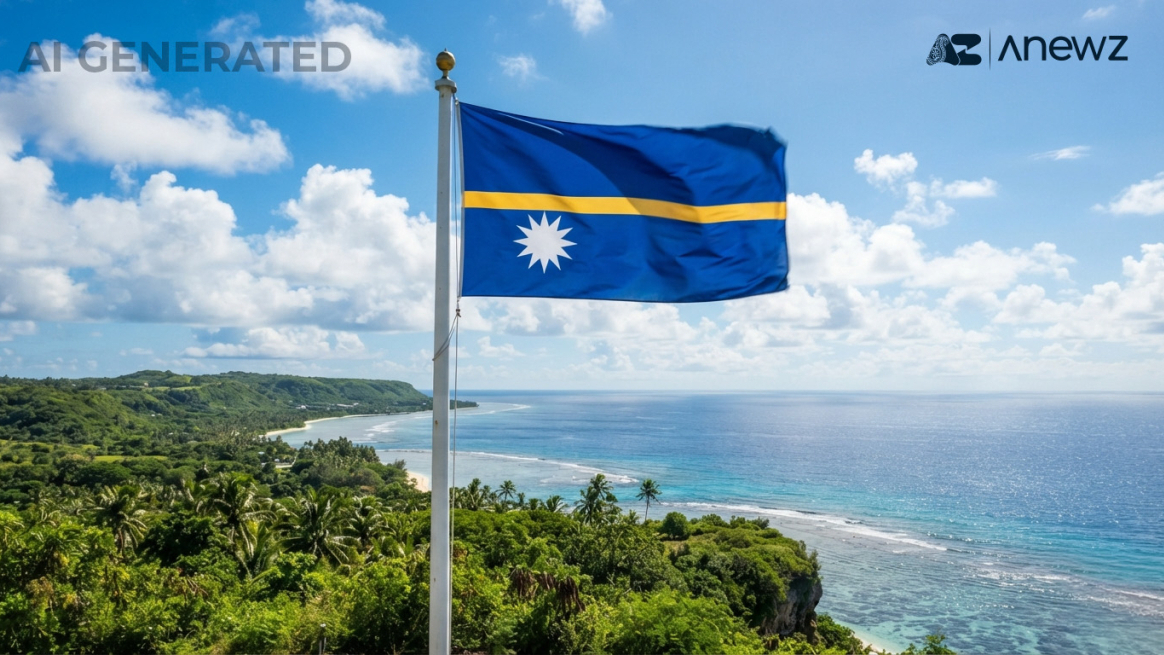
The Pacific island nation formerly known internationally as Nauru has officially adopted the name Republic of Naoero, restoring the traditional name used by its people in a move to reaffirm the country's cultural identity and heritage.
Returning to a name that never disappeared
President David Adeang announced that the government has begun notifying foreign governments and international organisations, marking the start of the formal transition.
The change will also affect other official designations. The country's international code will be updated from NRU to NRO, while citizens will now be referred to as dei-Naoero.
For many residents, the move is less about creating a new identity than formally recognising one that has always existed.
Naoero has continued to be used in local language and culture, appearing on the country's coat of arms and remaining familiar within communities despite Nauru being the name most widely used internationally.
President Adeang said the government decided not to proceed with a planned referendum after concluding that public approval was unnecessary for a name already deeply embedded in national life.
"The decision not to pursue a referendum was reached after thoughtful deliberation that Naoero is not a new name seeking acceptance by the people," Adeang said.
"It is already the identity of the people, is on the national coat of arms, and spoken in the community; and importantly is allowed by the constitution."
Why the country was called Nauru
According to government officials, the internationally recognised name Nauru emerged during the colonial era, when foreign administrators and settlers struggled to pronounce Naoero.
Over time, the adapted version became the name used on maps, official documents and in international diplomacy.
The government argues that restoring Naoero better reflects the country's language and history while correcting a change made largely for the convenience of outsiders.
Adeang has previously described the move as a way of honouring the nation's heritage and passing that legacy on to future generations.
A nation balancing history and future challenges
Naoero may be one of the world's smallest countries, with a population of about 12,000, but its history has been anything but simple.
The island was colonised by Germany and later administered by Australia before gaining independence in 1968. Vast phosphate deposits brought prosperity in the 1970s, but the decline of the industry left the country facing serious economic difficulties in later decades.
Today, the nation faces another challenge: climate change. Rising sea levels threaten parts of the low-lying island, prompting the government to explore new funding sources and long-term adaptation measures.
Following a global trend
Naoero joins a growing list of countries seeking to reclaim traditional names or emphasise local identity on the international stage.
In recent years, Eswatini adopted its current name from Swaziland, while Türkiye successfully asked international organisations and foreign governments to use its official name.
For Naoero, the change is being presented as more than a rebranding exercise. Officials describe it as recognition of the country's original identity and a statement of national pride.
As the transition progresses, government agencies, vessels, aircraft and international records will gradually adopt the new name, ensuring Naoero is how the island nation is known both at home and abroad.
READ MORE:















What is your opinion on this topic?
Leave the first comment