United Nations must continue, Trump says, but Board of Peace 'might' replace it
U.S. President Donald Trump says his so-called 'Board of Peace' on Gaza "might" replace the United Nations, but said the body should "continue."...
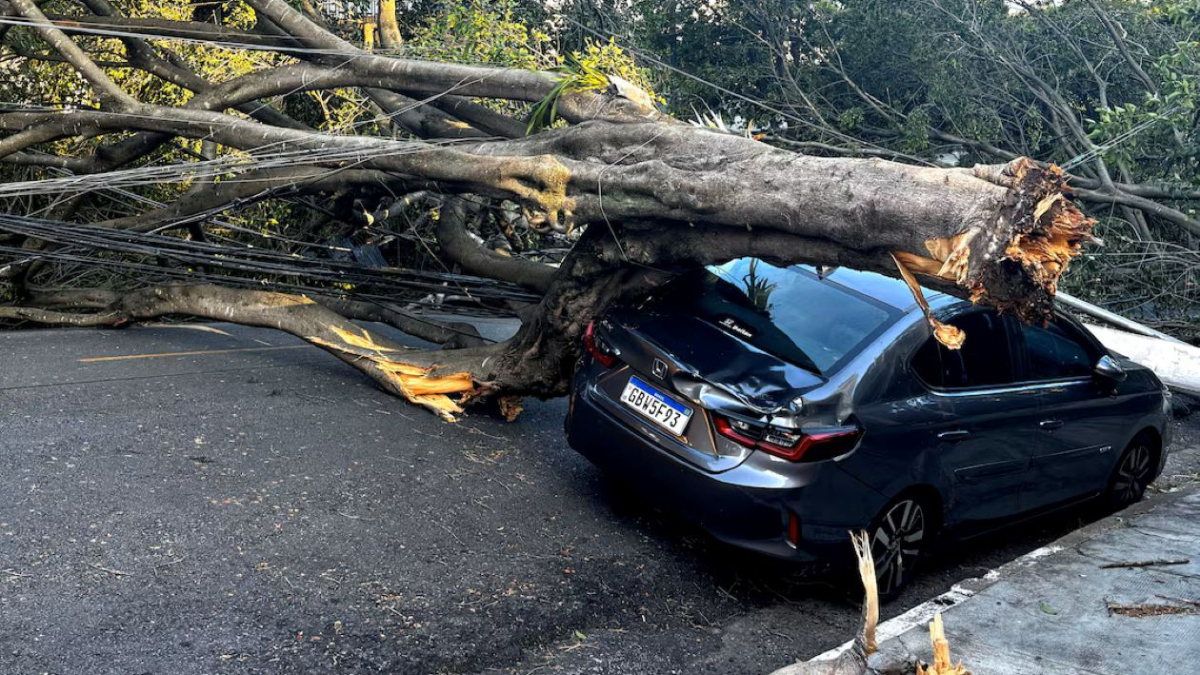
An extratropical cyclone has caused widespread disruption across Brazil’s São Paulo state, with powerful winds toppling trees and power lines, blocking streets and leaving large parts of the region without electricity.
In São Bernardo do Campo, strong gusts brought down electricity poles and centuries-old trees, crushing cars and a lorry and cutting off access to several homes. Residents reported hearing a power transformer explode shortly before the outages began. Those affected said elderly people and patients reliant on medical equipment were facing heightened risks due to the prolonged lack of power.
The storm also damaged infrastructure, including the roof of a petrol station, which collapsed under the force of the winds.
At São Paulo’s Congonhas Airport, travellers faced long queues, delays and widespread cancellations.
Milena Porto, a passenger travelling from Rio de Janeiro to Goiânia, said her connection was cancelled after she arrived late in São Paulo, forcing her to spend the night in the city at her own expense. She said the airline had promised a refund and she was now waiting to be rebooked.
Authorities said around 1.5 million homes and businesses were without electricity on Thursday (11 December). Energy provider Enel reported wind speeds reaching 98 km/h, with about 2 million customers losing power at the storm’s peak.
The company said supply had been restored for 500,000 consumers by Thursday morning.
Brazil’s energy regulator Aneel has demanded a detailed explanation from Enel regarding the scale and duration of the outages.
Water utility Sabesp said that power cuts had knocked out pumping stations, disrupting supply across multiple districts. The company said water services were being gradually restored.
Air travel was also severely affected. Airport operator Aena said Congonhas Airport cancelled 31 arrivals and 15 departures on Thursday, after scrapping 181 flights on Wednesday.
At Guarulhos International Airport, one of Latin America’s busiest hubs, 61 arrivals and 56 departures were cancelled since Wednesday, though operations had largely normalised by Thursday morning.

Several locally-developed instant messaging applications were reportedly restored in Iran on Tuesday (20 January), partially easing communications restrictions imposed after recent unrest.
There was a common theme in speeches at the World Economic Forum on Tuesday (20 January). China’s Vice-Premier, He Lifeng, warned that "tariffs and trade wars have no winners," while France's Emmanuel Macron, labelled "endless accumulation of new tariffs" from the U.S. "fundamentally unacceptable."
Dozens of beaches along Australia's east coast, including in Sydney, closed on Tuesday (20 January) after four shark attacks in two days, as heavy rains left waters murky and more likely to attract the animals.
U.S. President Donald Trump said Washington would “work something out” with NATO allies on Tuesday, defending his approach to the alliance while renewing his push for U.S. control of Greenland amid rising tensions with Europe.
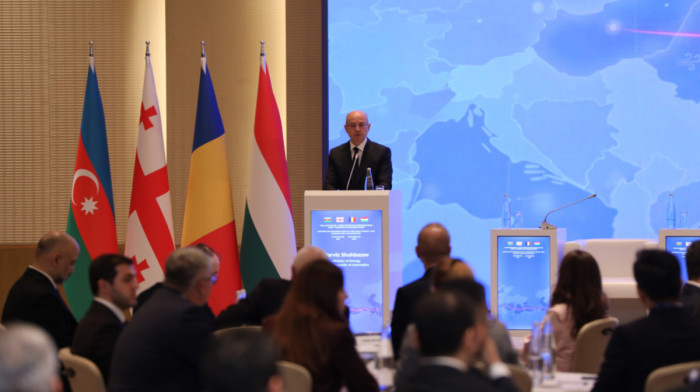
At the World Economic Forum’s “Defining Eurasia’s Economic Identity” panel on 20 January 2026, leaders from Azerbaijan, Armenia and Serbia discussed how the South Caucasus and wider Eurasian region can strengthen economic ties, peace and geopolitical stability amid shifting global influence.
Several people, including children, were reported missing in New Zealand's north island on Thursday after a landslide struck a coastal campsite amid heavy rain that caused evacuations of people to safety, road closures and widespread power outages.
At least four people were killed on Tuesday as floods swept across Tunisia during the worst torrential rain for more than 70 years in some regions, and there were fears the death toll could rise, authorities said.
The world has already entered an era of global water bankruptcy, with irreversible damage to rivers, aquifers, lakes and glaciers pushing billions of people into long-term water insecurity, according to a major United Nations report released on Tuesday.
Chilean President Gabriel Boric declared a state of catastrophe in two southern regions of country on Sunday as raging wildfires forced at least 20,000 people to evacuate and left at least 19 people dead.
A landmark global treaty to safeguard biodiversity in the high seas came into effect on Saturday, providing countries with a legally binding framework to tackle threats and meet a target to protect 30% of the ocean environment by 2030.
You can download the AnewZ application from Play Store and the App Store.
What is your opinion on this topic?
Leave the first comment