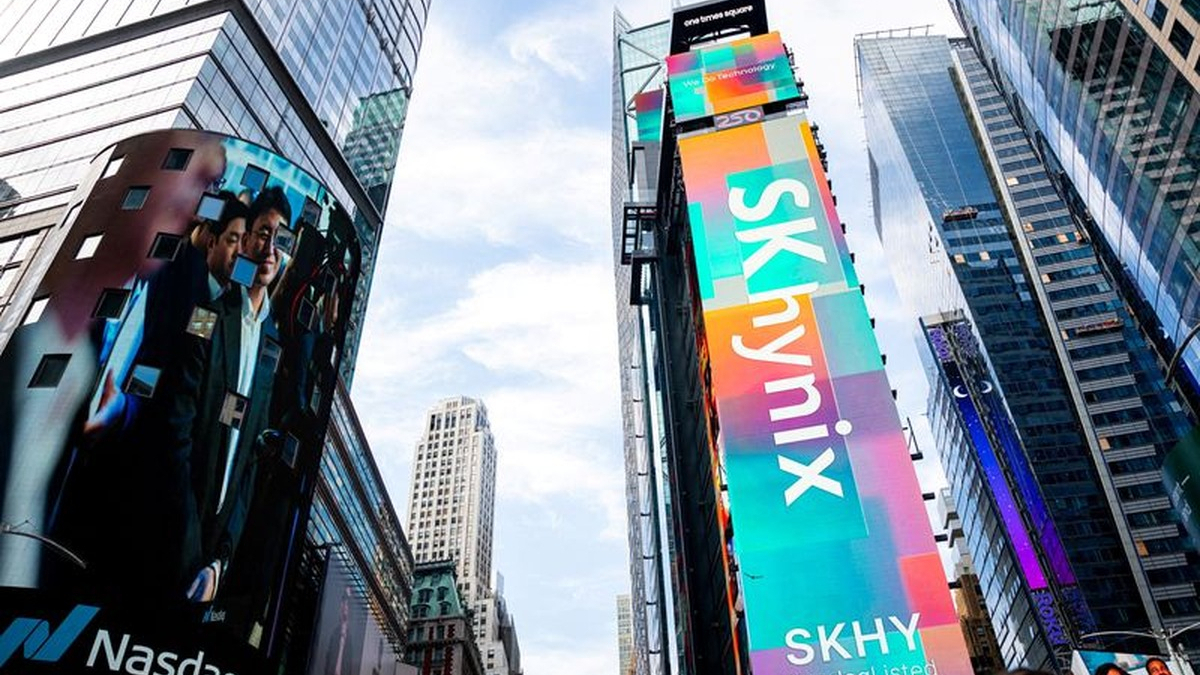
SK Hynix reported record quarterly profit on Wednesday, but its shares slumped 10 per cent after the South Korean chipmaker fell short of investor expectations built around the artificial intelligence (AI) boom.
The Nvidia supplier said operating profit for the April-June period rose more than sixfold to 60.5 trillion won (USD 41.62 billion), compared with 9.2 trillion won a year earlier. The result missed an LSEG SmartEstimate forecast of 64 trillion won.
Quarterly revenue rose 257 per cent to 79.3 trillion won, while net profit increased more than 13-fold to 93.9 trillion won. Analysts said the net result was boosted by cumulative investment gains following the completion of the sale of SK Hynix's stake in Japanese NAND flash memory maker Kioxia.
The earnings miss heightened concerns that aggressive AI infrastructure spending by major technology companies could eventually slow. Analysts also said investor sentiment was dented by the company's failure to provide detailed plans for higher shareholder returns.
SK Hynix said delays in shipments of some advanced products limited price gains for its core dynamic random access memory (DRAM) chips. Analysts said its greater exposure to high-bandwidth memory (HBM), whose prices rose less than those of conventional memory, also contributed to the weaker-than-expected result.
AI demand remains strong
Despite the sharp fall in its share price, SK Hynix struck an optimistic tone on AI memory demand. President Song Hyun-jong said major customers were still requesting additional memory supply and that the company was seeking more long-term supply agreements to better manage chip price volatility.
The company said it has concluded talks on around 10 long-term supply agreements and is continuing discussions with other major industry players. The agreements include financial safeguards, such as deposits, to help ensure contracts are fulfilled.
The move reflects how chipmakers are trying to turn today's AI-driven boom into more predictable demand, as investors question whether hyperscalers such as Microsoft, Alphabet, Amazon, Meta Platforms and Oracle can continue funding hundreds of billions of dollars in planned AI infrastructure investment.
SK Hynix said major technology companies continue to expand AI infrastructure spending and that demand momentum is expected to persist because the investments are supported by revenue generated from AI services.
Reflecting confidence in future demand, the company plans to increase capital expenditure this year to the high-40 trillion won range, up from 30.173 trillion won in 2025, to expand chip production capacity. It said investment would be adjusted in line with market demand to avoid oversupply.
SK Hynix's net cash reached 88 trillion won at the end of June, and the company aims to increase that to more than 100 trillion won. It said details on the timing, size and structure of its shareholder return policy would be disclosed later this year.
Read more:





















What is your opinion on this topic?
Leave the first comment